Every cooler, prep table and walk-in in your operation has one job: keep food cold enough that bacteria cannot grow to dangerous levels. Health inspectors check this with a thermometer, and a good temperature log is often the first thing that tells you a unit is starting to fail.
Here is what the rules say, which numbers to aim for, and a simple way to log temperatures that your staff will actually keep up with. This is general information, not legal advice; your local health department is the final word on what your establishment must do.
The rule that applies in Colorado
Colorado's retail food regulations adopt the FDA Food Code by reference. In January 2024 the state adopted the 2022 edition of the FDA Food Code, with the updated rules taking effect March 16, 2024. That means the FDA Food Code is the baseline for restaurants and other retail food establishments in Denver and around the Front Range, enforced by local public health agencies.
FDA has since published a 2026 edition of the Food Code. States adopt new editions on their own schedule, so check with your local health department about which version they are enforcing.
41°F: the cold holding number
The Food Code requires that time/temperature control for safety food, or TCS food, held cold be kept at 41°F (5°C) or below. TCS foods include items like dairy, cooked rice and pasta, sliced melons, cut leafy greens, cooked vegetables, meats, poultry and seafood.
Inspectors measure the internal temperature of the food itself, not just the air in the unit. A cooler display reading 38°F does not help if the potato salad on the top shelf near the door reads 45°F.
Because air temperature swings when doors open and product is loaded, many operators set coolers a few degrees below 41°F to keep a safety margin. Just make sure the unit is not so cold that it freezes produce or dairy.
Freezers: 0°F is the common target
FDA's consumer guidance recommends keeping freezers at 0°F (-18°C), and that is the target most commercial operators use for walk-in and reach-in freezers. Freezing does not kill most bacteria, but holding food solidly frozen stops growth and protects quality.
If a freezer is consistently running well above 0°F, or product feels soft, treat it as a mechanical issue to investigate, not a setting to live with.
Use the right thermometers
- Place an appliance thermometer in each cooler and freezer, in an easy-to-see spot. FDA notes that these inexpensive thermometers are the best way to know the actual temperature in a unit.
- Do not rely only on the digital display. Displays read a sensor in one spot, which may not reflect the warmest part of the box.
- Keep a calibrated probe thermometer for checking food temperatures. Check its accuracy regularly using the ice-water method recommended by the thermometer's maker.
- In walk-ins, consider a second thermometer near the door, which is usually the warmest area.
How to set up a temperature log
A temperature log does not need to be complicated. What matters is that readings are taken consistently, written down honestly and acted on when they are out of range.
- List every refrigerated unit by name: walk-in cooler, walk-in freezer, line reach-in, prep table, bar cooler.
- Set check times. Opening and closing at a minimum; many operations add a mid-shift check for high-traffic units.
- Record the time, the reading, and the initials of the person checking.
- Write down the target range on the log itself, for example 'at or below 41°F' for coolers and '0°F' for freezers.
- Add a column for corrective action: what was done when a reading was out of range.
- Have a manager review and sign the log weekly and keep old logs on file.
What to do with an out-of-range reading
One high air reading right after a delivery may not mean much. Close the door, wait, and recheck. If the unit is still high, check internal food temperatures with a probe.
If food is above 41°F, the Food Code and your health department set out what you can and cannot do with it, which depends on how long it was out of temperature. When in doubt, ask your local health department or discard it.
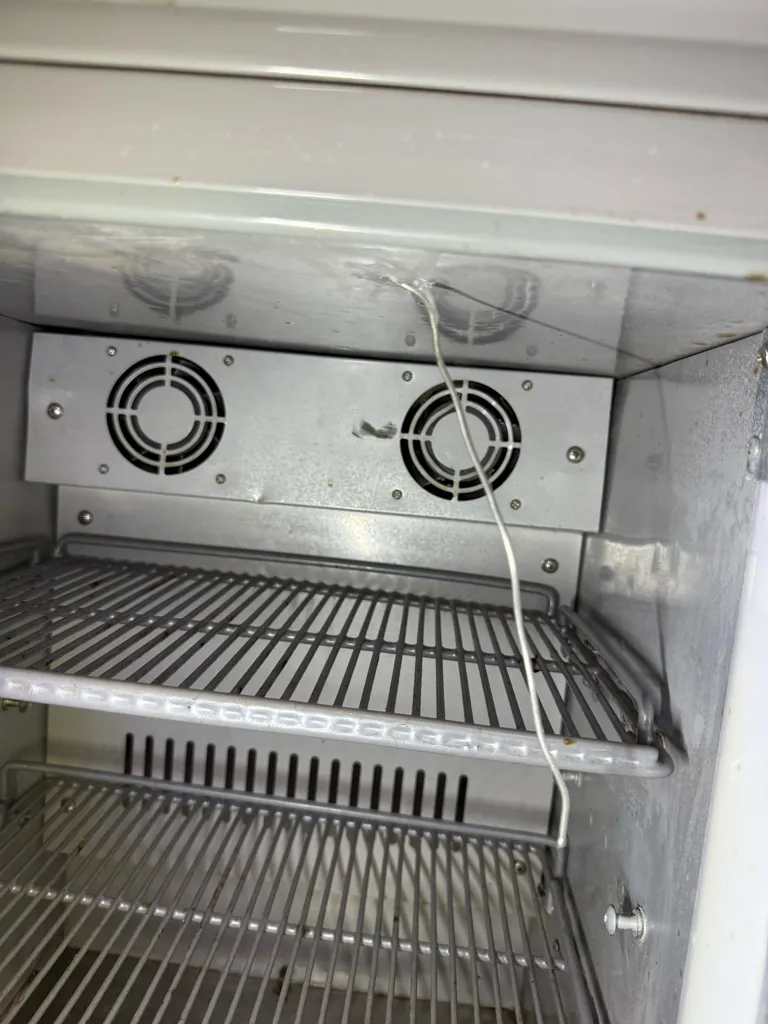
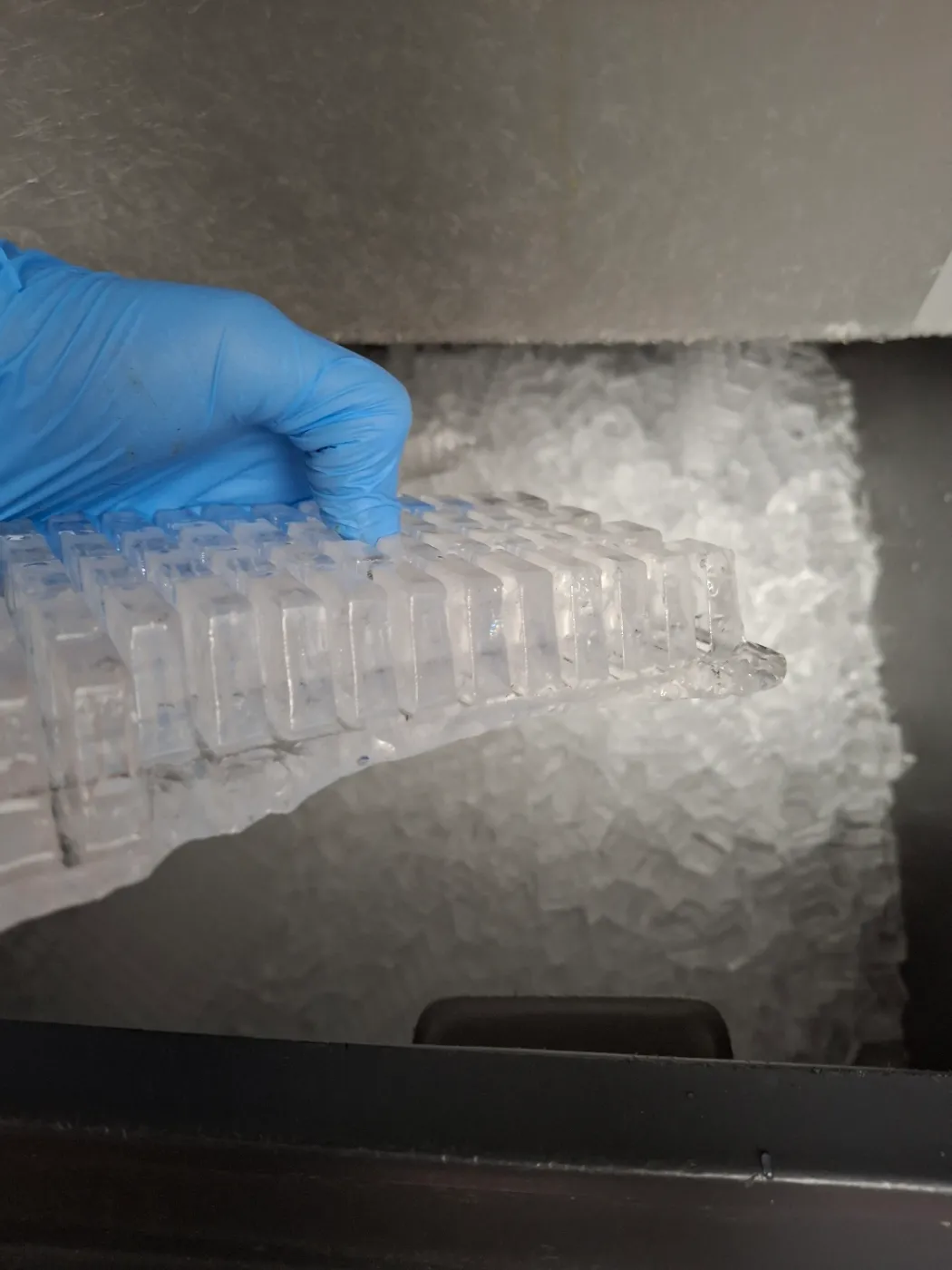
If the unit keeps drifting high, look for simple causes first: a door that did not close, blocked airflow from overloading, a dirty condenser coil or ice on the evaporator. If none of those explain it, call for service before the unit fails completely.
Patterns a log can reveal
Logs are not just for inspectors. Over a few weeks they show trends that are easy to miss day to day.
- Readings creeping up a degree or two each week often point to dirty coils, low refrigerant or a weakening compressor.
- High readings only during busy shifts can mean the unit is undersized for the load or a door gasket is failing.
- High readings only on hot afternoons can point to a condensing unit struggling with heat or blocked airflow.
Digital monitoring
Wireless temperature sensors that send alerts to a phone are now common and can catch a failure overnight or on a closed day. They do not replace a working log and spot checks of food temperatures, but they can turn a total loss into a quick service call.
If your logs show a cooler or freezer drifting out of range, ABC Denver Appliance Repair can find the cause before it turns into a loss. The service call fee is waived when you approve the repair, and repairs carry a 90-day warranty.