Washer not spinning: front- and top-load diagnosis
A washer that won't spin is usually a washer that doesn't think it's safe to spin. Before it goes to high speed, the control wants to know the drum is empty, the door or lid is locked, and the load is balanced. Most of the time one of those three checks is failing. The rest of the time it's a belt, a coupler or the motor drive.
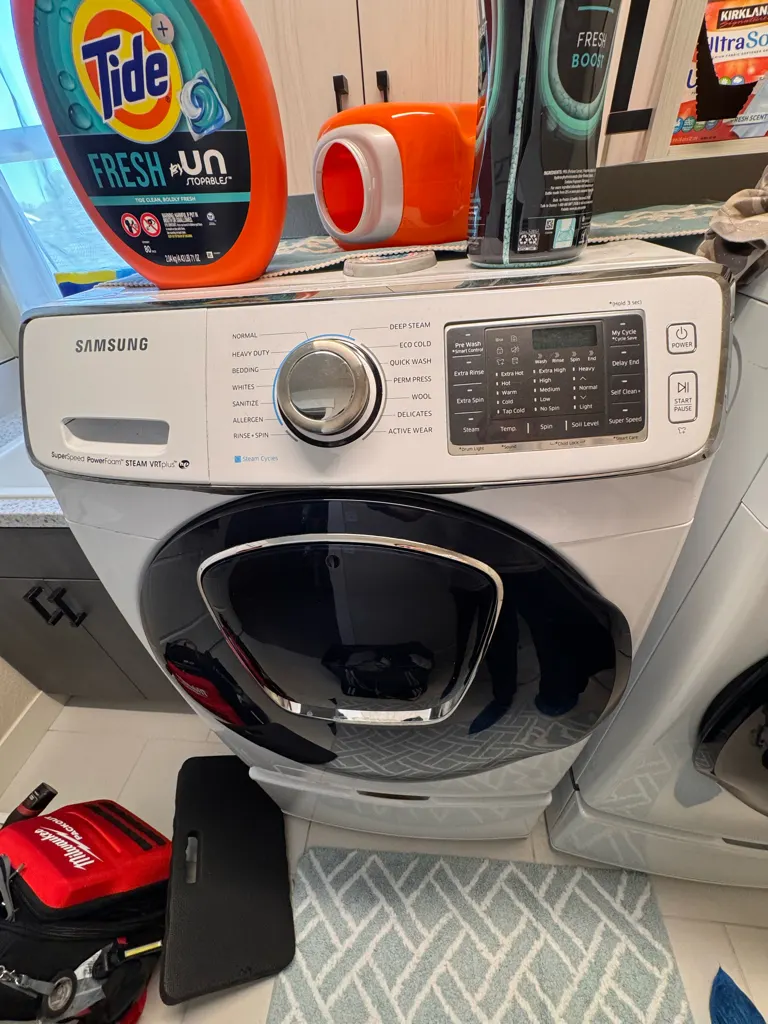
Check that the washer actually drained, because most washers won't spin with water in the drum. Then redistribute the load and run a drain/spin. If it still won't spin, the door or lid lock isn't confirming, the suspension is letting the tub bang so it can't balance, or the drive (belt, coupler, shift actuator, motor or motor control) has failed. LG UE, Samsung UB and similar codes mean it couldn't balance.
Why washers refuse to spin
Spin is the most violent part of the cycle, so modern washers protect themselves. If there's water in the tub, the lock can't confirm, or the load is lopsided, the control won't go to high speed.
That's why we always ask whether the clothes are dripping or just damp. Dripping usually means it never spun at all. Damp but heavy means it spun slowly because it couldn't balance.
| What you see | Likely cause | What we check |
|---|---|---|
| Water still in drum | Drain problem | Filter, hose, pump |
| Tries to spin, stops, repeats | Unbalanced load, worn suspension | Load, shocks/rods, leveling |
| Hums but drum doesn't turn | Belt, coupler, motor, hall sensor | Drive components, motor signals |
| Top-load agitates but won't spin | Shift actuator, lid lock, clutch | Actuator test, lock circuit |
| Door/lid lock clicks repeatedly | Lock assembly or wiring | Lock switch, signal to control |
| Loud bang during spin | Suspension, foreign object, bearings | Shocks, drum, bearings |
1. It didn't drain
Most "won't spin" calls are really drain calls. The control watches the water level, and it won't spin until it sees an empty tub. If there's water left, start with our washer not draining guide: filter, hose, pump.
2. Unbalanced loads and worn suspension
A single heavy item, like a bath mat or a waterlogged comforter, throws the drum off balance. The washer tries to redistribute, gives up, and finishes with a slow spin or an unbalanced code. Try a mixed load.
If normal loads keep failing to balance, the suspension is worn. Front-loaders use shock absorbers under the tub; top-loaders use suspension rods. Worn ones let the tub swing, so the control never gets a stable reading. Shock absorbers were among the washer parts we replaced most, 70 times in our records.
3. Door and lid locks
Front-loaders lock the door for the whole cycle. Many top-loaders lock the lid for spin. If the lock motor fails or the switch doesn't report "locked", the washer won't spin, and on some models it repeats the lock click over and over.
We test the lock circuit and the signal back to the control. Samsung reports this as dC or dE on many models, LG as dE, Whirlpool front-loaders as F5E2.
4. The drive: belts, couplers, actuators, motors
If the washer is empty, locked and balanced, and still won't spin, we go to the drive. Belt-drive washers can simply throw or snap a belt. Older Whirlpool direct-drive top-loaders use a motor coupler designed to break under overload. Whirlpool, Maytag and Kenmore high-efficiency top-loaders use a shift actuator to switch between agitate and spin; when it fails, the washer agitates but never spins.
Direct-drive front-loaders, like most LG and many Samsung models, use a motor on the back of the tub with a sensor that reports its position. LG calls a stall LE. On an LG in Longmont this fall, the error and the noise came down to the hall sensor on the stator, and replacing it fixed the spin. We check those signals before we condemn a motor or a board.
Error codes by brand
Find more in the error code lookup, or see what we see most on LG washers and Samsung washers.
| Brand | Code | Meaning |
|---|---|---|
| LG | UE | Unbalanced: load or suspension |
| LG | LE | Motor locked or overloaded: load, hall sensor, stator, motor |
| LG | dE | Door not locking |
| Samsung | UB / UE / Ub | Unbalanced load or suspension |
| Samsung | dC / dE / dS | Door lock or door detection |
| Whirlpool, Maytag | F5E2 | Door lock didn't lock or unlock |
| Whirlpool, Maytag | F7E1 | Motor speed / drive problem |

What you can check
- Make sure the drum drained
- Run a drain/spin with a smaller, mixed load
- Check the washer is level and the feet are locked
- On a new front-loader, confirm the shipping bolts are out
- Note the exact error code
- Don't force a locked door; drain first
What our records show
Across 1,854 washer repairs, the parts list tells the spin story: drain pumps (washers won't spin with water inside), control boards (including motor control), and shock absorbers (washers can't balance with worn suspension). Belts, door locks and hall sensors follow behind.
| Most common complaints | Calls | Most replaced parts | Times |
|---|---|---|---|
| Not working | 262 | Drain pump | 131 |
| Leaking water | 183 | Control board | 102 |
| Showing an error code | 180 | Shock absorbers | 70 |
Leveling, floors and installation
A washer that isn't level, or sits on a soft floor, rocks during spin. The control reads that motion as an unbalanced load and slows down. Laundry closets on upper floors and older wood floors are the usual places we see it.
Check the washer with a level front to back and side to side, then lock the leveling feet with their nuts. On stacked pairs, make sure the stacking kit is installed, because a dryer sitting loose on top adds to the motion. Anti-vibration pads help on wood floors.
Bearings: the sound to listen for
Worn tub bearings start as a low rumble during spin and get louder over weeks or months, often turning into a roar like a jet engine at high speed. On front-loaders you may also see rust streaks or water marks below the tub, because the seal fails before the bearing does.
Try spinning the empty drum by hand. Grinding or roughness you can feel points to bearings. It's a larger repair because the tub usually has to come apart. On a newer or premium washer it's worth it; on an older economy machine we'll give you the price and our honest opinion.
How we diagnose it on a service call
- 1Ask how wet the clothes are: dripping (no spin) or damp-heavy (slow spin)
- 2Read stored error codes and run the service test mode
- 3Confirm the drum drains and the water level reads empty
- 4Test the door or lid lock and the lock signal
- 5Check the suspension: push down on the tub and watch how it settles
- 6Check the belt, coupler or shift actuator depending on the design
- 7On direct-drive washers, check the hall sensor and stator signals
- 8Run a spin test with a balanced load before we leave
Front-load vs top-load: what differs
Front-loaders spin much faster, often 1,000 rpm or more, so balance and suspension matter more and shock absorbers wear out. Their door locks work harder because they lock for the whole cycle.
Top-loaders vary more by design. Older agitator machines have transmissions and couplers. High-efficiency impeller machines use shift actuators and more electronics. A Whirlpool-built top-loader that agitates but won't spin is a classic shift-actuator story.
Spin system parts, explained
| Part | What it does | How it fails |
|---|---|---|
| Door / lid lock | Locks before spin and reports it to the control | Lock motor or switch fails |
| Shock absorbers / suspension rods | Damp tub motion during spin | Wear out, tub bangs, washer can't balance |
| Drive belt | Connects motor to drum on belt-drive models | Stretches, slips, breaks |
| Motor coupler | Links motor and transmission on older Whirlpool direct-drive | Breaks by design under overload |
| Shift actuator | Switches agitate/spin on many HE top-loaders | Fails, washer agitates but won't spin |
| Hall sensor / rotor position sensor | Reports motor position on direct-drive washers | Fails, causes LE-type motor errors |
| Motor control board | Drives the motor | Failed components, water damage |
| Tub bearings | Let the drum spin smoothly | Wear, roar during spin |
Is it worth repairing?
Locks, belts, couplers, actuators and shocks are almost always worth repairing. Bearings are the big one: worn tub bearings make a roaring noise during spin that gets louder over months. On a newer or premium washer they're usually worth doing. On an older economy machine, the bearing job can cost close to a new washer, and we'll say so. See our repair-or-replace calculator.
Cost and when to call
Locks, belts, couplers and shocks are moderate repairs. Motor control boards and bearings are larger jobs, and on an older economy washer we'll tell you if it isn't worth it. Call (720) 534-0432, or read more on our washer repair page.
If your washer shows a code along with the spin problem, our washer error code guide explains what each brand's codes mean.
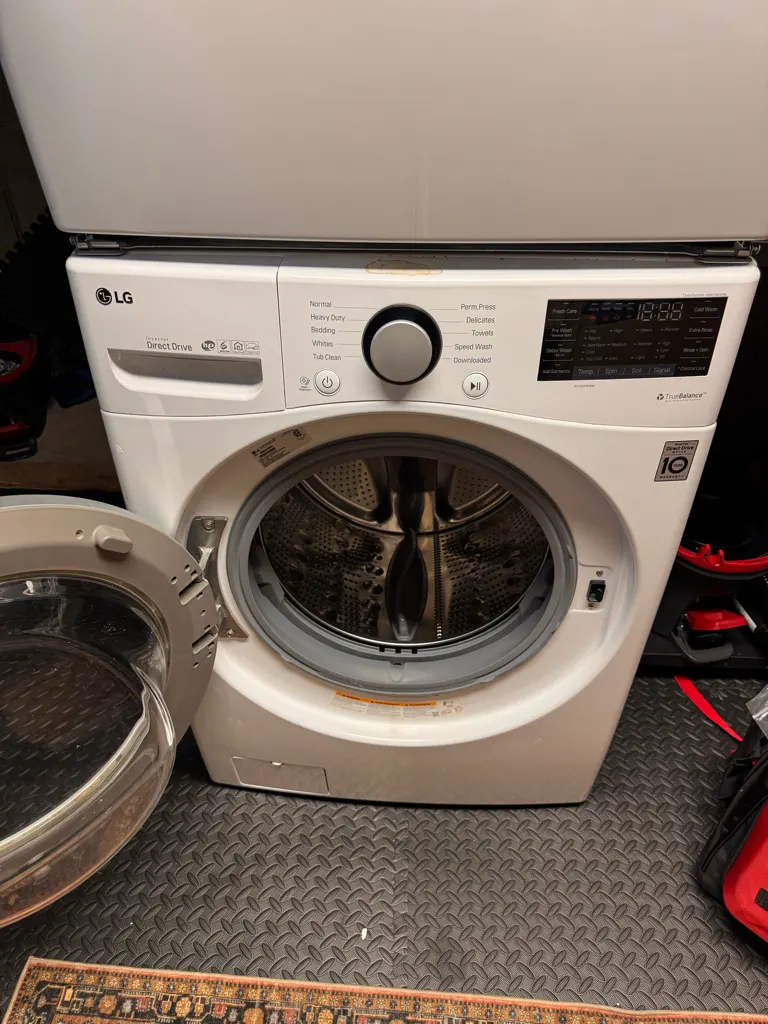
Still not working?
Home service call from $59, credited toward the repair. Same- or next-day visits across the Denver metro.
Related repairs from our jobs


Questions we get about this
Why does my washer spin only sometimes?
Usually balance: the load, the suspension or leveling. Sometimes a lock that only confirms intermittently.
My top-loader agitates but won't spin. What is it?
On many Whirlpool-family HE top-loaders, the shift actuator. On older ones, the lid switch or coupler.
Is it safe to keep using a washer that bangs during spin?
Stop and check the suspension. Banging damages the tub and cabinet.
Do I need to remove shipping bolts?
Yes, on new front-loaders. They lock the tub for transport.
Why does my washer smell burnt after trying to spin?
A slipping belt or an overloaded motor. Stop using it and have it checked.
Can too much detergent stop the spin?
Yes. Excess suds slow draining and can trigger suds or unbalanced errors.

