Dryer making noise: what each sound means
Noise was the third most common dryer complaint in our records, 198 calls. The good news is that dryer noises are honest. Each sound points to a short list of parts, and almost all of them are inexpensive. The bad news is that a noisy dryer is usually a dryer whose drum is working harder than it should, and that eventually costs a belt or a motor.

Thumping that follows the drum rotation is usually flat-spotted drum rollers. A high squeal is the idler pulley or a dry drum glide. Scraping is a worn drum seal or glide, or something caught between drum and cabinet. Rattling that changes with speed is often a coin or button in the blower. Grinding or a loud hum is the motor or the blower wheel. Stop using the dryer if you hear grinding or smell burning.
Match the sound to the part
| Sound | Most likely cause | Typical fix |
|---|---|---|
| Rhythmic thumping | Drum rollers worn flat | Replace rollers (and axles) |
| Squealing or chirping | Idler pulley bearing, dry drum glides | Replace pulley, glides |
| Scraping or rubbing | Worn drum seal/felt, glides, object stuck at drum edge | Replace seal/glides, remove object |
| Rattling, changes with speed | Coin or button in the blower, loose panel | Clear blower, tighten panel |
| Grinding or loud hum | Motor bearings, blower wheel damaged | Motor or blower wheel |
| Ticking | Belt seam, items in pockets | Usually harmless; check belt |
Thumping: drum rollers
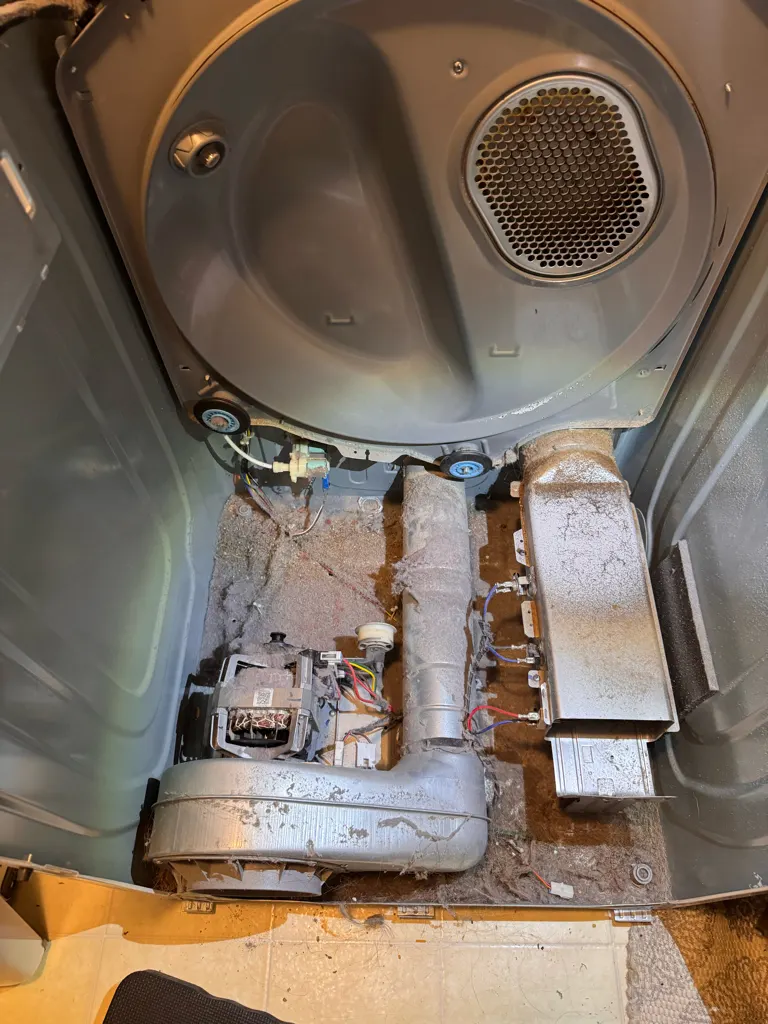
Most dryers ride the back of the drum, and sometimes the front, on small rubber or plastic rollers. Over years they wear flat on one side, especially if the dryer sits unused for a while with a heavy load in it. The thump follows the rotation of the drum.
We replace rollers in sets, with their axles if worn. On Samsung, Whirlpool and LG dryers it's one of the most common noise repairs. We opened a Samsung in Arvada recently with rollers worn flat; new rollers made it quiet and took load off the motor. Read the Arvada Samsung dryer case.
Squealing: the idler pulley and glides
The idler pulley keeps tension on the drive belt. Its bearing dries out and starts squealing, especially at startup. Left alone, it can seize and burn through the belt.
Front drum glides are small plastic or felt pads the drum slides on. When they wear through, you get a squeal or a metal-on-plastic scrape. Both parts are inexpensive and are usually replaced together with the belt when the dryer is apart.
Scraping: seals and stuck objects
The felt seals at the front and back of the drum stop air and lint leaking around the drum. When they wear or come loose, the drum rubs metal and you hear scraping. A bra underwire, a coin or a screw caught between the drum and the front bulkhead makes a similar sound and can scratch clothes.
Run your hand around the drum's front edge with the dryer unplugged. If you find something stuck, remove it. If the felt is hanging loose or worn through, it needs replacing.
Rattling: the blower
The blower wheel pulls air through the drum and pushes it out the vent. Coins, buttons and small toys that get past the lint screen end up in the blower housing, where they rattle loudly. A cracked blower wheel wobbles and rattles too.
On many dryers, removing the lint screen housing gives a look at the blower inlet. If you hear rattling, don't keep running it: a damaged blower moves less air, which leads to overheating and blown thermal fuses.
Grinding and humming: the motor
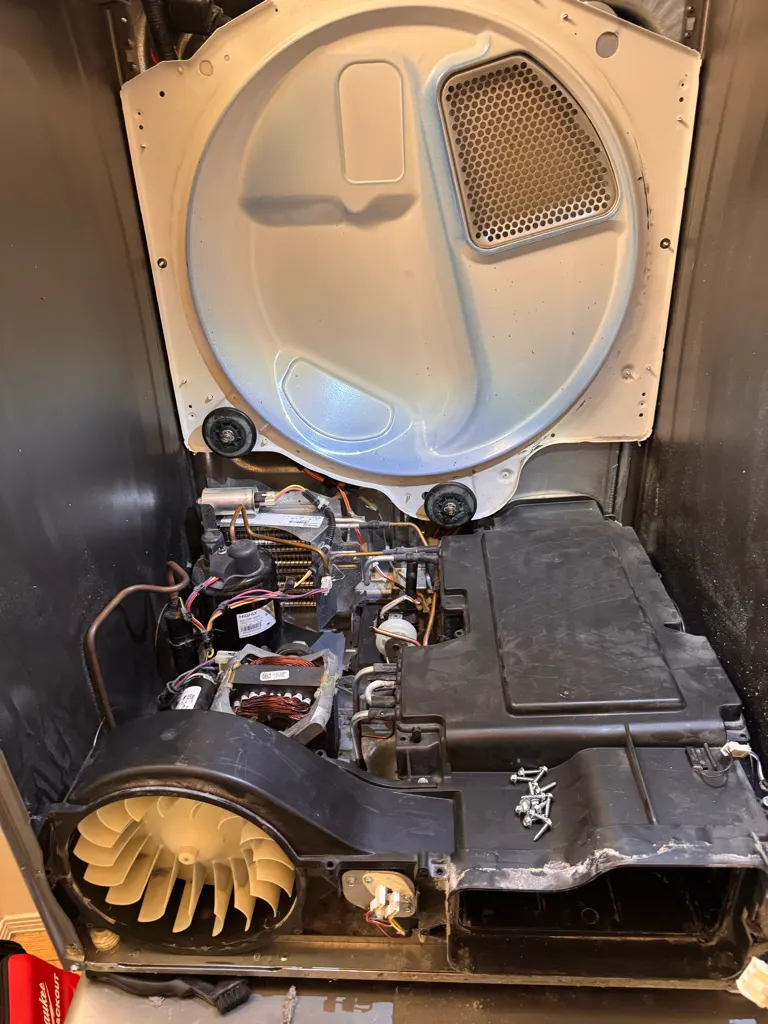
A motor with worn bearings grinds or growls, gets louder over time and may struggle to start. A hum with the drum not turning can mean a broken belt (on some dryers a belt switch shuts off the motor), a seized pulley, or a failing motor or start switch.
Motor replacement is a bigger repair than rollers or pulleys, but still usually cheaper than a new dryer on a mid-age machine. We check the belt, pulley and drum rotation first, because a seized idler can make a healthy motor hum and stall.
Dryer drive and support parts, explained
| Part | What it does | How it fails |
|---|---|---|
| Drum rollers | Support the drum as it turns | Wear flat, thumping |
| Idler pulley | Keeps the belt tight | Bearing squeals, seizes |
| Drive belt | Turns the drum | Stretches, cracks, breaks |
| Drum glides | Support the drum front | Wear through, scraping |
| Drum seals (felt) | Seal the drum to the cabinet | Wear, come loose, scraping |
| Blower wheel | Moves air through the dryer | Cracks, collects debris |
| Motor | Drives drum and blower | Bearings wear, grinding, won't start |
What our records show
Noise is the third most common dryer complaint, but belts are the second most replaced part. That gap tells a story: plenty of noisy dryers are fixed with rollers, pulleys and glides alone, while others keep running until the belt finally snaps and the dryer stops turning. Catching the noise early is cheaper.
| Dryer complaint | Calls | Part replaced | Times |
|---|---|---|---|
| Not heating | 257 | Heating element | 144 |
| Not working | 230 | Drive belt | 71 |
| Noisy | 198 | Control board | 44 |
Stacked and compact dryers
Stacked laundry centers and compact 24-inch dryers are common in Denver condos and townhomes. They use the same basic parts, but access is harder: the dryer often has to come down or out of a closet before we can open it. That's why we ask for clear access to the laundry space when you book.
Compact ventless dryers add a condenser or heat-pump coil that collects lint. A rattle or a whine on those units is sometimes the condensate pump or a fan in the condenser circuit, not the drum.
Preventing dryer noise
- Don't overload the drum: heavy wet loads wear rollers and the belt faster
- Empty pockets: coins and screws end up in the blower
- Clean the lint screen every load and the cavity under it every few months
- Keep the dryer level so the drum doesn't ride unevenly on its rollers
- Have rollers, pulley and glides checked if the dryer is over eight to ten years old and starting to thump
How we diagnose it on a service call
Taking the belt off separates the problem: if the noise disappears, it's the drum side (rollers, glides, seals). If it stays, it's the motor or blower.
- 1Run the dryer empty and loaded, and listen for where the sound comes from
- 2Turn the drum by hand with the belt on and off
- 3Check rollers for flat spots and axles for wear
- 4Spin the idler pulley and feel the bearing
- 5Inspect drum glides and felt seals at the front and back
- 6Check the blower wheel and housing for debris and cracks
- 7Listen to the motor with the belt off
- 8Check vent airflow before closing up
Brand patterns we see
| Brand | Most common noise causes |
|---|---|
| Samsung | Drum rollers, belts, idler pulleys |
| Whirlpool, Maytag, Kenmore | Rollers on 29-inch models, idler pulleys, drum glides |
| LG | Rollers and drum supports, blower debris |
| GE | Drum bearings and slides, belts |
| Speed Queen | Belts and idler; heavy-duty parts last long |
Gas vs electric: does it change the noise?
The drum, rollers, belt, pulley and blower are essentially the same on gas and electric dryers, so mechanical noises mean the same thing on both. Gas dryers add a few sounds of their own. A soft whoosh when the burner lights is normal, and so is a click from the gas valve. A loud bang at ignition, or a roar that comes and goes with the heat, is not: it can point to delayed ignition or a burner that needs adjustment, and should be checked by a technician.
Electric dryers sometimes hum from the motor or the heater contactor. A buzz that only happens with heat on is worth a look at the element terminals and wiring, because a loose connection there heats up over time.
What a noise repair visit looks like
Most noise repairs are done in one visit. The technician pulls the dryer out, takes off the front or top panel, removes the drum and inspects rollers, pulley, glides, seals and belt together. Parts that are worn get replaced as a set, the blower is checked, and the vent airflow is tested before the dryer goes back. On a typical 27-inch dryer that takes roughly an hour to an hour and a half; stacked units take longer because of access.
You get a written price after the diagnosis and before any parts go in. If the dryer also has a heating issue, it's quoted at the same visit.
Is it worth repairing?
Almost always. Rollers, pulleys, glides, seals and belts cost a fraction of a new dryer. A failing motor on a dryer that's 15 years old is where we'd talk about replacing, and we'll give you both numbers. See our repair-or-replace calculator.
Noise and heat are connected
A dryer working against worn rollers or a dragging seal runs hotter and slower. Debris in the blower and lint in the vent cut airflow. That's why noisy dryers often show up later with heating problems. If you're having both, see our dryer not heating guide.
Cost and when to call
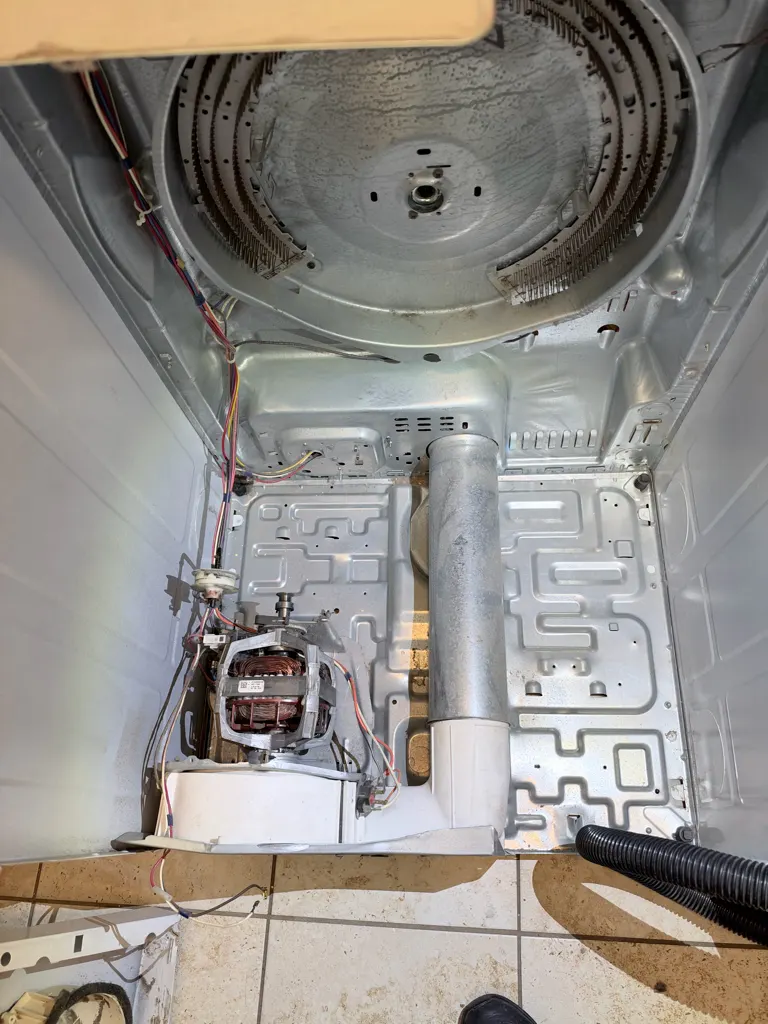
Rollers, pulleys, glides, seals and belts are moderate repairs and are often done together in one visit. Motors and blower housings cost more. Call (720) 534-0432 if the noise is getting louder, if you hear grinding, or if you smell burning. More on our dryer repair page, Samsung dryers and Whirlpool dryers.
A slow dryer and a noisy dryer often share a cause: a lint-packed blower. See why a dryer takes too long to dry.
Still not working?
Home service call from $59, credited toward the repair. Same- or next-day visits across the Denver metro.
Related repairs from our jobs


Questions we get about this
Is a noisy dryer dangerous?
Thumping and squealing usually aren't urgent. Grinding, burning smells or a dryer that struggles to turn are reasons to stop using it.
Should rollers, belt and pulley be replaced together?
Often yes. They wear together, and doing them at once avoids a second visit.
Why does my dryer only squeal at startup?
Typically a dry idler pulley bearing that quiets as it warms up.
Can I lubricate a squeaky dryer?
Most of these parts are designed to be replaced, not oiled. Oil attracts lint.
Why does my dryer thump only with heavy loads?
Worn rollers flatten under weight. A heavy load makes the flat spots louder.
How long do dryer rollers last?
Many last years; heavy use and overloading shorten their life.