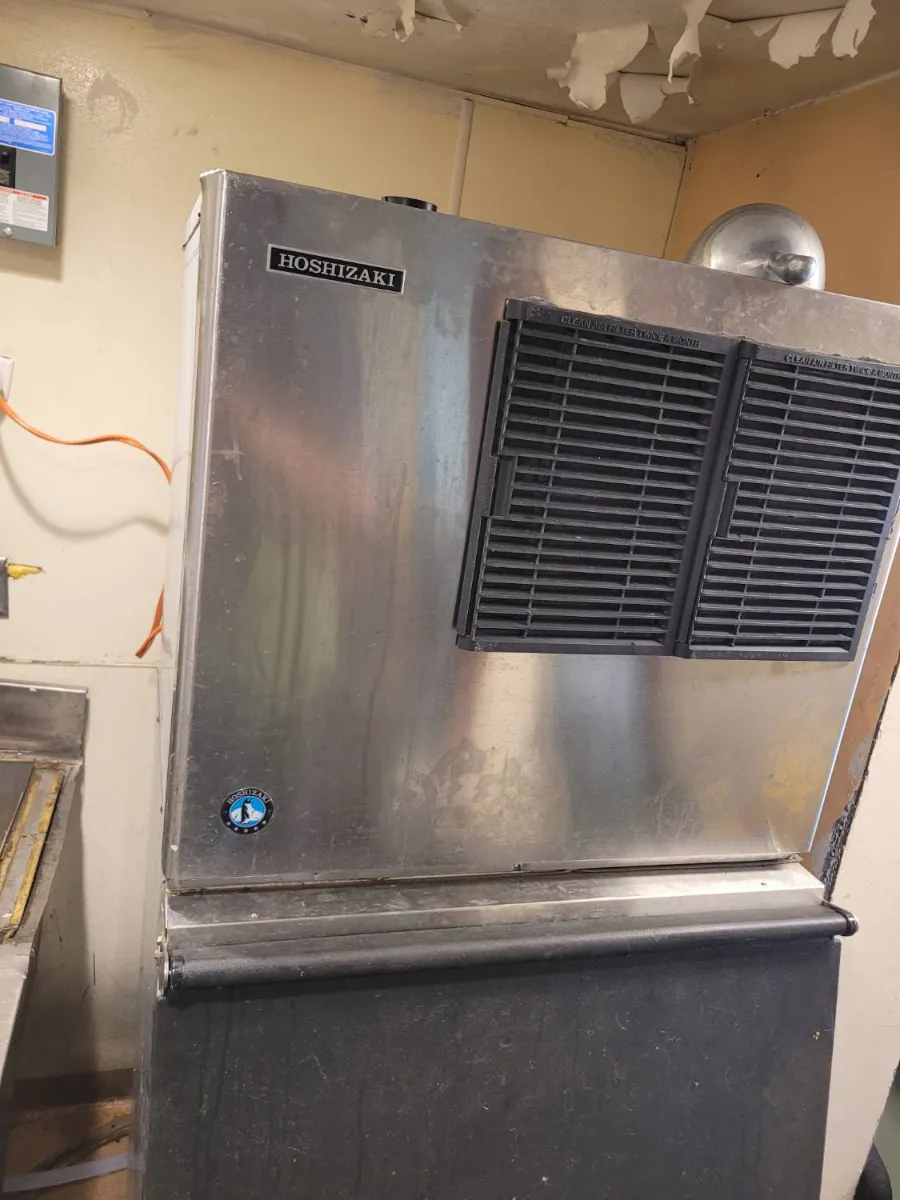
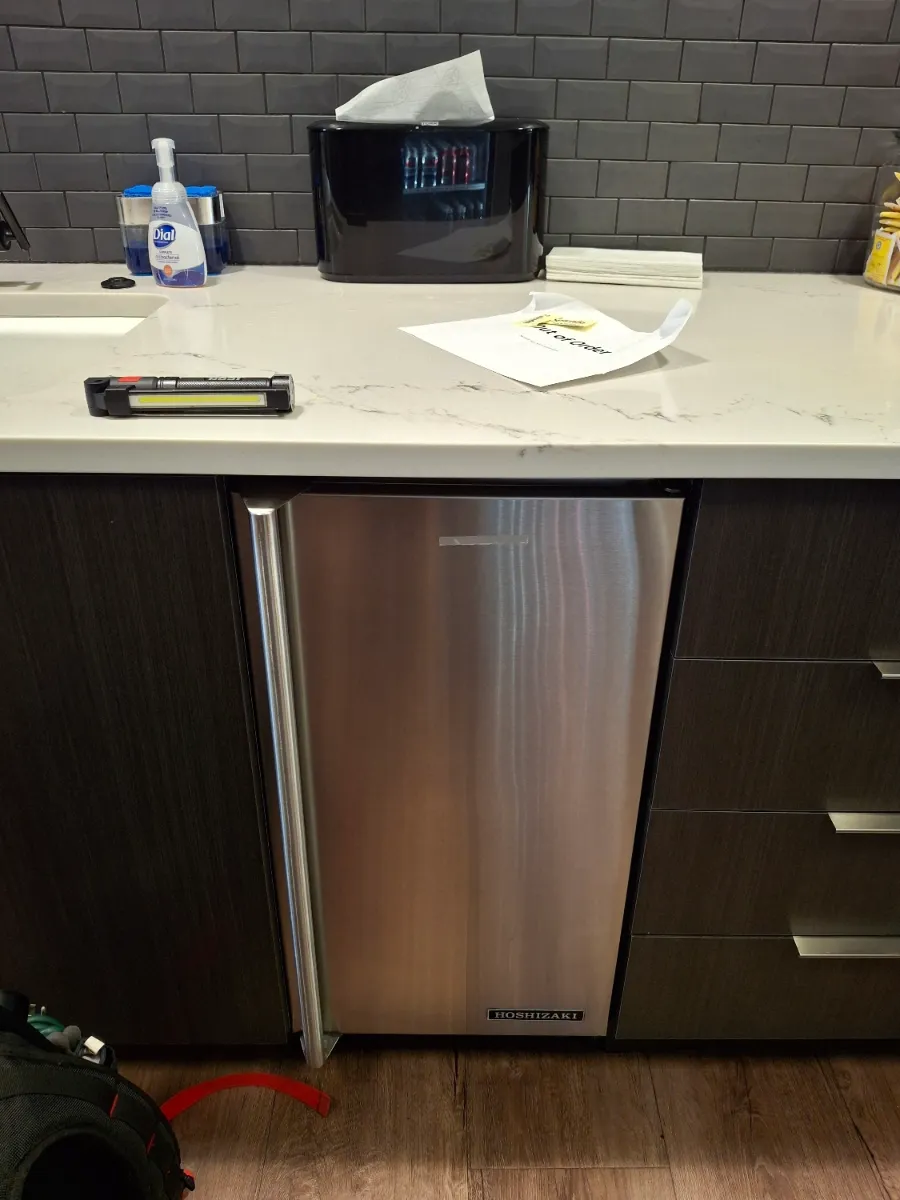
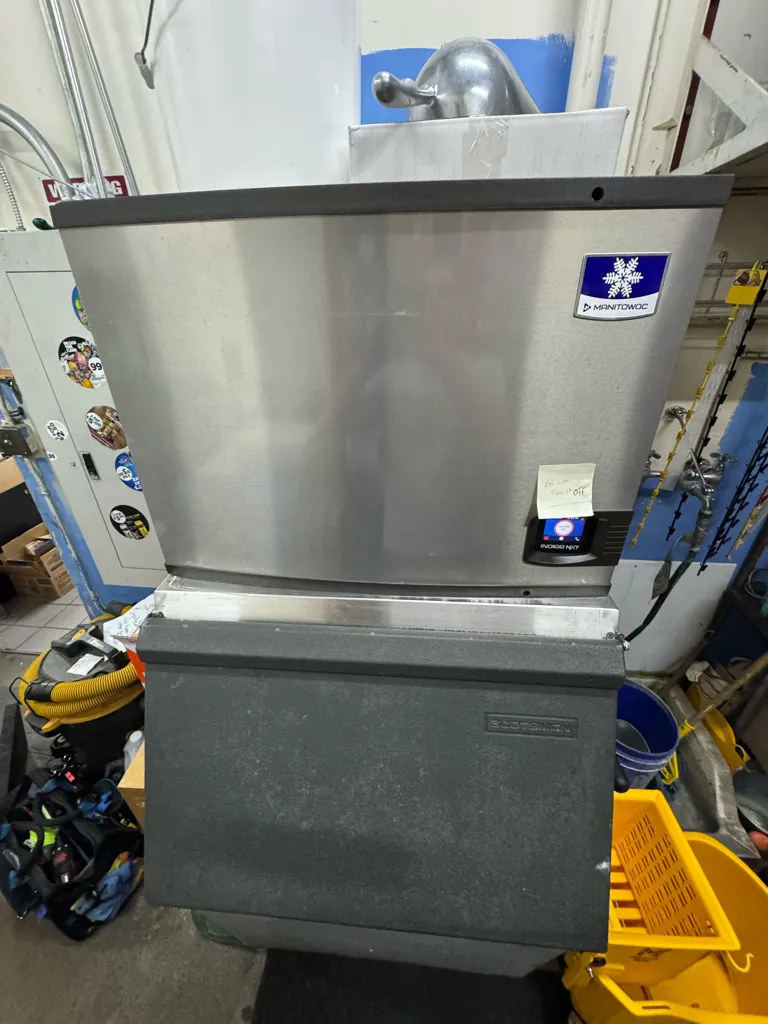
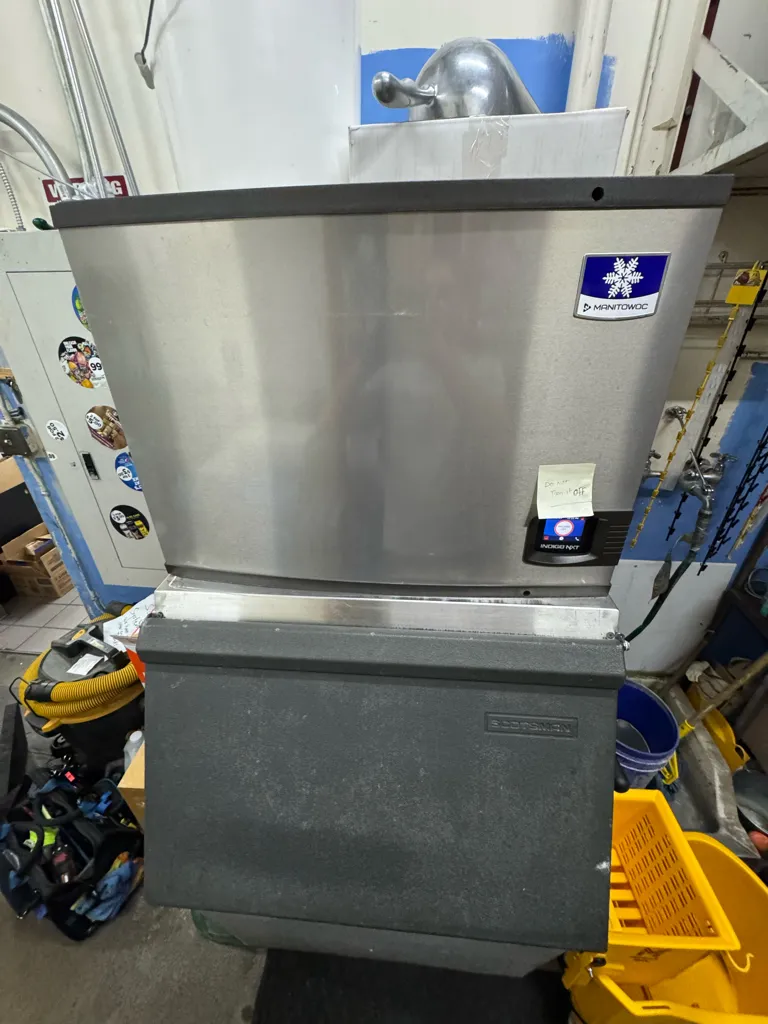
Ice is food. It goes into drinks, onto seafood displays and into patient and guest cups, so the machine that makes it needs the same attention as any other food-contact equipment. A neglected ice machine can grow slime, build up mineral scale, make cloudy or slow-dropping ice and eventually shut itself down.
This article covers what manufacturers generally recommend for cleaning and sanitizing, why water quality changes that schedule, and the simple checks your staff can do between professional visits.
Cleaning versus sanitizing
These are two separate steps, and both matter.
Cleaning, sometimes called descaling or delimiting, uses a manufacturer-approved ice machine cleaner to dissolve mineral scale from the evaporator, water trough, distribution tubes and other parts that touch water.
Sanitizing uses an approved sanitizer to kill bacteria and reduce the slime and biofilm that can grow in the dark, damp parts of the machine and bin. Cleaning without sanitizing leaves microbes behind. Sanitizing a scaled machine is less effective because biofilm hides in the scale.
How often: start with the manufacturer
Every ice machine model has its own care instructions, and those come first. As one example, Manitowoc's service manual for its S-series machines calls for a full cleaning and sanitizing at least once every six months, and notes that local water conditions may call for more frequent cleaning in between. The same manual includes a separate, more aggressive procedure for heavily scaled machines.
Many other manufacturers publish similar minimum intervals. Treat the printed interval as the minimum, not the target. If your machine shows signs of scale or slime before the next scheduled cleaning, it is due now.
Use only the cleaner and sanitizer the manufacturer approves for your model. Some evaporator surfaces are damaged by the wrong chemical, and mixing cleaner and sanitizer together can create hazardous fumes. Discard all ice made during the cleaning process.
Why Front Range water changes the schedule
Ice machines concentrate whatever minerals are in the incoming water. As water freezes on the evaporator, minerals are left behind in the trough and on surfaces. Over time that becomes scale, a hard white or tan coating.
Water quality across the Denver metro and Front Range varies by utility, by source and sometimes by season. Some locations see more scale than others. The practical answer is to check your water utility's annual water quality report and, more importantly, watch your machine. How quickly scale returns after a cleaning tells you how often you need to clean.
Scale is not just cosmetic. It insulates the evaporator, which slows freezing and harvest, reduces ice production and can cause the machine to fail to harvest or trip a safety shutdown.
The role of water filtration
A water filter rated for ice machines does several jobs: it removes sediment that can clog valves and distribution tubes, can reduce chlorine taste and odor, and many systems add a scale inhibitor that slows mineral buildup.
Filters only help if cartridges are changed on schedule. An expired cartridge can restrict water flow, which causes its own problems with ice production. Write the install date on the housing and follow the filter maker's change interval or capacity rating, whichever comes first.
Signs your ice machine needs cleaning now
- White or tan scale on the evaporator, water trough or curtain
- Pink, black or slimy residue in the bin, on the deflector or around the water curtain
- Cloudy, soft, thin or misshapen cubes
- Ice that tastes or smells off
- Slower production or ice sheets that do not release cleanly
- The machine shutting down on a safety or harvest error
Weekly and monthly checks for staff
Between full cleanings, a few simple habits help a lot.
- Keep the bin door closed and use a dedicated ice scoop stored outside the ice, in a clean holder.
- Never store food, drinks or anything else in the ice bin.
- Wipe the outside of the bin door and the scoop holder regularly.
- Check the air-cooled condenser or air filter (on models that have one) and clear dust and lint. Kitchen grease and Front Range dust can block airflow quickly.
- Make sure the area around the machine is not blocked and the room is not unusually hot.
- Look at the drain and confirm water is flowing freely and not backing up.
What a professional cleaning adds
A technician can disassemble the parts that staff should not, such as distribution tubes, water pumps and probes, and clean them properly. During the visit they can also check water inlet valves, float or level sensors, harvest controls and the condenser, and spot early signs of wear before they become a no-ice emergency.
Refrigerant-side work on ice machines requires EPA Section 608 certification. It is also worth knowing that EPA's 2024 HFC rule calls for servicing automatic commercial ice makers with reclaimed HFC refrigerant beginning January 1, 2029, which is one more reason to keep refrigerant-side work with a qualified technician.
A note on new machines
If you are shopping for a replacement, the refrigerant inside will be different from older units. Under EPA's Technology Transitions rule, new self-contained commercial ice machines in the smaller size classes must use refrigerants with a global warming potential of 150 or less as of January 1, 2026. Larger machines face their own restrictions starting January 1, 2027.
If your ice machine is scaling up quickly, making poor ice or shutting down, ABC Denver Appliance Repair can clean, inspect and repair it. The service call fee is waived when you approve the repair, and repairs carry a 90-day warranty.