Home / Commercial appliances / Commercial Refrigerators
Commercial equipmentCommercial Refrigerator and Freezer Repair in Denver
When a reach-in or prep table starts drifting above 41°F, you are on the clock: product has to be moved, logged or thrown out, and a health inspector will not care that the unit was fine yesterday. ABC Denver Appliance Repair services self-contained commercial refrigeration across the Denver metro, from sandwich-prep units on a busy line to glass-door merchandisers in a convenience store or office breakroom. We offer same-day or next-day appointments, give you a written quote before any work starts, and back our repairs with a 90-day parts-and-labor warranty.
Request business service
We reply during business hours (Mon–Sat 7am–7pm · Sun 8am–6pm). Urgent? Call (720) 534-0432.
Common commercial refrigerators problems we fix
Reach-in cooler not holding 41°F
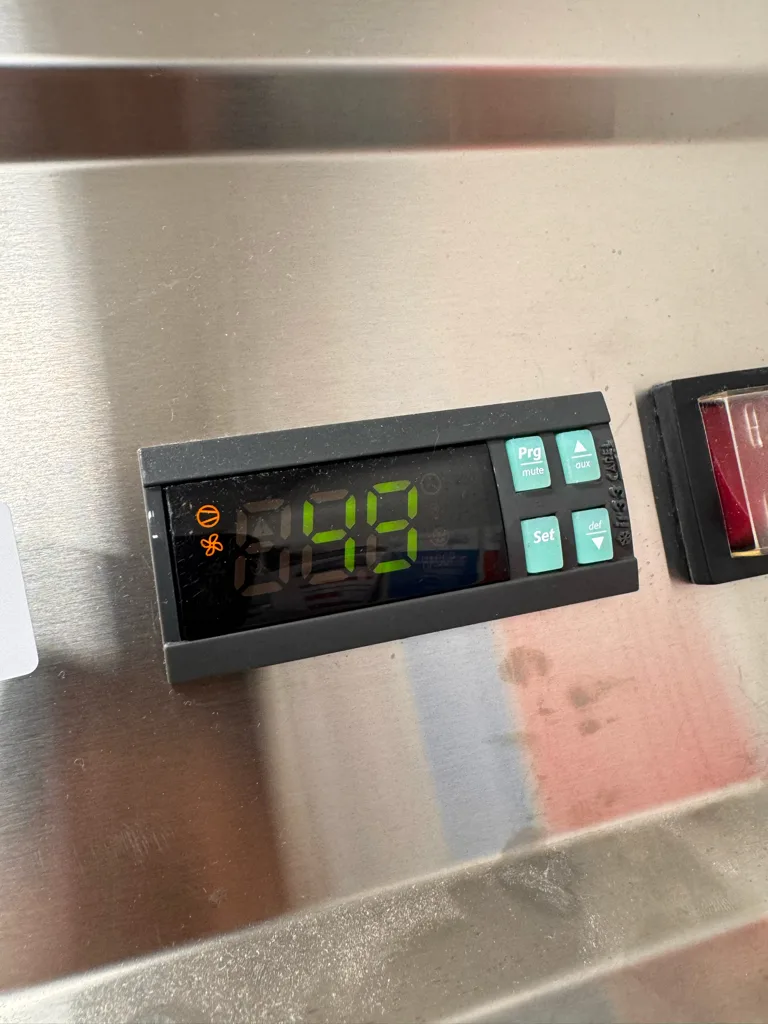
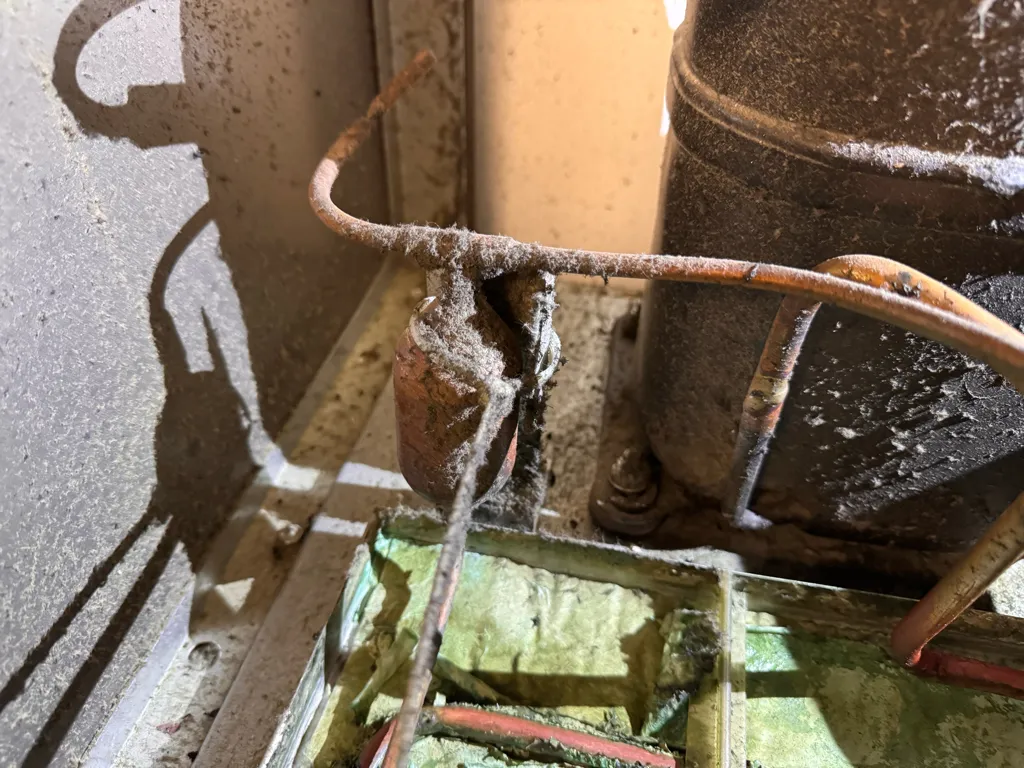
The most common causes are a dirty condenser coil, a failing condenser or evaporator fan motor, a worn door gasket, or a defrost problem that has iced over the evaporator. The technician checks cabinet and coil temperatures, amp draw on the compressor and fans, airflow across both coils and the defrost cycle before recommending a part. Kitchens run hot, so a condenser packed with grease and flour dust is often the first thing we find.
From our jobs


Commercial freezer frosting up or not defrosting
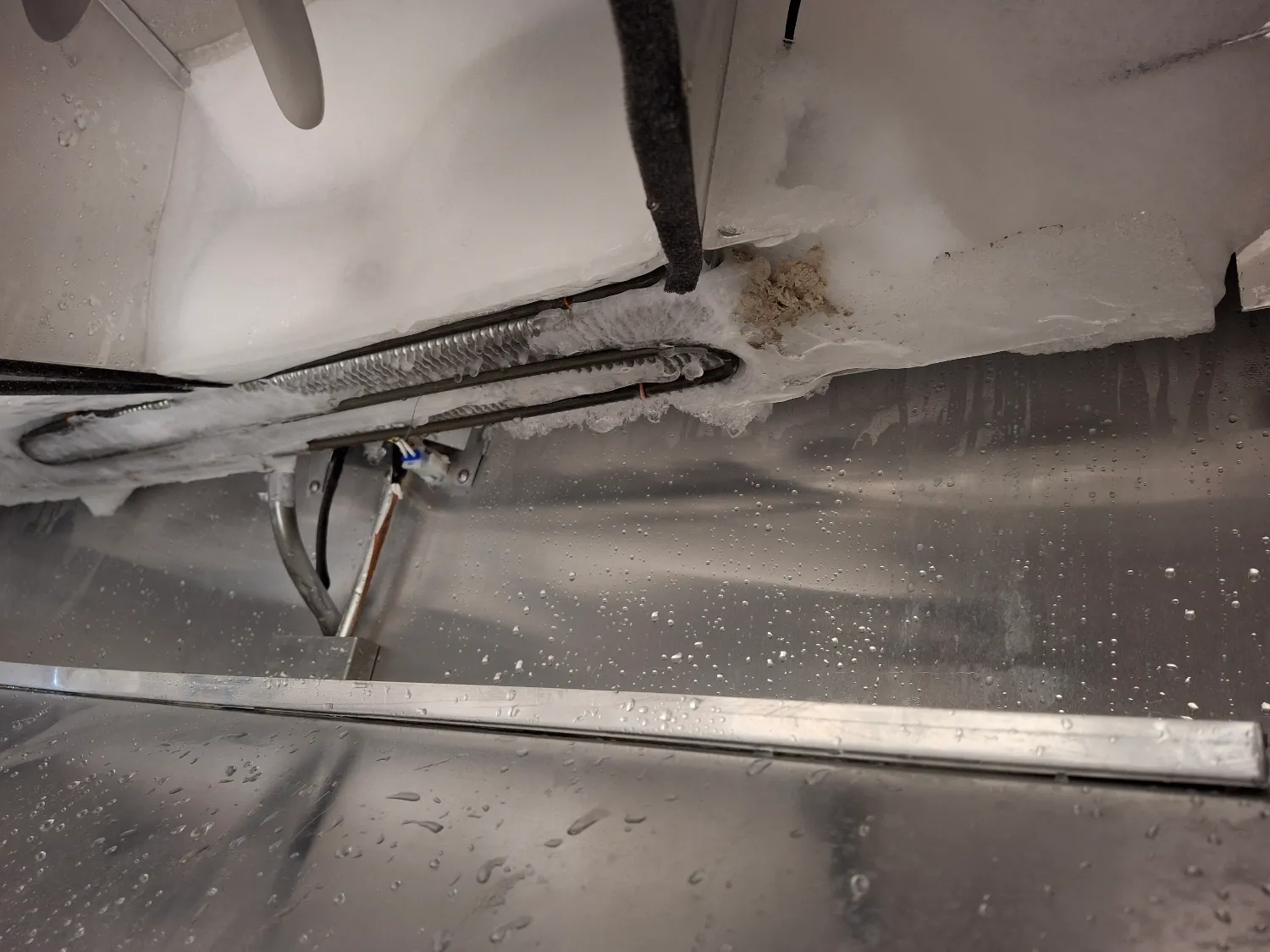
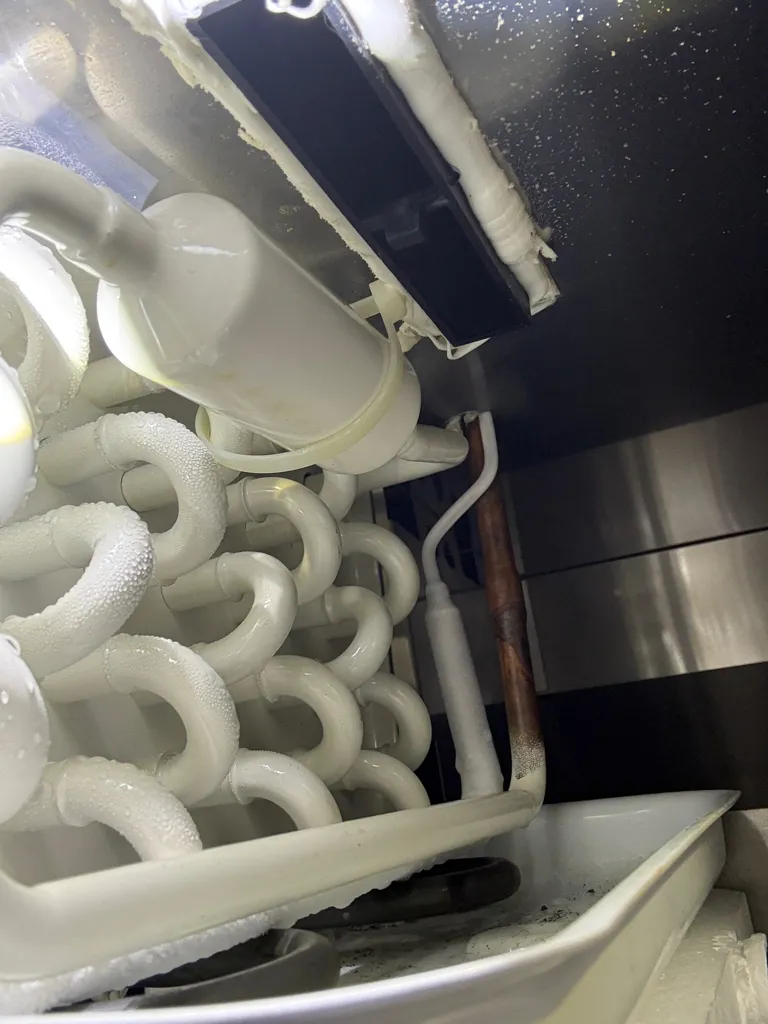
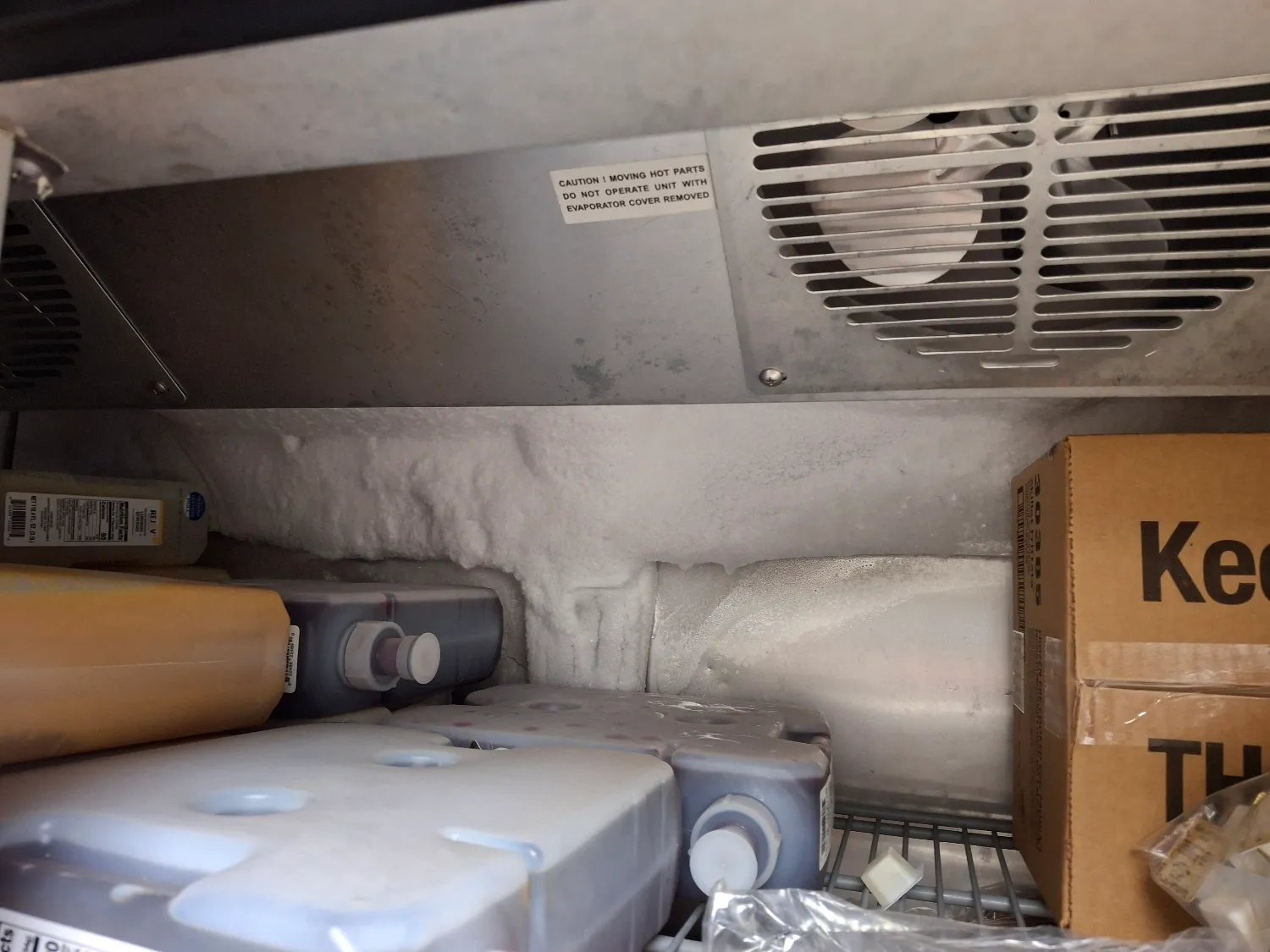
Heavy frost on the evaporator usually points to a failed defrost heater, defrost termination thermostat, defrost timer or control board, or a door that is not sealing and letting humid air in. We test each defrost component, look at the drain line and drain heater, and check the door closer and gasket. Repeated manual defrosting only buys time; the failed part has to be found.
From our jobs
Prep table or sandwich unit warm at the rail
Prep-table pans sit in the warmest part of the cabinet, so small airflow problems show up there first. We look for blocked air ducts behind the pan rail, a weak fan, a dirty condenser under the unit, lids left open during service, and pans overfilled above the cold zone. Some units have a separate rail thermostat or fan that also gets checked.
Under-counter refrigerator running constantly
Under-counter units breathe through a small front grille, so anything that blocks it or traps heat around the cabinet makes the compressor run without stopping. The technician cleans and checks the condenser, verifies fan operation, tests the thermostat or temperature sensor, and checks for a low refrigerant charge or a weak compressor if the basics check out.
Commercial refrigerator leaking water on the floor
Water on the floor usually comes from a clogged evaporator drain, a cracked or misaligned drain pan, a failed condensate evaporator heater, or ice from a defrost problem melting all at once. We clear and test the drain path, check the pan and heater, and fix the root cause so you are not mopping again next week.
Compressor clicking, humming or not starting
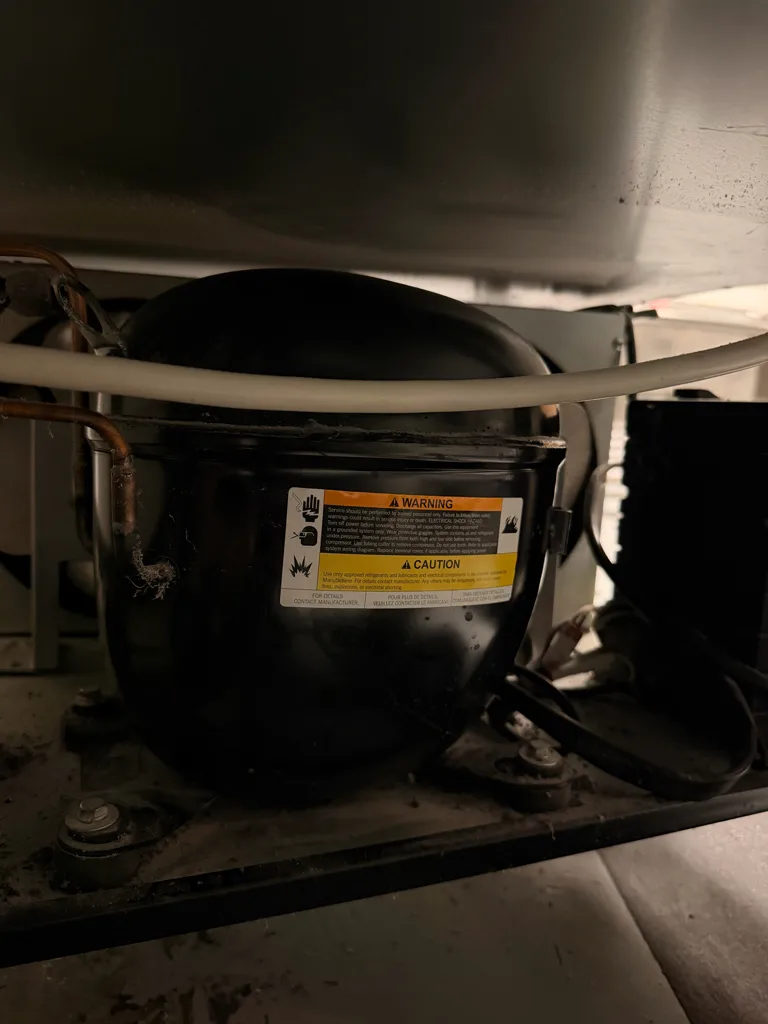
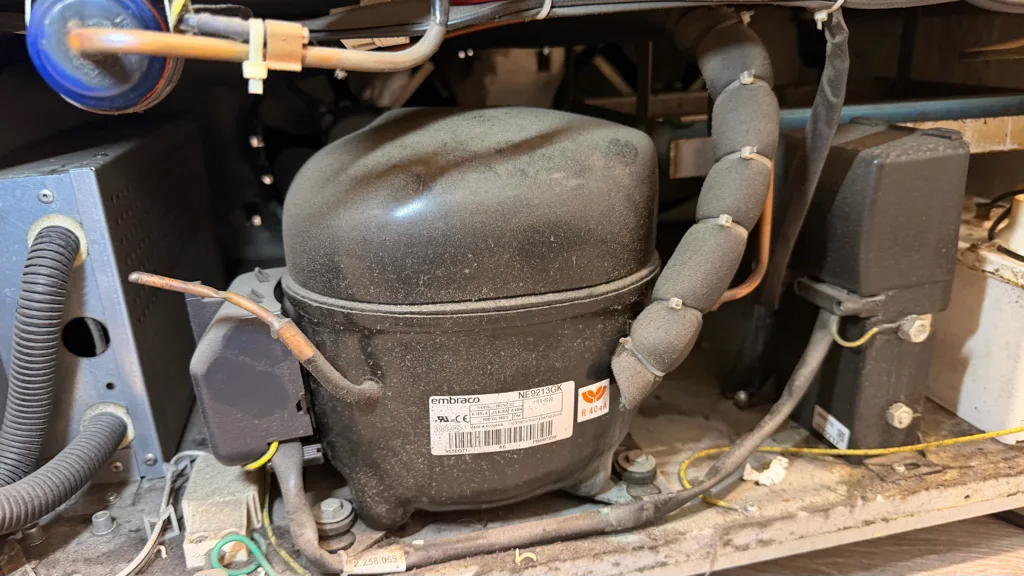
A compressor that clicks on and off or hums without starting may have a failed start relay, overload or start capacitor, a power supply issue, or an internal fault. We measure voltage and amp draw and test the start components first, because those are far cheaper than a compressor. If the problem is inside the sealed system, the quote will say so plainly.
From our jobs
Door gasket torn or door not closing
A split gasket or a door that does not self-close lets warm, moist air in all shift long, which leads to frost, sweating and high box temperatures. We replace gaskets, adjust or replace hinges and cam closers, and check door heaters on freezer and glass-door units where condensation forms on the frame.
Glass-door merchandiser sweating or lights out
Fogging and condensation on merchandiser doors often trace to a failed door or frame heater, an anti-sweat control set wrong, or a seal that no longer meets the frame. We also replace failed lighting, ballasts and LED drivers so product stays visible to customers.
Equipment covered
Before the technician arrives, tell us the make, model and what the cabinet thermometer is reading, so we can bring the right parts for the most likely failures. On site, the technician checks box and coil temperatures, condenser and fan condition, electrical draw and the defrost system, then gives you a written quote before any repair begins. Many refrigeration repairs, such as fan motors, gaskets, start components and thermostats, can be finished on the first visit because common parts ride on the truck.
- Reach-in refrigerators and freezers (one, two and three door)
- Under-counter refrigerators and freezers
- Sandwich and salad prep tables
- Pizza prep tables
- Refrigerated chef bases and worktop units
- Glass-door merchandisers and beverage coolers
- Back-bar coolers and bottle coolers
- Roll-in and pass-through refrigerators
- Commercial chest and upright freezers
Between visits: what your staff can do
- Clean the condenser coil every one to three months with a stiff brush and vacuum, more often in a bakery or near the fryer line.
- Keep a few inches of clearance around the condenser grille and do not store boxes against vents or under-counter intakes.
- Check door gaskets weekly for tears and clean them with warm soapy water; a dollar-bill test shows weak spots.
- Do not overload shelves or block the evaporator fan; cold air has to circulate to reach every pan.
- Log cabinet temperatures at opening and mid-shift so you catch a slow drift before it becomes a 41°F problem.
- Keep the evaporator drain clear and empty or clean the drain pan as part of the deep-clean schedule.
Repair or replace?
Fans, gaskets, thermostats, defrost parts and start components are almost always worth repairing, even on older units. A failed compressor or a refrigerant leak in a coil on an older, inexpensive reach-in can cost a large share of a new unit, and in that case we will tell you so and price the repair honestly so you can compare. Repeated sealed-system failures, a rusted-out cabinet, or a unit that is too small for your current volume are all good reasons to replace instead.
Guides
Who we do this for
Commercial Refrigerators brands we repair
More photos from our jobs
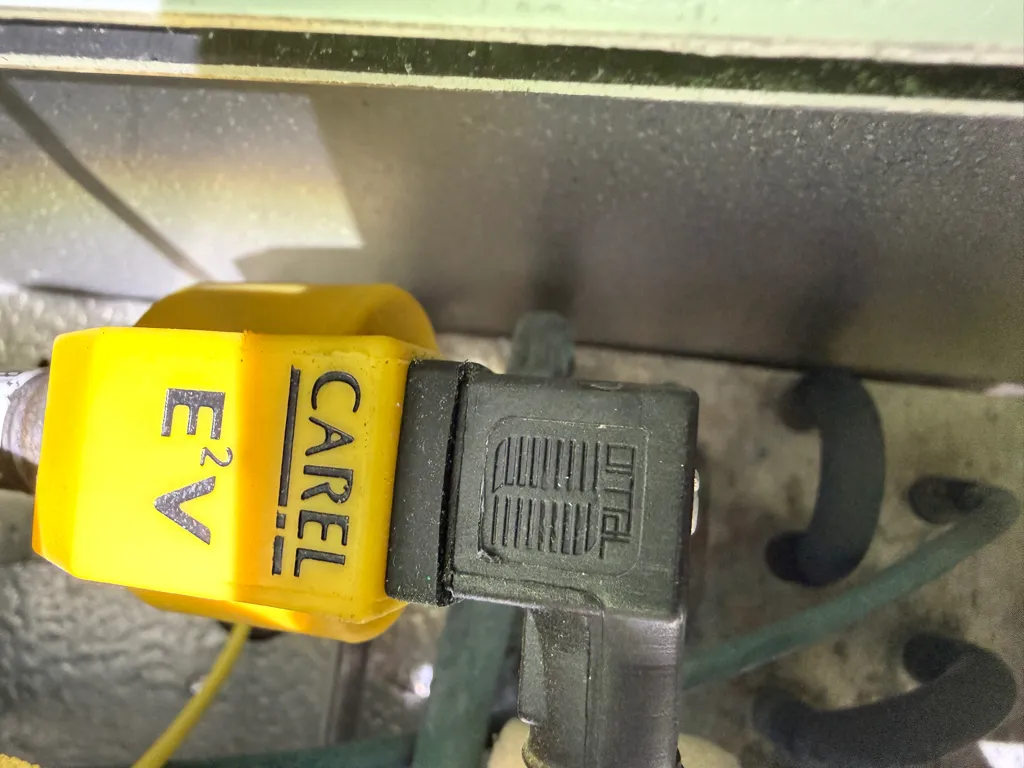
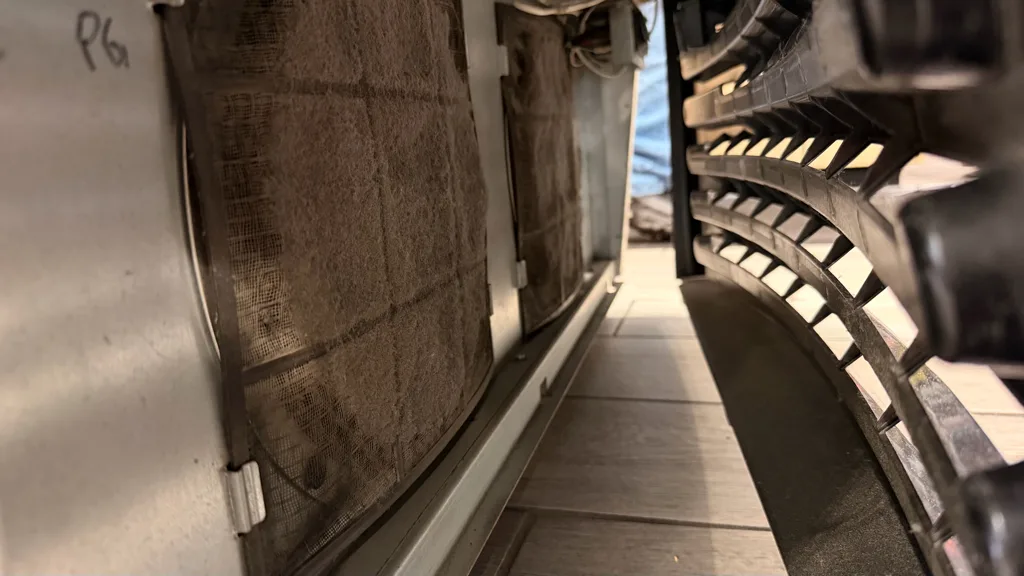
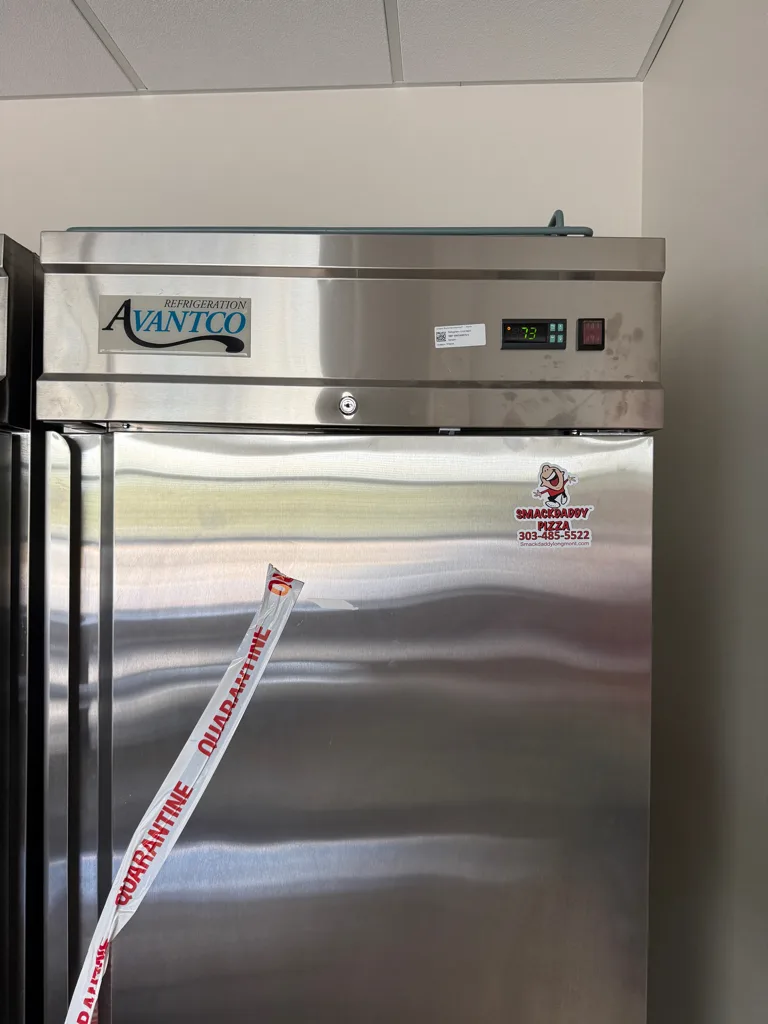
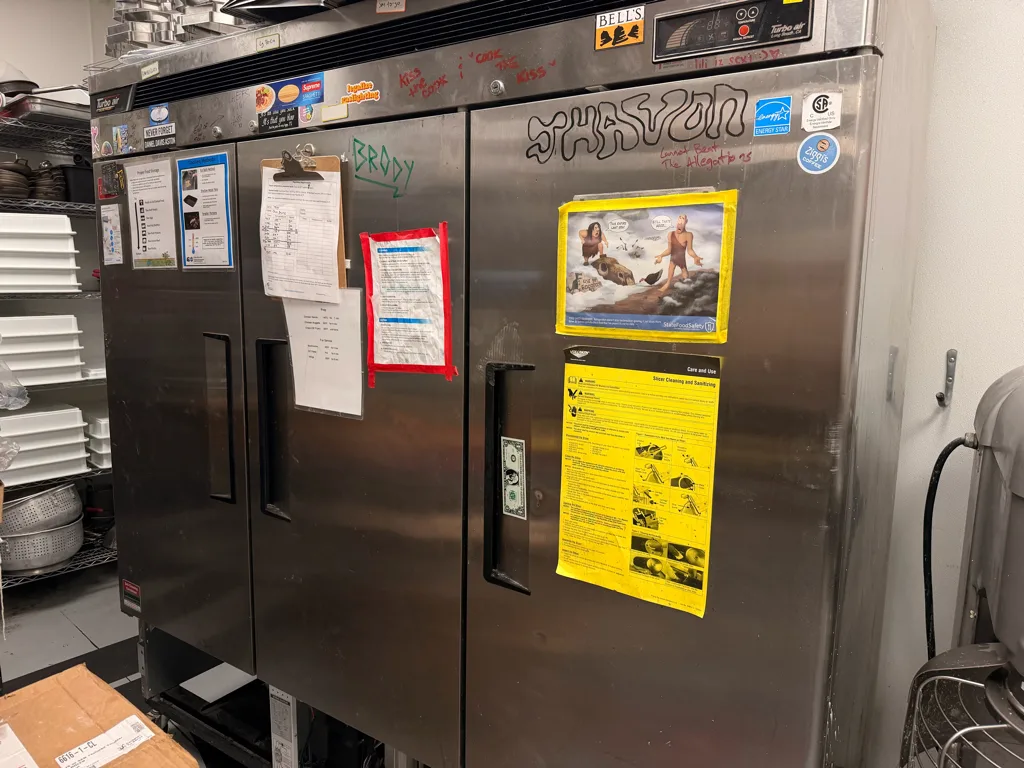
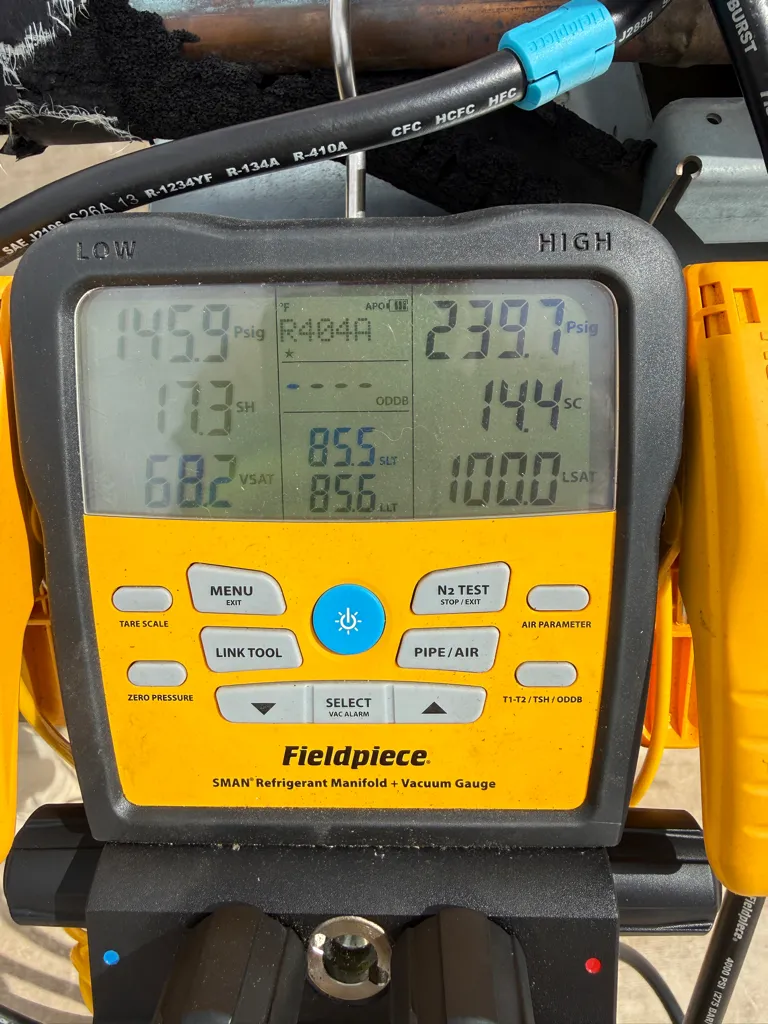
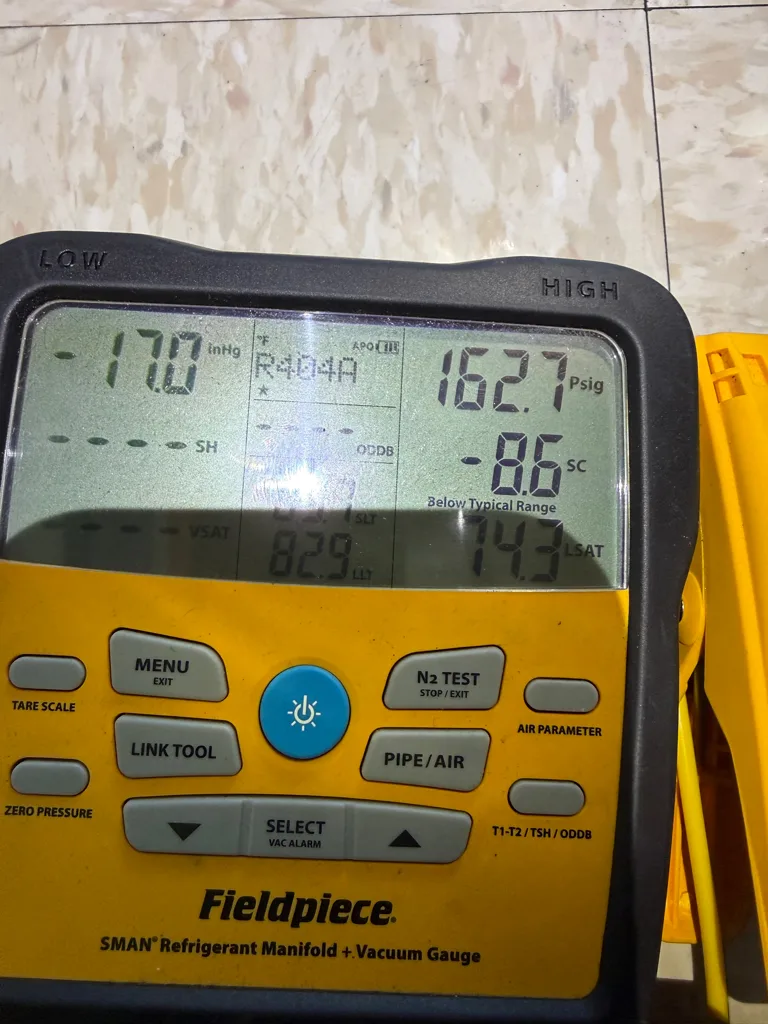
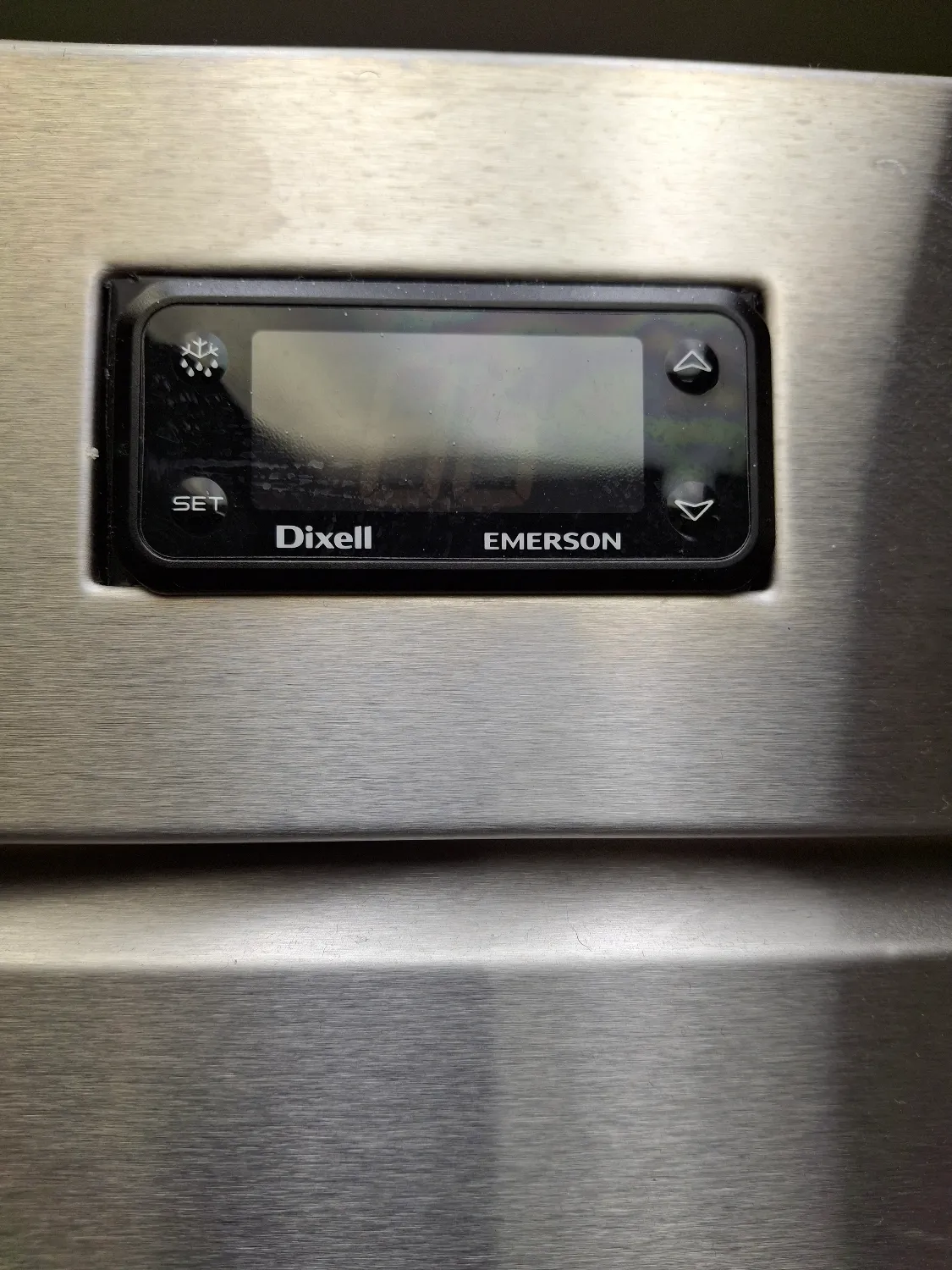
Photos from our own service calls in the Denver metro — not stock images. Case: Commercial cooler diagnosis with controller and board testing · Case: Turbo Air reach-in freezer refrigerant leak repair · Case: Hotel kitchen reach-in refrigerator defrost repair · Case: Restaurant freezer fan motor replacement · All job photos →



How a service call works
Request
Call, text or send the form. Tell us the location and the equipment.
Diagnose & quote
A technician arrives same or next day and gives a written quote before any work.
Repair & report
You get a photo report and an invoice your office can file the same day.
Commercial Refrigerators: common questions
What temperature should a commercial refrigerator hold?
Under the FDA Food Code, which Colorado has adopted, cold-held foods must be kept at 41°F or below. Most operators set reach-ins a few degrees lower to allow for door openings. If a unit cannot stay at or below 41°F with normal use, it needs service.
Can you fix a refrigerator that is low on refrigerant?
A low charge almost always means there is a leak, so simply adding refrigerant is not a real repair. Federal rules require refrigerant work to be done by an EPA Section 608 certified technician. Your written quote will spell out whether the problem is in the sealed system and what fixing it properly involves.
How fast can you get to my restaurant?
We offer same-day or next-day appointments across the Denver metro and Front Range, including Aurora, Lakewood and Englewood. Call early in the day and have the model number ready, and tell us if food safety is at risk so we can plan accordingly.
Do you charge for the diagnostic visit?
There is a service call fee, and it is waived when you go ahead with the repair. You get a written quote before any work begins, so there are no surprises on the invoice.
Which brands do you work on?
We service most major commercial refrigeration brands, including True, Beverage-Air and Turbo Air. If you are not sure about your unit, send us the make and model from the data plate inside the cabinet and we will confirm.
Commercial Refrigerators service across the Denver metro
Other equipment we repair
Walk-in Coolers
Walk-in cooler repair for restaurants, hotels and schools: warm boxes, iced coils, leaks and door seals. Same-day or next-day visits and a written quote.
See service →Walk-in Freezers
Walk-in freezer repair for kitchens, hotels and schools: defrost failures, iced floors, frozen doors and warm boxes. Same-day or next-day service.
See service →Ice Machines
Ice machine repair, descaling and sanitizing for Denver restaurants, bars and hotels. Cubers, nugget and flake units. Written quotes and a 90-day warranty.
See service →Commercial Washers & Dryers
Laundromat, multi-housing and on-premise laundry washer and dryer repair in Denver. Front-loaders, top-loaders and stack dryers. Written quotes up front.
See service →Commercial Ovens & Ranges
Commercial range, convection oven, griddle and charbroiler repair in Denver. Ignition and thermostat fixes, written quotes, 90-day warranty. Book today.
See service →Commercial Dishwashers
Door-type, under-counter and conveyor dishwasher repair in Denver. Rinse temperature, booster heater and chemical feed problems fixed. Written quotes.
See service →