Some frost inside a walk-in freezer is normal. A thick white block on the evaporator coil, ice building on the floor, or a door that freezes shut is not. Ice is a symptom, and it usually points to one of a handful of causes: moisture getting in, water not draining out, or a defrost system that is not doing its job.
This guide explains where freezer ice comes from, how to read the clues, and what kitchen and facility staff should and should not do before a technician arrives.
Where the ice comes from
Every time the door opens, warm air carrying moisture enters the box. That moisture has to go somewhere. The coldest surface in the freezer is the evaporator coil, so most of it freezes there as frost.
A freezer evaporator is designed to handle that. On a schedule, the system stops cooling, heaters (or hot refrigerant gas on some systems) warm the coil, the frost melts, and the water runs into a drain pan and out a heated drain line. Then the fans and compressor restart.
Ice problems start when more moisture comes in than the defrost cycle can remove, or when defrost happens but the water cannot leave.
Cause 1: A defrost system that is not working
If the coil is encased in ice from top to bottom and the box is warming up, defrost is the first suspect. Common failures include a burned-out defrost heater, a failed defrost timer or electronic controller, a bad defrost termination sensor, or settings that were changed and never put back.
When defrost fails, frost builds layer on layer until air can no longer pass through the coil. The fans keep running but move little cold air, and the box temperature climbs even though the compressor may still be running.
Diagnosing defrost components requires electrical testing and, often, refrigerant pressure readings. This is technician work.
Cause 2: A blocked or frozen drain line
Sometimes defrost works fine but the meltwater has nowhere to go. A drain line that is clogged, not pitched properly, or missing a working heater can freeze solid. Water then backs up into the drain pan, overflows and refreezes on the bottom of the coil and on the floor beneath it.
A telltale sign is ice concentrated at the bottom of the evaporator and an icicle or ice mound under the unit, while the upper part of the coil looks relatively clear.
Cause 3: Door, gasket and heater problems
Air leaks around the door are a major source of moisture. A torn or flattened gasket, a door that sags on its hinges, or a closer that no longer pulls the door shut all let humid air stream in continuously.
Freezer doors also rely on heater wires in the frame and sometimes around the gasket. These keep the gasket from freezing to the frame and keep condensation from forming. If a heater fails, you may see frost or ice around the frame, a door that sticks, and gaskets that tear when staff yank the door open.
Look for frost lines around the door perimeter, ice on the threshold, or a door that does not swing shut on its own.
Cause 4: Humidity and how the box is used
Denver's air is generally dry, which helps, but kitchens are not. Dish areas, steam tables and open kettles near the freezer door raise local humidity. Summer storms and swamp coolers in older buildings can add more.
Usage matters as much as weather. Propping the door open during deliveries, missing or tied-back strip curtains, and loading large amounts of warm product at once all bring in moisture faster than the system was designed to remove it.
Cause 5: Fan and airflow problems
If an evaporator fan motor fails, the coil gets colder in one spot and frost builds unevenly. Product stacked against the evaporator or blocking its airflow has a similar effect. A refrigerant charge problem can also show up as uneven frost patterns on the coil, which a technician can diagnose with gauges.
What staff should do when they see ice
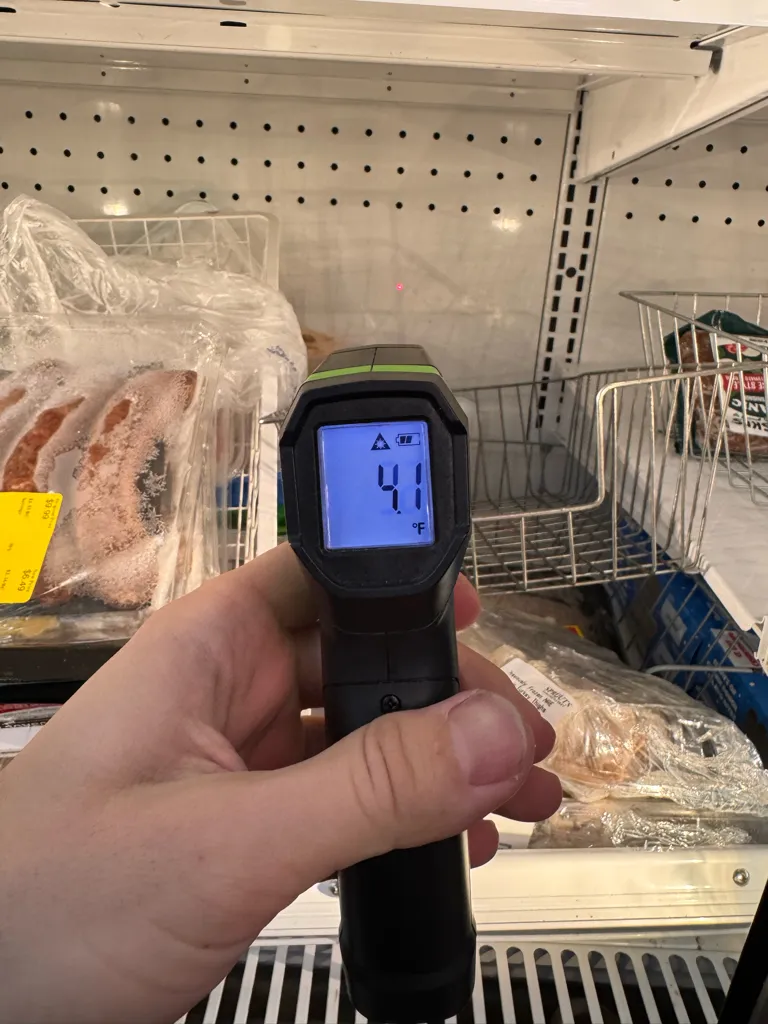
- Check and write down the box temperature using a reliable thermometer. FDA guidance for freezers is 0°F, so note how far off you are.
- Look at where the ice is: whole coil, bottom of the coil and drain area, or door frame. Take a photo for the technician.
- Keep the door closed as much as possible and make sure strip curtains are in place.
- Clear product away from the evaporator so air can move.
- If the box is warming, move the most temperature-sensitive product to another freezer.
- Call for service and describe what you see, including any recent changes like a power outage or settings adjustment.
What staff should not do
A technician may perform a controlled manual defrost to clear the coil, then find and fix the reason it iced up. Clearing the ice without fixing the cause usually means you will see it again within days.
- Do not chip or pry ice off the coil with knives, screwdrivers or ice picks. Coils and refrigerant lines puncture easily, and a leak turns an ice problem into a much larger repair.
- Do not use propane torches or heat guns near the coil, wiring or plastic components.
- Do not repeatedly adjust the thermostat or defrost settings hoping it will fix itself. That can mask the real problem.
- Do not ignore water on the floor. Ice on a walk-in floor is a slip hazard for your staff.
Prevention
Most icing problems are cut down by a few habits: keep the door closed and the closer working, replace damaged gaskets and strip curtains promptly, keep the drain pan clean, and have defrost settings, heaters and the drain line heater checked during routine maintenance.
If your walk-in freezer is icing up or losing temperature, ABC Denver Appliance Repair can diagnose the defrost system, drain, door heaters and refrigeration side. The service call fee is waived when you approve the repair, and repairs carry a 90-day warranty.