Home / Commercial appliances / Commercial Dishwashers

Commercial equipment

Commercial Dishwasher Repair in Denver

When the dish machine goes down, the whole kitchen backs up, and when it runs but does not sanitize, you have a health-code problem you may not notice until an inspection. ABC Denver Appliance Repair repairs high-temp and low-temp commercial dishwashers, including under-counter, door-type and conveyor machines, along with their booster heaters and chemical feed connections. We offer same-day or next-day appointments across the Denver metro, a written quote before any work and a 90-day parts-and-labor warranty.

Commercial service call$129
Waived when you approve the repairWritten quote before any work · same- or next-day appointments · 90-day warranty on parts and labor

4.8 ★  71 Google reviews

Request business service

We reply during business hours (Mon–Sat 7am–7pm · Sun 8am–6pm). Urgent? Call (720) 534-0432.

Same / next-day dispatchPriority slots for contract clients
90-day warrantyOn every repair, parts and labor
Service call waivedWhen you go ahead with the repair
EPA 608 certifiedTechnicians licensed for refrigerant work
Insured, COI on requestReady for vendor onboarding
W-9 & invoicingNet-30 terms for approved accounts

Commercial dishwashers work harder than any other machine in a kitchen or bar. A busy undercounter unit can run dozens of racks a day, and if it stops sanitizing, the kitchen has a health-code problem, not just a dirty-dish problem.

Below is how we diagnose and repair commercial dishwashers around Denver, with photos and notes from our own jobs.

From our jobs

Commercial dishwasher jobs from our records

01A small dishwasher-sanitizer that leaked and stopped sanitizing

In Boulder, a small commercial dishwasher and sanitizer was making noise during the wash cycle, leaking water and no longer dispensing sanitizer. On chemical-sanitizing machines, the sanitizer, detergent and rinse aid are fed by small peristaltic pumps that squeeze a flexible tube. Over time the tube hardens and cracks, and the pump stops moving chemical even though the motor still turns. We replaced the peristaltic pump tube and the drain hose.
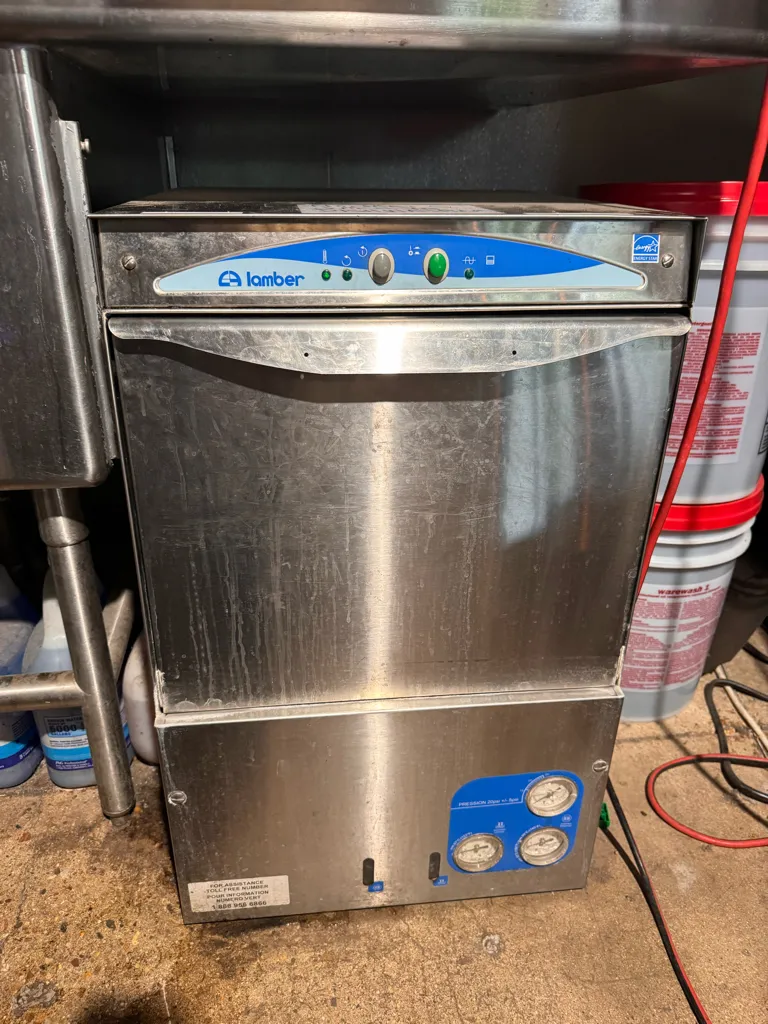
Small commercial dishwasher-sanitizer in Boulder after a pump tube and drain hose repair

02An installation that stopped before it started

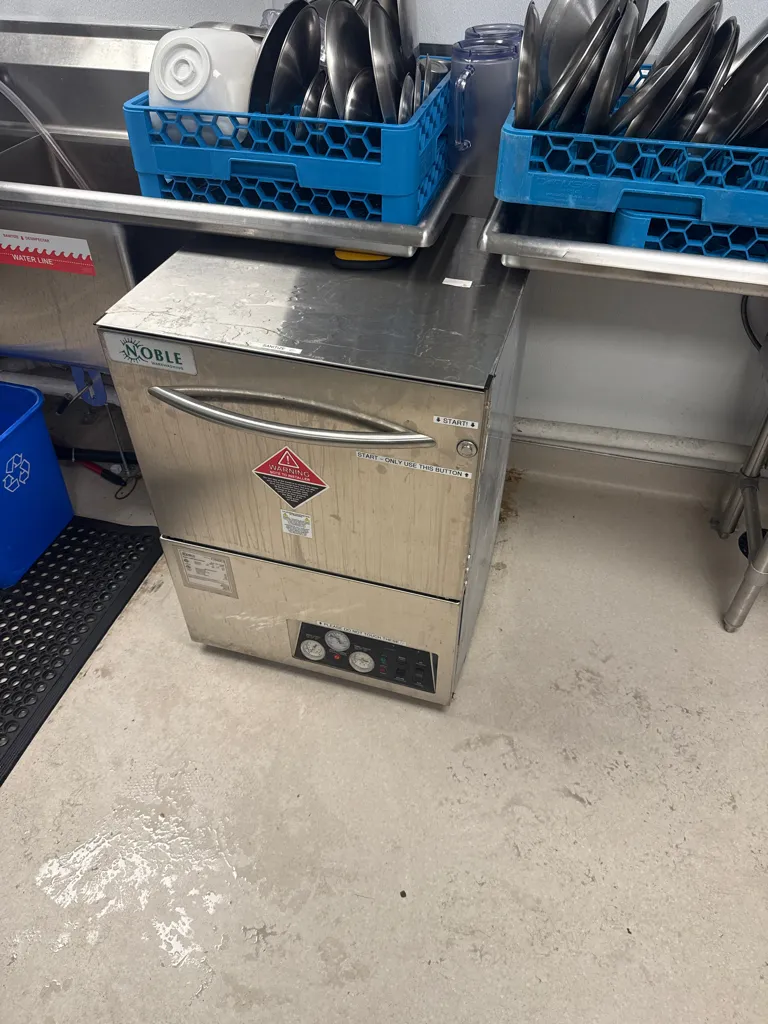
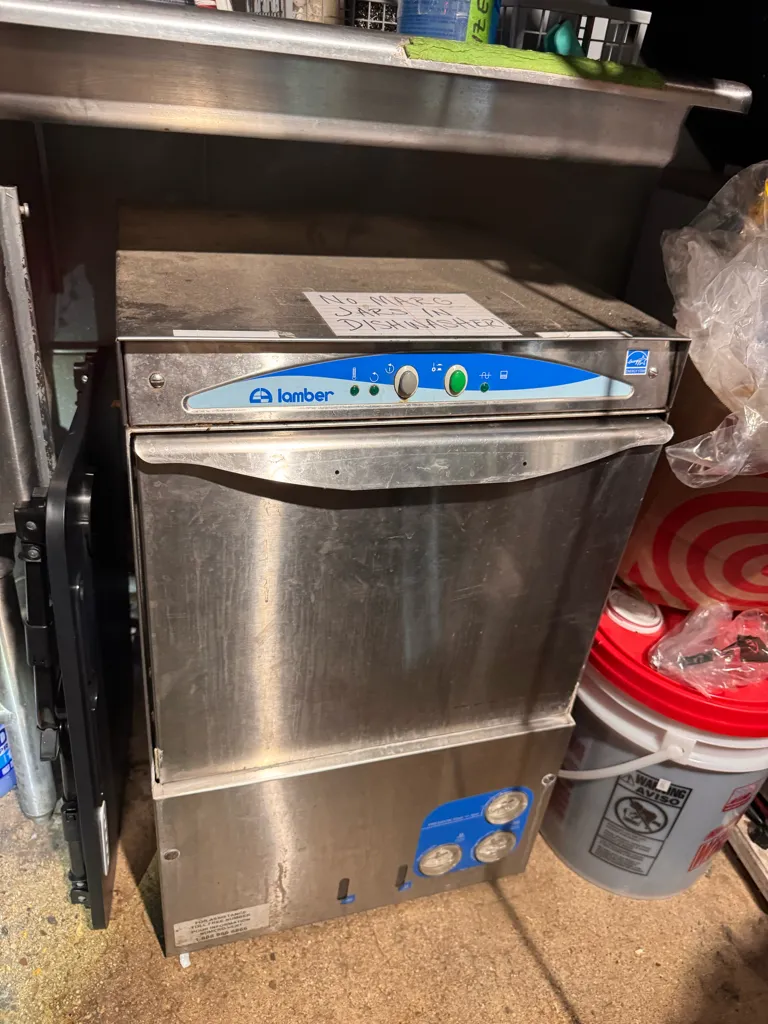
Also in Boulder, we were booked to install a new commercial dishwasher at a business. When we checked the electrical, the old machine had run on single-phase power, but the new model required a three-phase supply. Connecting it anyway could have damaged the machine, so the installation could not go ahead until the right model or the right power supply was in place. Checking voltage, phase, amperage, water supply and drain before installation is part of every commercial install we do.

Commercial dishwasher front panel and controls at a Boulder business

03Multi-appliance service at one property

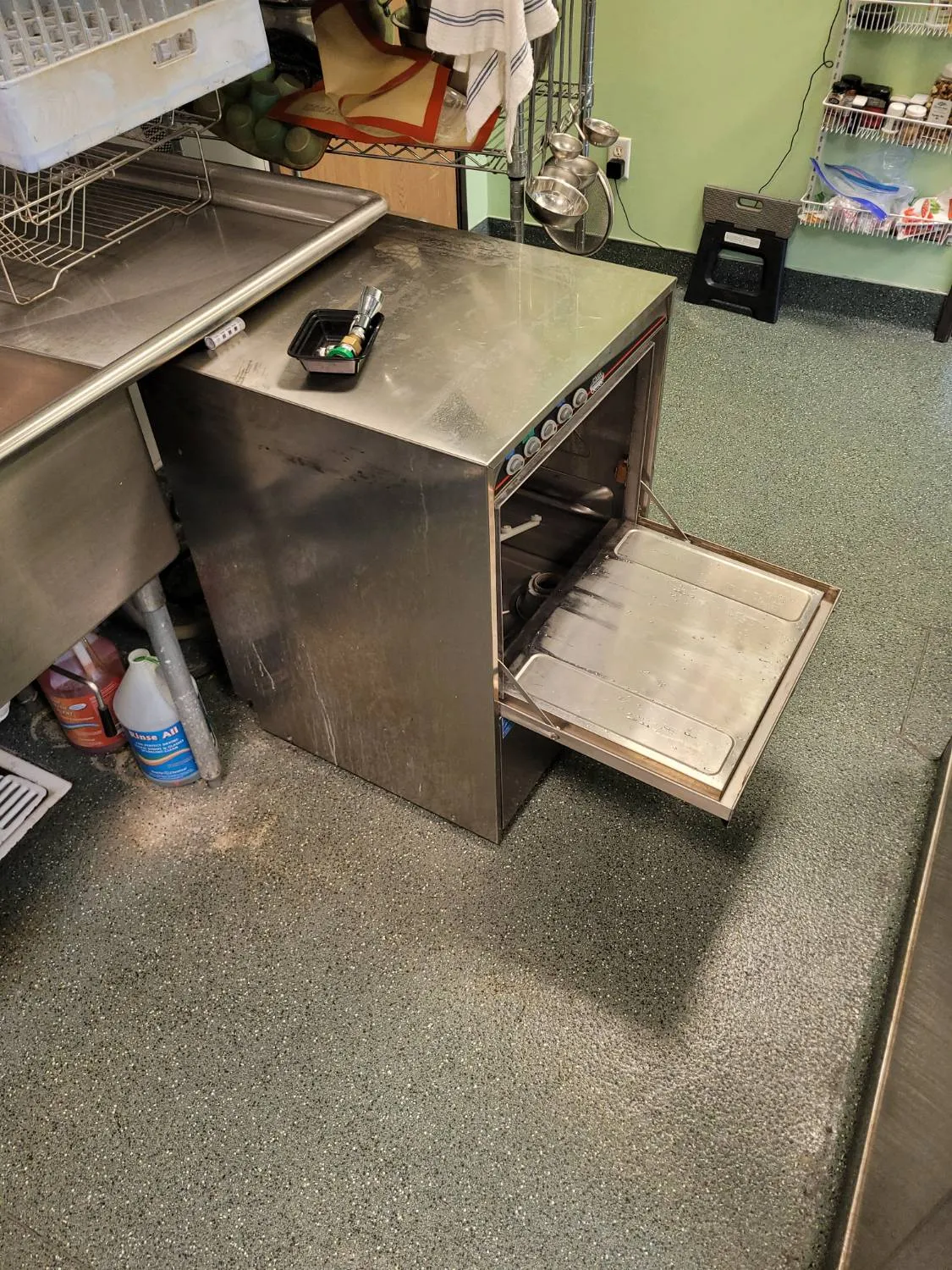
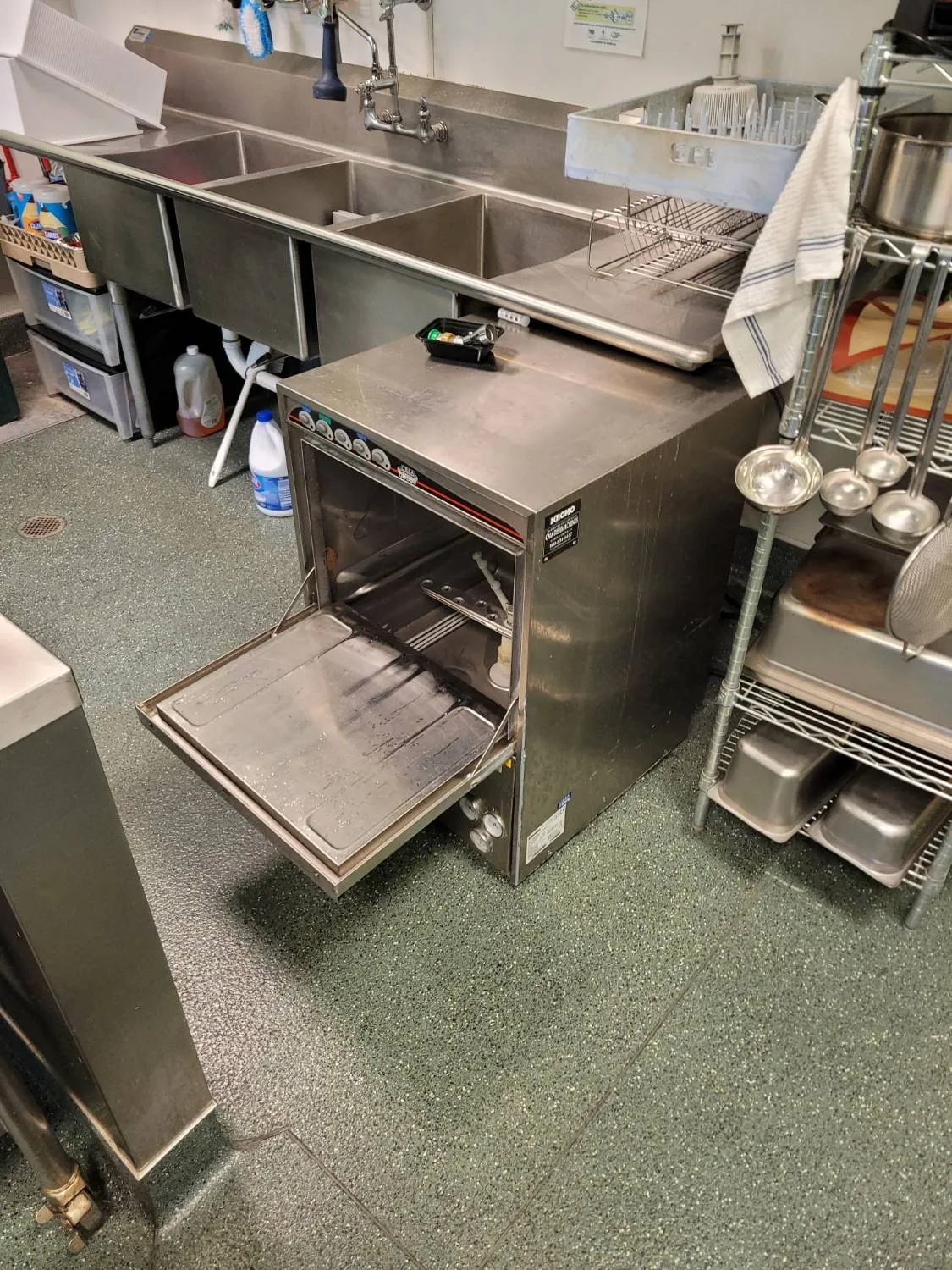
In Denver we serviced seven appliances at one property in a single visit: three refrigerators got condenser cleaning, and a dishwasher needed repair on its drain system. Booking several machines together saves a second trip and lets us spot shared problems, such as a drain line or a water supply issue that affects more than one unit.

How they work

High-temp and low-temp commercial dishwashers

04Two ways to sanitize

High-temperature machines sanitize with heat. They wash with hot water and finish with a very hot final rinse, usually supplied by a booster heater. Under the FDA Food Code that final rinse typically needs to reach 180°F at the manifold, or 165°F on some single-tank, stationary-rack machines. If the booster heater or its thermostat fails, the dishes look clean but are not sanitized.

Low-temperature machines sanitize with chemicals, usually chlorine, fed by pumps into the final rinse. They run cooler and need no booster, but the chemical has to be there in the right strength every cycle. Test strips are the simplest daily check; the reading should fall in the range listed on the machine's data plate.

05Undercounter, door-type and conveyor

Undercounter units are common in bars, cafes, offices and small restaurants. Door-type machines, where racks slide in at counter height, are the workhorses of most restaurants. Conveyor machines move racks through continuously in large kitchens. The parts that fail are similar across all three: wash pumps, drain pumps or valves, fill solenoids, heaters and thermostats, door switches, wash and rinse arms, and chemical pumps.

Symptoms

Commercial dishwasher problems and their usual causes

06Dishes come out dirty or spotty

Clogged wash arms, a worn wash pump, low wash temperature or the wrong detergent feed. Scale from hard water also coats arms and heaters and cuts performance. We check temperatures with a thermometer, clean or replace arms and check the chemical feed before replacing major parts.

07No sanitizer, low rinse temperature

On low-temp machines: a cracked peristaltic tube, an empty or kinked chemical line, or a failed chemical pump. On high-temp machines: a booster heater element, a thermostat, a high-limit or a contactor. These are the repairs to call about the same day, because the machine is not doing its job even if it still runs.

08Leaks, standing water and no fill

Leaks usually come from door gaskets, drain hoses, pump seals or a cracked hose. Standing water points to a blocked drain, a failed drain pump or a drain valve stuck closed. No fill or slow fill is a fill solenoid, a clogged inlet screen or low water pressure. Each one is testable on site.

Care

Daily and weekly care that prevents most service calls

09Simple habits

Scrape dishes before racking them; food on the racks ends up in the pump and drain. Empty and clean the scrap screens and filters at the end of every shift. Drain and refill the tank as the manufacturer recommends, and check the sanitizer strength or rinse temperature daily. Delime the machine on a schedule if your water leaves scale, and keep chemical containers full so pumps never run dry. Write down the rinse temperature or sanitizer reading each day; if it starts to drift, call before an inspection finds it.

Job records

Recent commercial dishwashers repairs in and around Denver

WhereApplianceProblemWhat we did
BoulderCommercial dishwasher-sanitizerNoisy, leaking, no sanitizerReplaced the peristaltic pump tube and drain hose
BoulderNew commercial dishwasherInstallationFound a three-phase machine for a single-phase supply; not connected
DenverDishwasher at a multi-appliance propertyDrain problemRepaired the drain system

Problems are described as the customer reported them; repairs are taken from the technician's notes. No customer details are published.

Tips from our technicians

How to avoid the next commercial dishwashers repair

Check the final rinse temperature or sanitizer strength every day and write it down.

Clean the scrap screens and filters at the end of every shift.

Who we are

ABC Denver Appliance Repair is an independent, local repair company. Our technicians are EPA 608-certified, carry common parts on the truck and test every repair before they leave. Every repair comes with a 90-day parts and labor warranty.

Problems we fix

Common commercial dishwashers problems we fix

Dishwasher final rinse not hot enough

High-temp machines sanitize with very hot final-rinse water, commonly 180°F at the rinse manifold on machines listed to NSF/ANSI 3, so check the data plate for your machine's required temperature. Low rinse temperature usually comes from a failed booster heater element, a bad thermostat or contactor, scale on the element, or incoming water that is too cool. We measure temperature at the manifold, test the booster and its controls, and check the supply water.

Book a technician

Wash tank not heating

If the wash tank will not come up to temperature, the tank heater element, thermostat, contactor, low-water safety or float may have failed. The technician tests each part in the heat circuit and verifies the tank fills to the level the safety requires before the heater will turn on.

Book a technician

Dishes coming out dirty or spotted

Poor results usually trace to clogged wash arms or nozzles, worn or missing end caps, a weak wash pump, dirty scrap screens, low wash temperature, or the wrong detergent concentration. Spotting can also mean the rinse aid is not feeding. We clean and inspect wash and rinse arms, test pump output and check temperatures and chemical delivery.

Book a technician

Low-temp dishwasher not sanitizing

Low-temp machines rely on a chemical sanitizer, usually chlorine-based, at the concentration listed on the machine's data plate. If test strips read low, the cause may be an empty or wrong chemical container, a clogged pickup tube, a worn squeeze tube or a failed dispenser pump. We repair the machine side and coordinate with your chemical supplier on product and settings.

Book a technician

Commercial dishwasher not filling or not draining

Fill problems often come from a clogged inlet strainer, a failed fill solenoid or a pressure or level switch fault. Drain problems usually mean a clogged drain, a failed drain valve or pump, or debris left after scrap screens were pulled. We clear and test both sides so cycles run to completion.

Book a technician

Dishwasher leaking on the floor

Leaks often come from worn door gaskets, a door that is out of adjustment, cracked hoses, a failed pump seal or loose fittings on the booster or drain. We trace the leak to the source and replace seals and hoses, and check whether chemical exposure has damaged other rubber parts.

Book a technician

Conveyor dishwasher not moving racks

On conveyor machines, a stalled conveyor usually points to a jammed or broken conveyor dog or pawl bar, a failed drive motor or gearbox, a tripped overload, or a safety switch on a door or curtain. We clear the jam, test the drive and check the safety switches that stop the conveyor.

Book a technician

Detergent or rinse aid not feeding

Chemical feed problems include empty containers, kinked or cracked tubing, worn pump tubes and failed dispensers. Wrong detergent strength leads to poor cleaning, film or foaming, and can damage seals over time. We check the machine's feed signals and tubing and work with your chemical provider, who usually owns and sets the dispensing equipment.

Book a technician

What we service

Equipment covered

When you call, tell us whether the machine is high-temp or low-temp and what is happening, and keep your temperature or test-strip log handy. The technician checks wash and rinse temperatures, fill, drain, wash arms, pump and chemical feed, then gives a written quote before starting. If the problem is with chemical dispensers owned by your chemical provider, we will tell you so the right company handles it.

  • Under-counter high-temp and low-temp dishwashers
  • Door-type (stationary rack) dishwashers
  • Conveyor (rack conveyor) dishwashers
  • Booster heaters
  • Glasswashers
  • Pot and pan washers
  • Detergent, rinse aid and sanitizer feed connections
  • Dish machine drain and water supply connections

Between visits: what your staff can do

  • Pull, clean and replace scrap screens and wash arms at the end of each shift, and check that end caps are in place before the machine is restarted.
  • Drain and refill the wash tank as often as your volume and the manual call for, and do not top off a dirty tank indefinitely.
  • Check final-rinse temperature or sanitizer concentration every shift and log the result.
  • Delime the machine and booster on the schedule your water conditions and manual require; scale insulates heating elements and clogs rinse nozzles.
  • Scrape and pre-rinse dishes so food solids do not overload screens and pumps.
  • Check chemical containers before each shift so the machine never runs without detergent, rinse aid or sanitizer.

Repair or replace?

Heating elements, thermostats, solenoids, pump seals, door gaskets and wash arms are routine repairs that usually make sense. A machine with a corroded tank, a failed wash motor and booster at the same time, or one that no longer keeps up with your covers may be a better candidate for replacement. Some operators also choose to switch between high-temp and low-temp machines based on energy, chemicals and electrical service, and we can explain the trade-offs.

Guides

Who we do this for

Brands

Commercial Dishwashers brands we repair

Real work

More photos from our jobs

Photos from our own service calls in the Denver metro — not stock images. Case: Commercial dishwasher drain pump replacement · Case: Commercial dishwasher timer and water valve replacement · All job photos →

How a service call works

Step 1

Request

Call, text or send the form. Tell us the location and the equipment.

Step 2

Diagnose & quote

A technician arrives same or next day and gives a written quote before any work.

Step 3

Repair & report

You get a photo report and an invoice your office can file the same day.

Commercial Dishwashers: common questions

What is the difference between a high-temp and low-temp dishwasher?

A high-temp machine sanitizes with very hot final-rinse water, usually supplied by a booster heater. A low-temp machine sanitizes with a chemical, typically chlorine-based, at lower water temperatures. Each must meet the temperature or concentration shown on its data plate.

How hot should the final rinse be on a high-temp machine?

Many high-temp machines listed to NSF/ANSI 3 call for about 180°F at the final-rinse manifold, but the requirement can vary by machine type. Always follow the temperature on your machine's data plate and your local health department's guidance.

Do you fix the chemical dispensers?

We repair the dishwasher's side of the chemical system, including feed signals, tubing connections and the machine itself. Dispensers are often owned and set by a chemical supplier, and in that case we will tell you what we found so they can adjust or replace their equipment.

Why does my dishwasher leave a white film on dishes?

White film is usually mineral scale from the water, too much detergent, or rinse aid that is not feeding. A machine that needs deliming will also run hotter and harder. We can check the cause and recommend a deliming schedule.

Which dishwasher brands do you service?

We work on most major commercial dishwasher brands, including Hobart. Send the model number from the data plate and we will confirm before the visit.

Call (720) 534-0432