Home / Commercial appliances / Walk-in Coolers

Commercial equipment

Walk-in cooler repair in Denver

When a walk-in starts warming up, you have hours, not days. We repair walk-in coolers for Denver restaurants, cafés, stores and facilities: evaporators, condensing units, controls, refrigerant and compressors.

Commercial service call$129
Waived when you approve the repairWritten quote before any work · same- or next-day appointments · 90-day warranty on parts and labor

4.8 ★  71 Google reviews

Request business service

We reply during business hours (Mon–Sat 7am–7pm · Sun 8am–6pm). Urgent? Call (720) 534-0432.

Same / next-day dispatchPriority slots for contract clients
90-day warrantyOn every repair, parts and labor
Service call waivedWhen you go ahead with the repair
EPA 608 certifiedTechnicians licensed for refrigerant work
Insured, COI on requestReady for vendor onboarding
W-9 & invoicingNet-30 terms for approved accounts

A walk-in cooler that drifts from 36°F to 45°F is a food-safety problem and an inventory problem at the same time. Most of the walk-ins we see in Denver are Kolpak, Norlake, Master-Bilt and Imperial boxes with Larkin, Heatcraft or Russell evaporators, and condensing units either on the roof or on top of the box.

The causes repeat: an evaporator that's iced over, a condenser packed with grease and dust, a failed sensor or controller, a start capacitor or fan motor, a refrigerant leak, and occasionally a compressor. Below are real walk-in repairs from our job records in and around Denver. Our technicians are EPA 608-certified, so refrigerant work is done in-house.

Iced evaporator

The box is warm and the evaporator is a block of ice

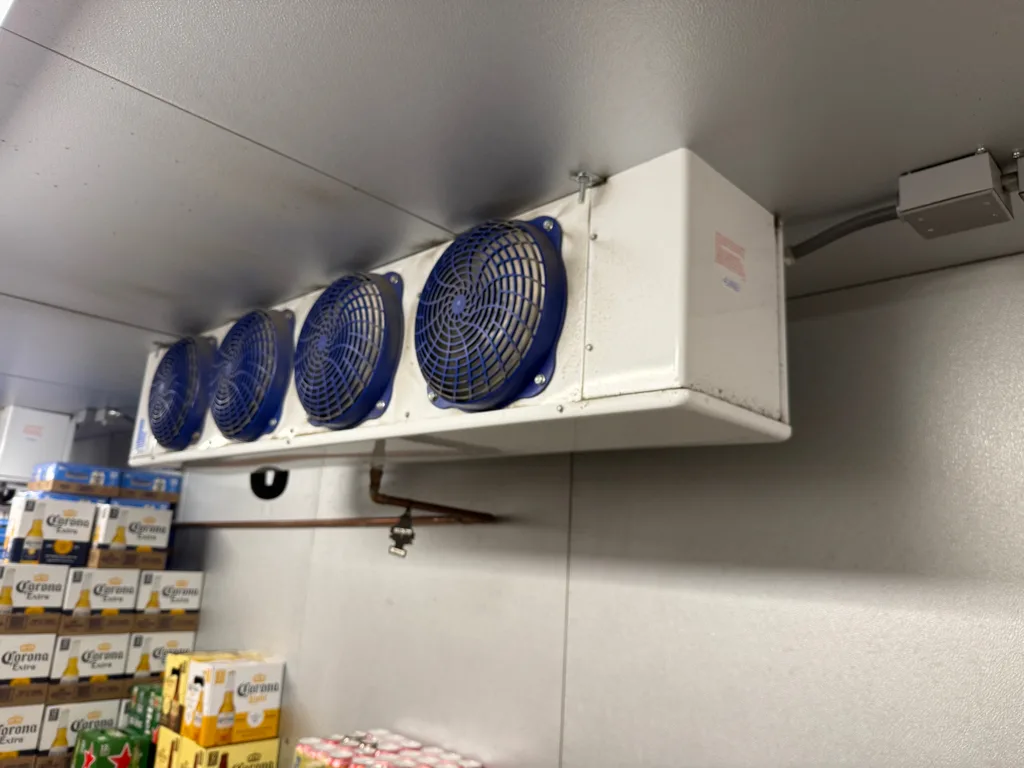
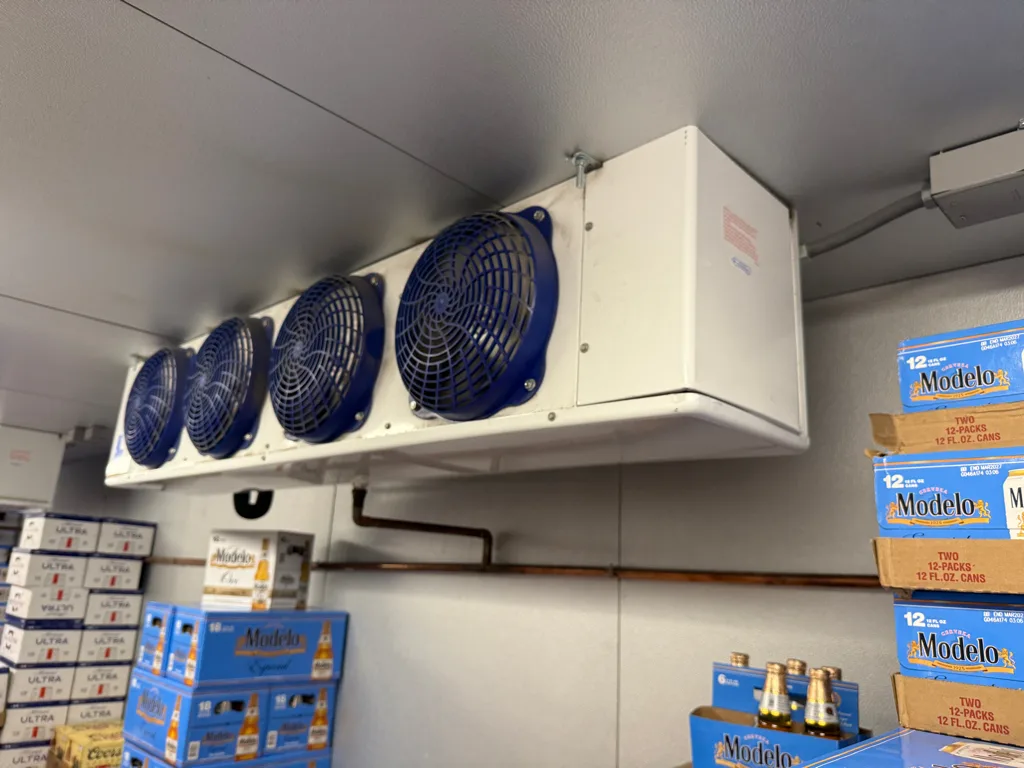
01Two iced-up evaporators in a Denver store cooler

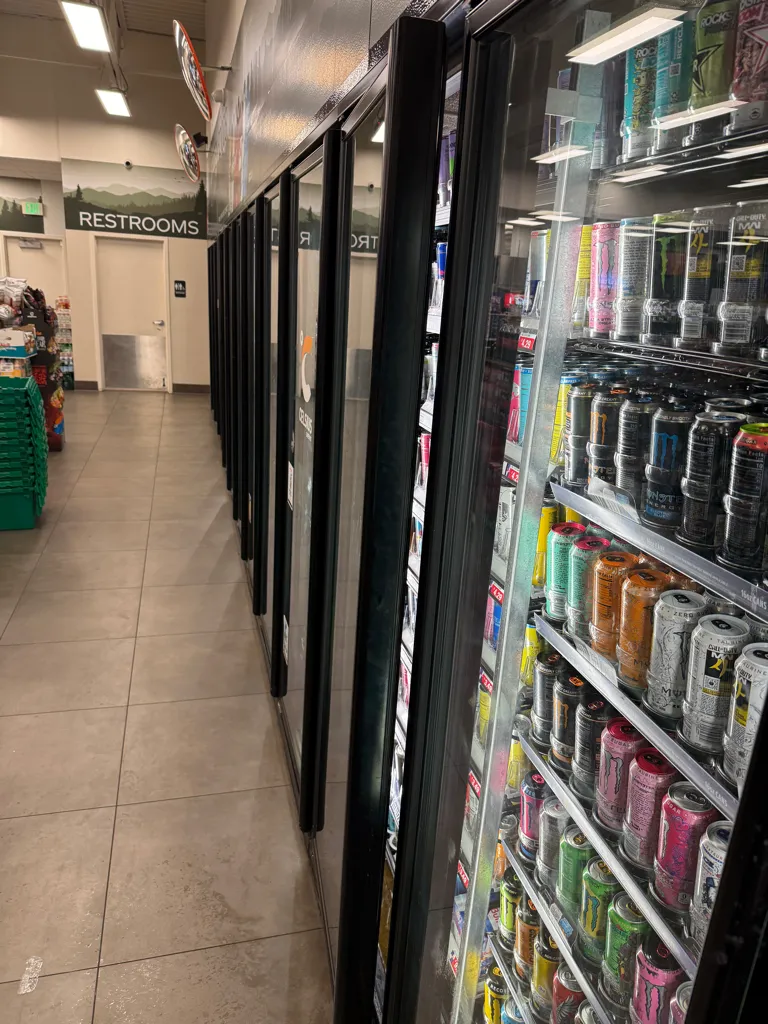
A glass-door walk-in at a Denver store was running warm with ice building on its evaporators. Both coils were packed solid, so air couldn't pass through them no matter how long the compressor ran. We manually defrosted both evaporators, cleaned the condensate drain pump that was letting water refreeze, and checked the system pressures once the coils were clear.

Ice on an evaporator is a symptom, not the cause. On walk-ins we usually find a failed defrost heater or timer, a stuck drain or drain-line heater, a door that doesn't close, or a low refrigerant charge. If the root cause isn't fixed, the ice comes back in days.

Glass-door walk-in cooler at a Denver store
Evaporator after the manual defrost
Coils and charge

Dirty coils and a low refrigerant charge

02Coil cleaning and charge on a Denver walk-in

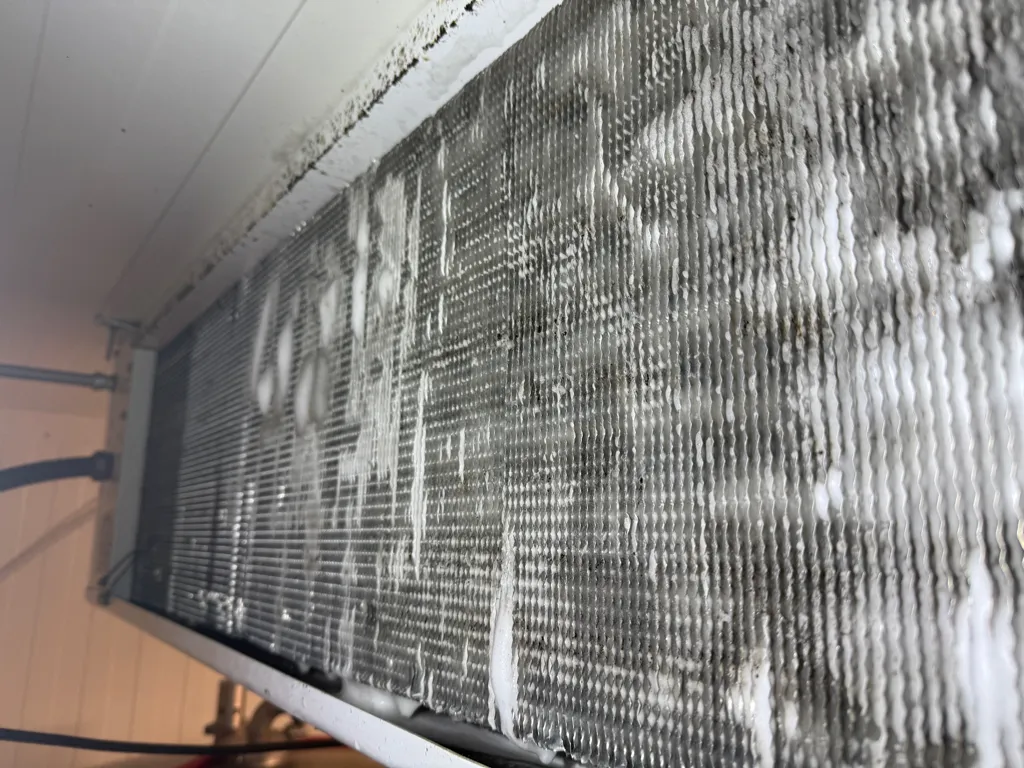
On a follow-up visit to a Denver walk-in we cleaned the evaporator and the condenser coil, which was matted with lint and dust, then brought the refrigerant charge back to spec and verified pressures. A condenser that can't reject heat drives head pressure up, makes the compressor work harder and slowly kills it.

At an Italian restaurant in Lakewood a Norlake walk-in was struggling to hold temperature. We deep-cleaned the condenser, added R-404A refrigerant and confirmed the box pulled down and cycled normally.

Evaporator coil after cleaning
Controls

Error codes, sensors and controllers

03A failed temperature sensor

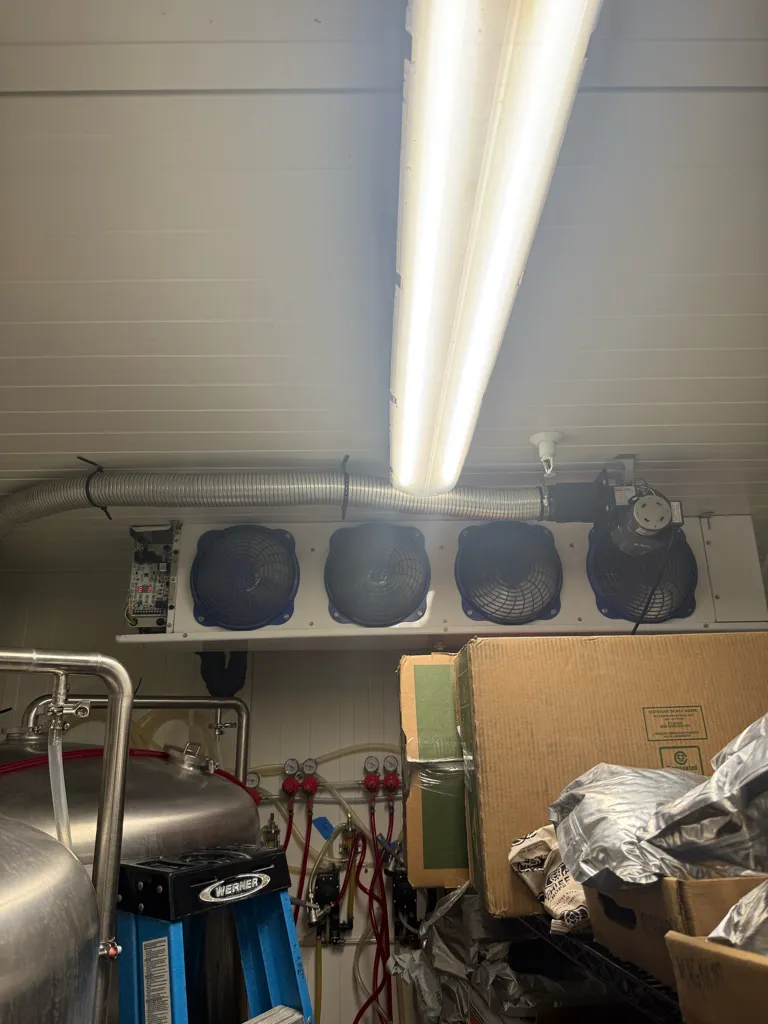
A Denver walk-in was throwing error codes and not cooling properly. The controller was reading a faulty temperature sensor. We replaced the sensor, calibrated it, deep-cleaned the top-mounted condenser coil and tested the unit under load, checking cut-in and cut-out temperatures and compressor amperage.

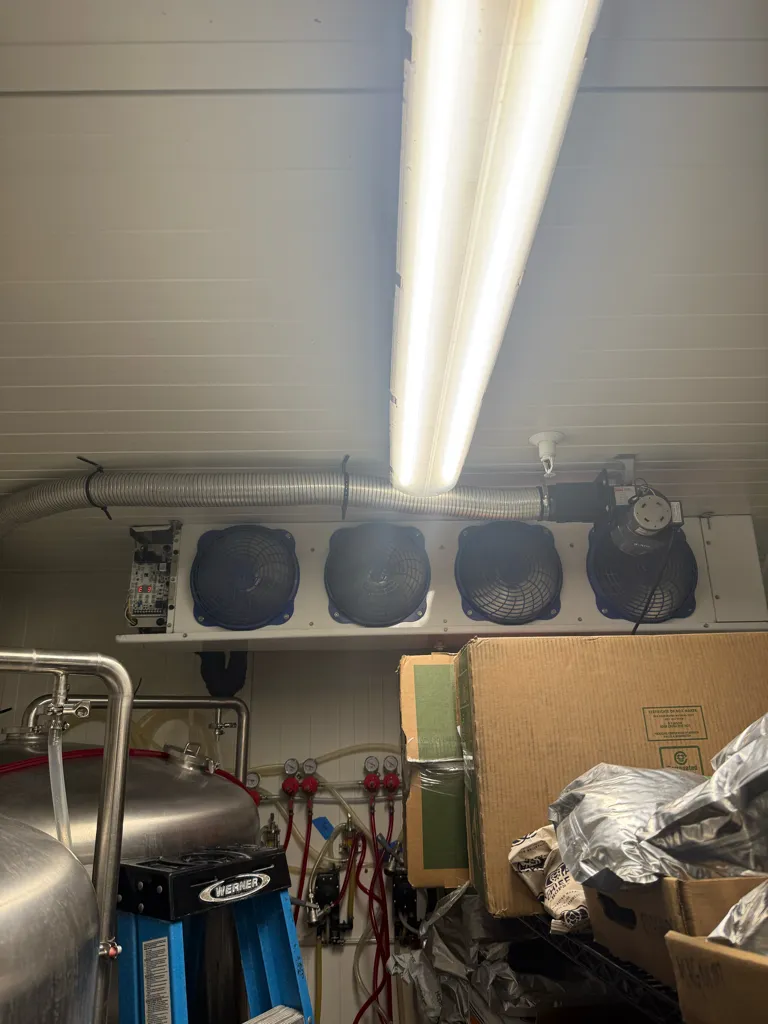
Evaporator inside the walk-in

04Low superheat alarms

A walk-in in Boulder was sitting at 47°F with an ER16 low-superheat alarm. Alarms like this point at the refrigerant side, the expansion valve or airflow across the evaporator, so we checked pressures and superheat before touching any parts.

Won't start

Compressor humming but not starting

05Start capacitor on a Master-Bilt walk-in

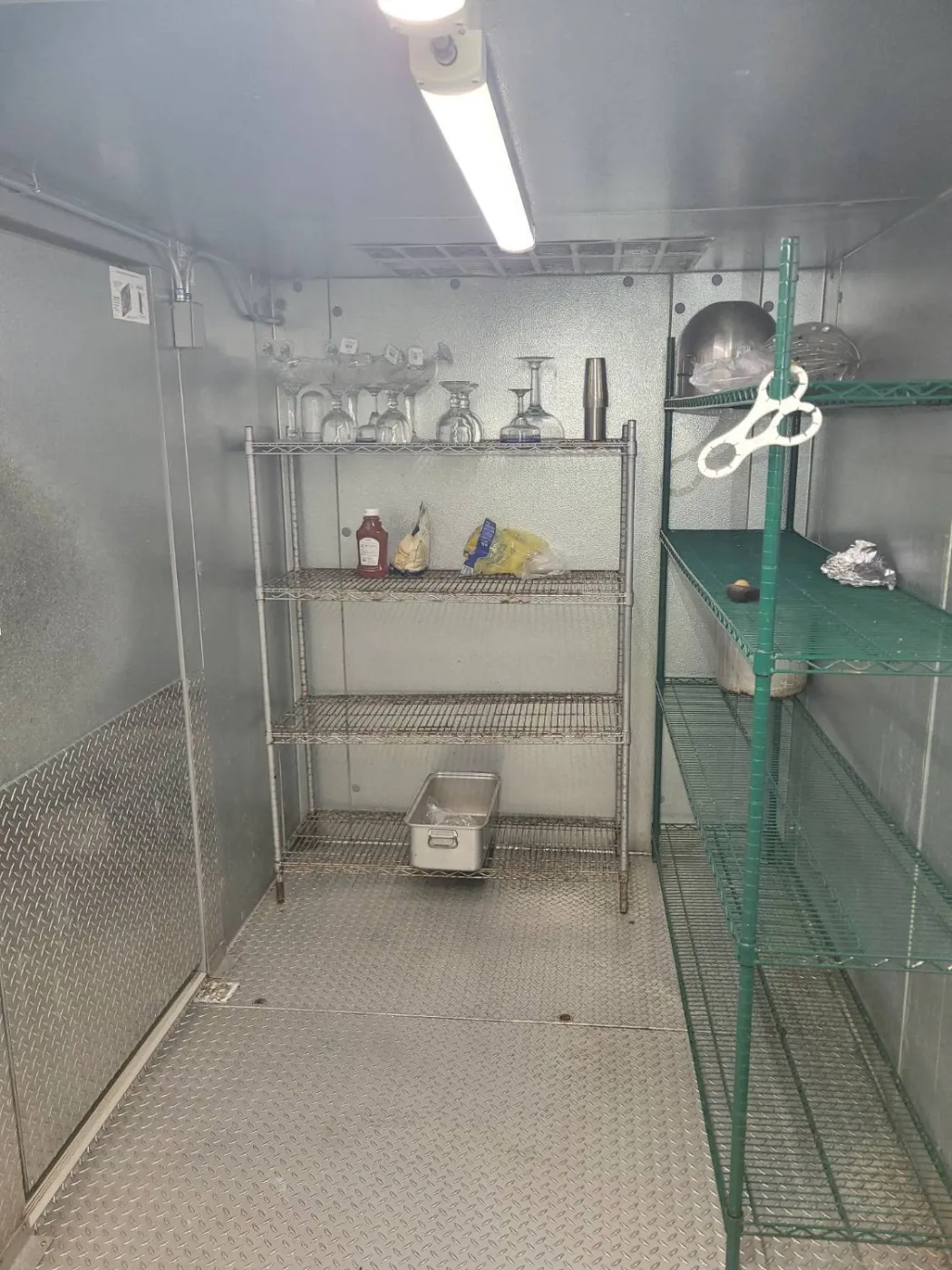
A Master-Bilt walk-in in Denver was warming up. The condensing unit was trying to start and failing. We found the start capacitor dead, replaced it, checked the fan motor and watched the box come back down toward temperature. A ten-minute part that saves a compressor when it's caught early.

Inside the Master-Bilt walk-in

06Power and condenser fan problems

At a walk-in in Longmont we repaired a power supply problem, cleaned the condenser and replaced the condenser fan motor. When a condenser fan stops, the compressor overheats and trips, so the box warms up in cycles.

Compressor

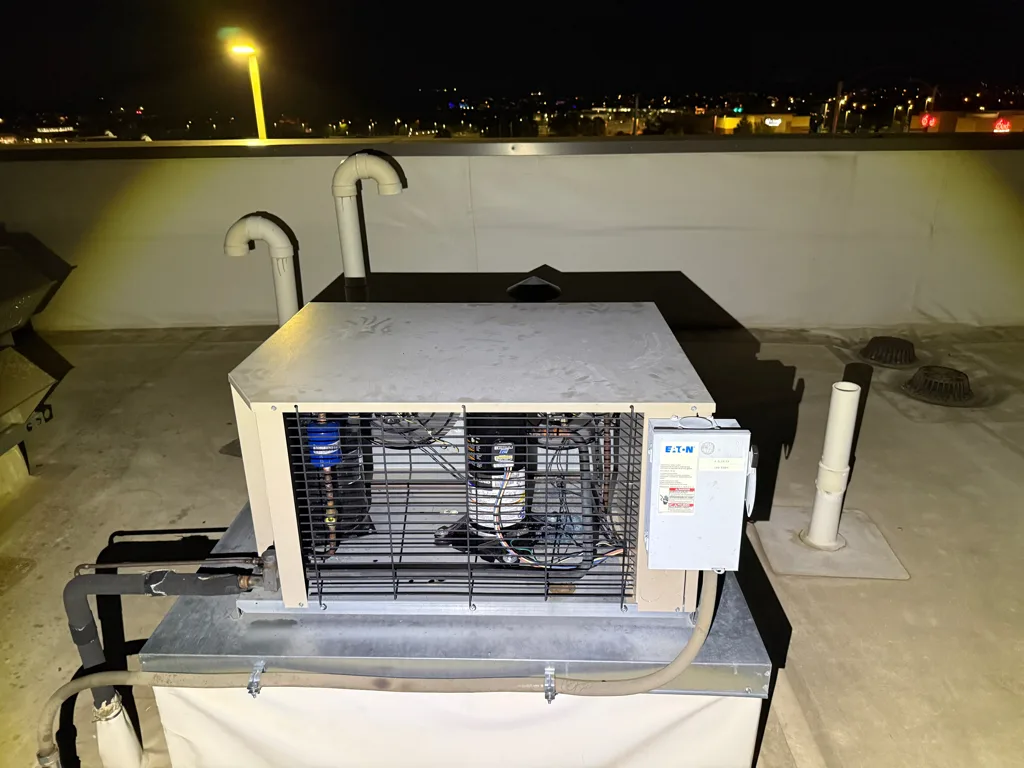
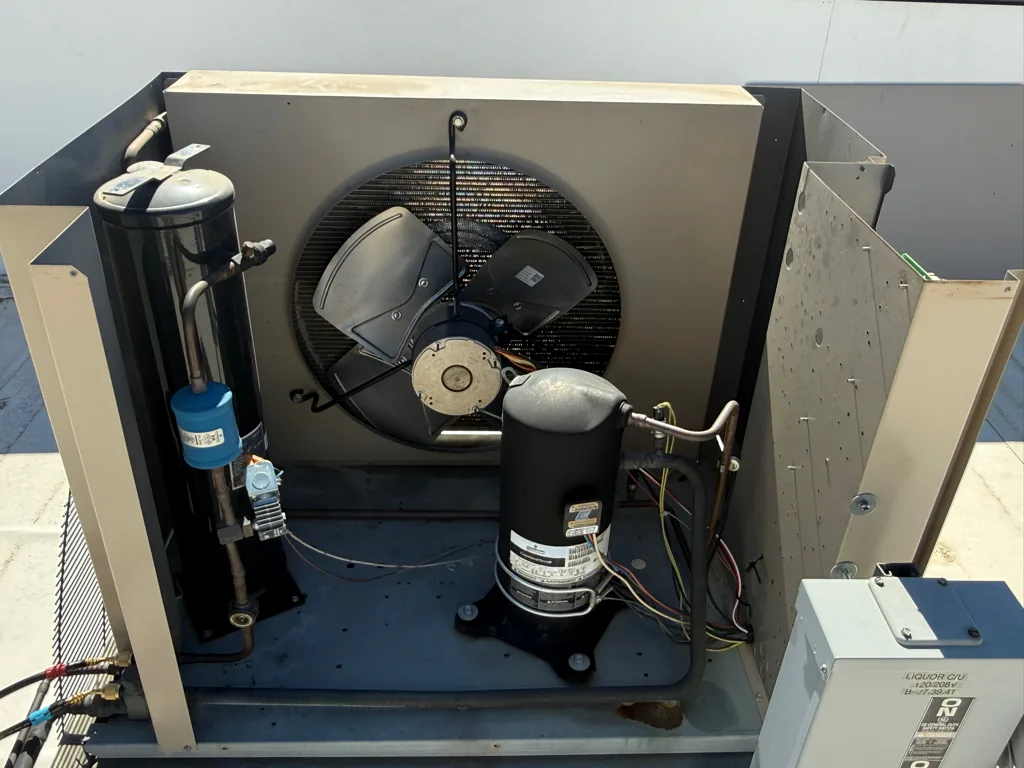
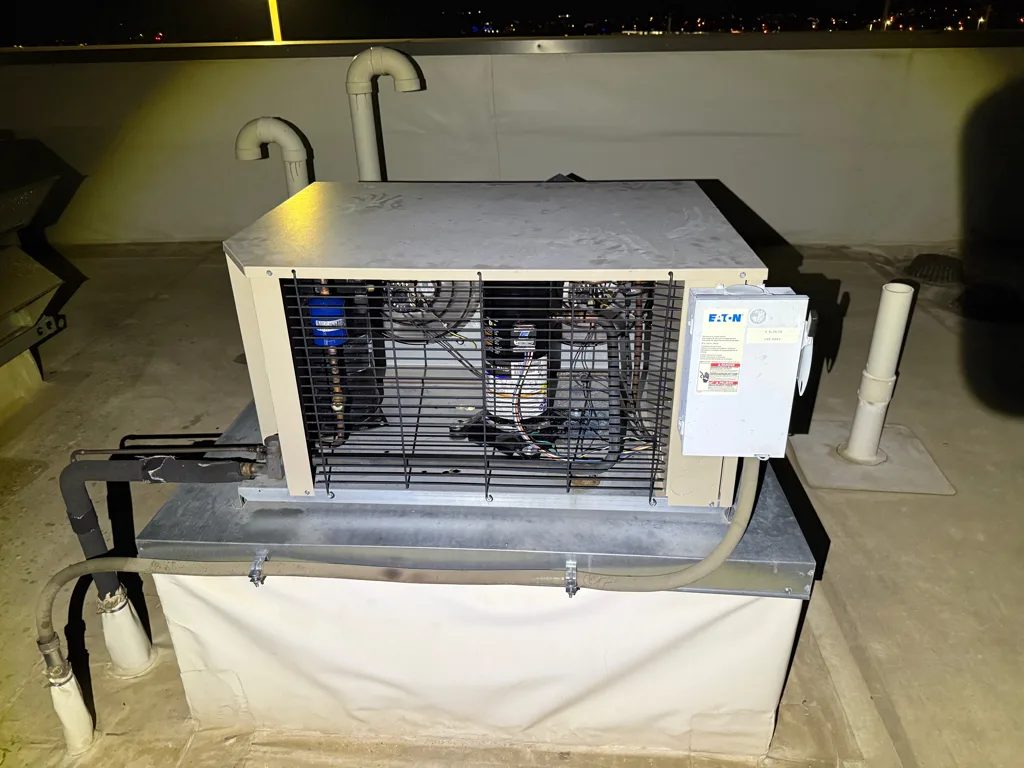
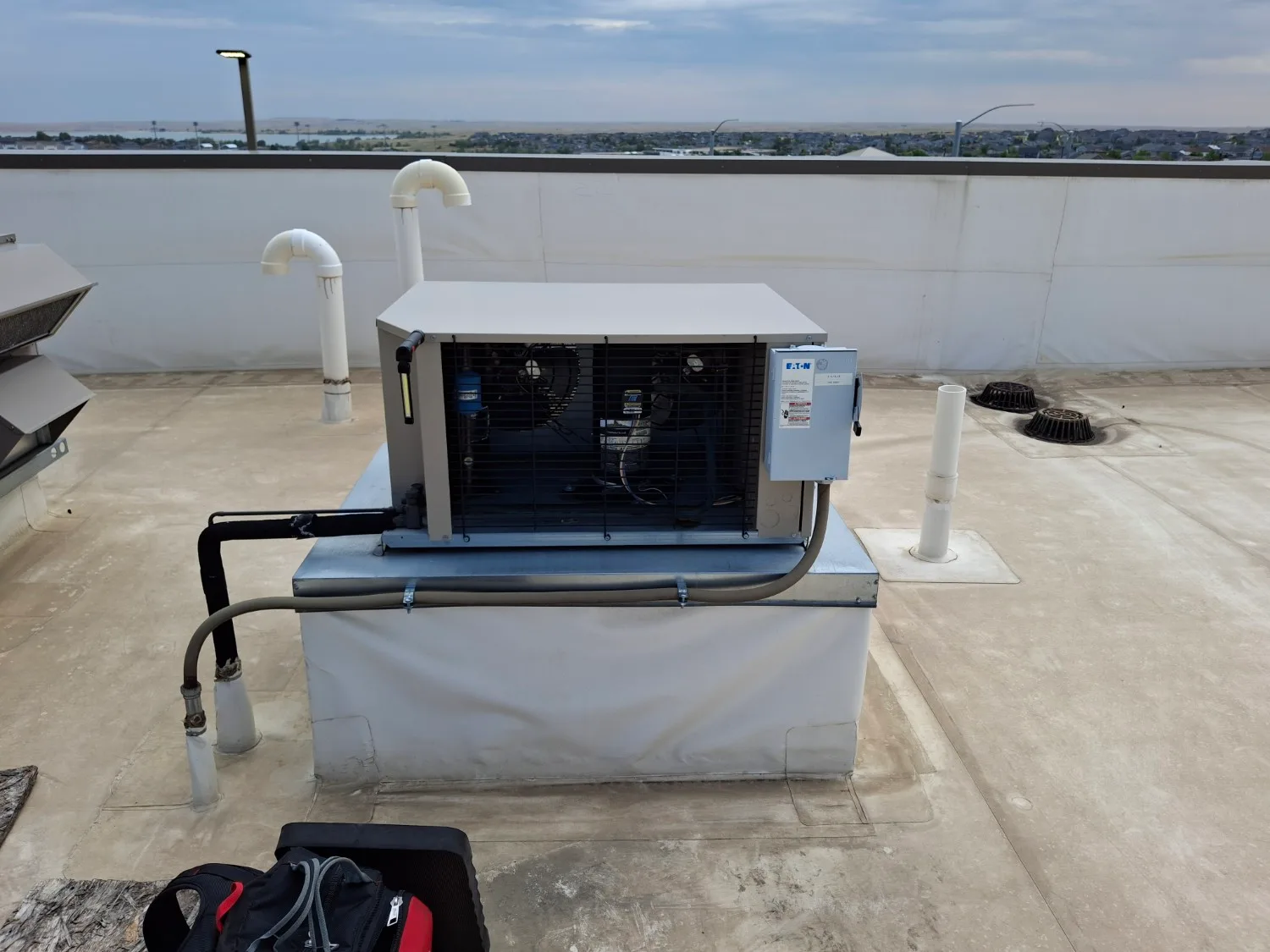
Compressor replacement on a rooftop condensing unit

07A café walk-in in Aurora

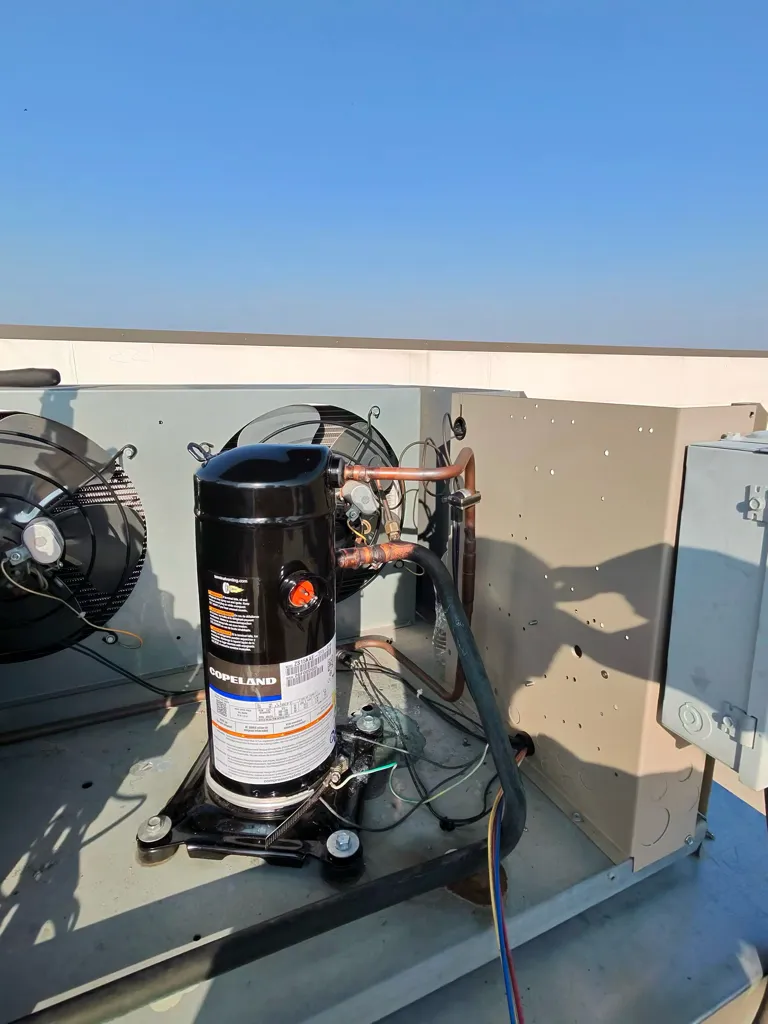
A café near Denver called because its walk-in had stopped cooling and food was starting to spoil. The compressor on the rooftop condensing unit had failed. We found the cause, recovered the refrigerant, replaced the compressor and the liquid-line filter-drier, pulled a deep vacuum, leak-checked the system and recharged it. Before leaving we verified pressures, temperatures and amperage, and confirmed the box was holding temperature.

Failed compressor on the rooftop unit
Rooftop condensing unit during the compressor replacement
The café walk-in back in service
Job records

Recent walk-in coolers repairs in and around Denver

WhereApplianceProblemWhat we did
DenverStore walk-in coolerWarm box, ice on evaporatorsDefrosted two evaporators, cleaned condensate drain pump, checked pressures
DenverWalk-in coolerStruggling to hold temperatureCleaned evaporator and condenser coil, brought refrigerant charge to spec
DenverWalk-in coolerError codes, not coolingReplaced temperature sensor, cleaned condenser, tested cut-in/cut-out
DenverMaster-Bilt walk-inWarming upReplaced start capacitor, checked fan motor
AuroraCafé walk-in coolerNot cooling, food spoilingReplaced compressor and filter-drier, vacuum, leak check, recharge
LakewoodNorlake walk-inNot holding temperatureDeep condenser cleaning, added R-404A, verified operation
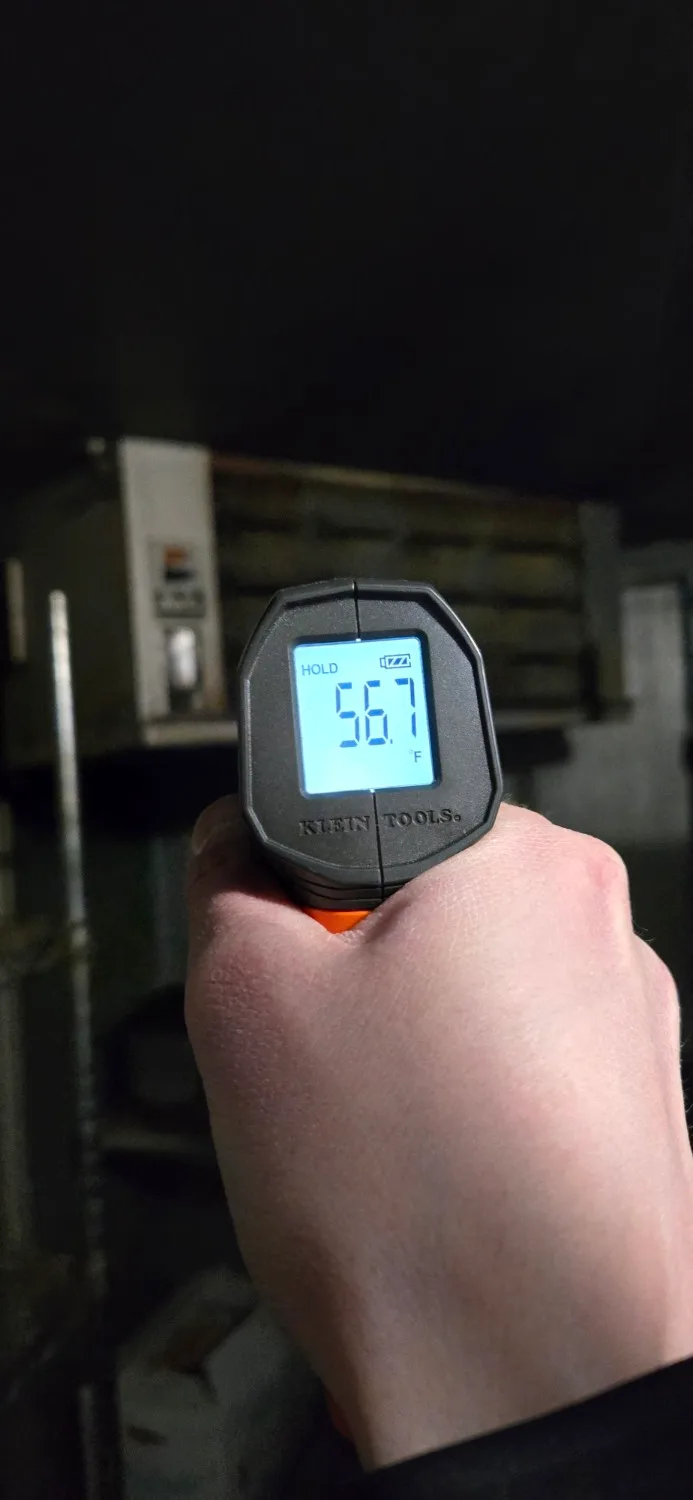
BoulderWalk-in cooler47°F, ER16 low superheatChecked pressures and superheat, maintenance
LongmontWalk-in coolerCycling warmRepaired power issue, cleaned condenser, replaced condenser fan

Problems are described as the customer reported them; repairs are taken from the technician's notes. No customer details are published.

Tips from our technicians

How to avoid the next walk-in coolers repair

Log the box temperature twice a day. A slow climb from 36°F to 40°F is the earliest warning you'll get.

Keep the door closed and the gasket, hinges and closer in good shape. Most iced evaporators start with a door that doesn't seal.

Don't stack product in front of the evaporator fans. The box needs airflow to cool evenly and to defrost properly.

Have the condenser coil cleaned every three months, monthly if it's near a fryer or on a dusty roof.

If you see ice on the evaporator, water on the floor or hear the compressor clicking on and off, call before the box warms up.

Who we are

ABC Denver Appliance Repair is an independent, local repair company. Our technicians are EPA 608-certified, carry common parts on the truck and test every repair before they leave. Every repair comes with a 90-day parts and labor warranty.

Problems we fix

Common walk-in coolers problems we fix

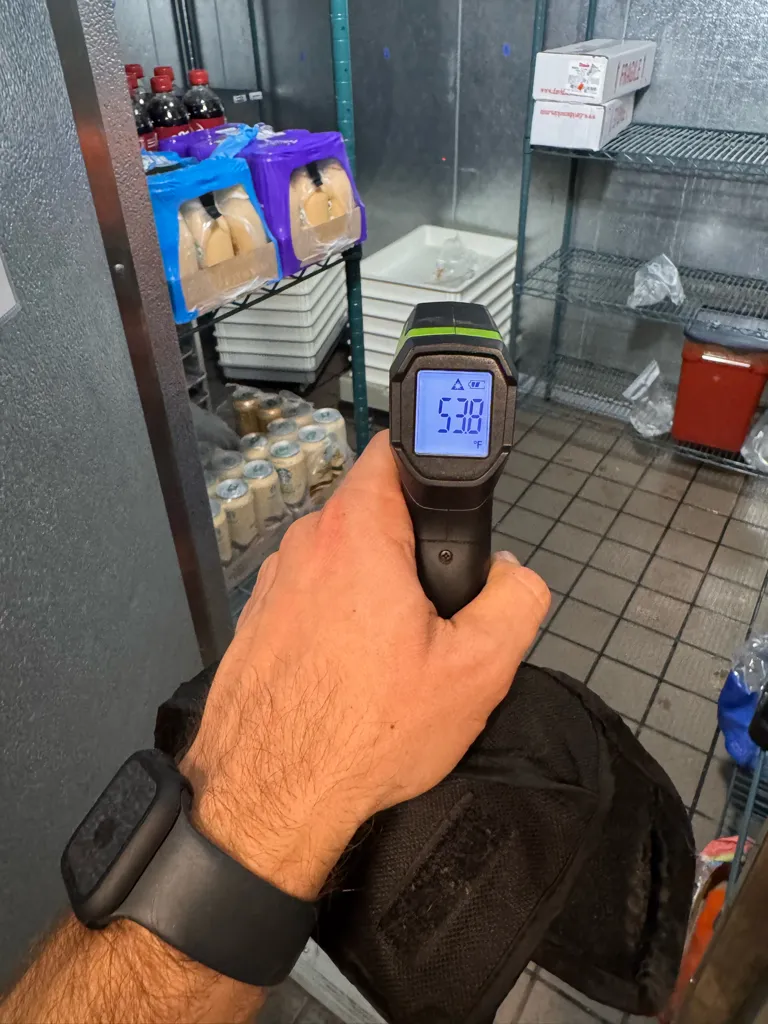
Walk-in cooler not holding 41°F

A box that will not pull down to temperature can have several causes stacked on top of each other: a condenser coil caked with dust or cottonwood, an evaporator fan that has stopped, a door that does not seal, an iced-over evaporator, a failing compressor or a low refrigerant charge. The technician measures box, coil and discharge air temperatures, checks amp draw on the compressor and fans, and looks at airflow across both coils before naming a part.

From our jobs

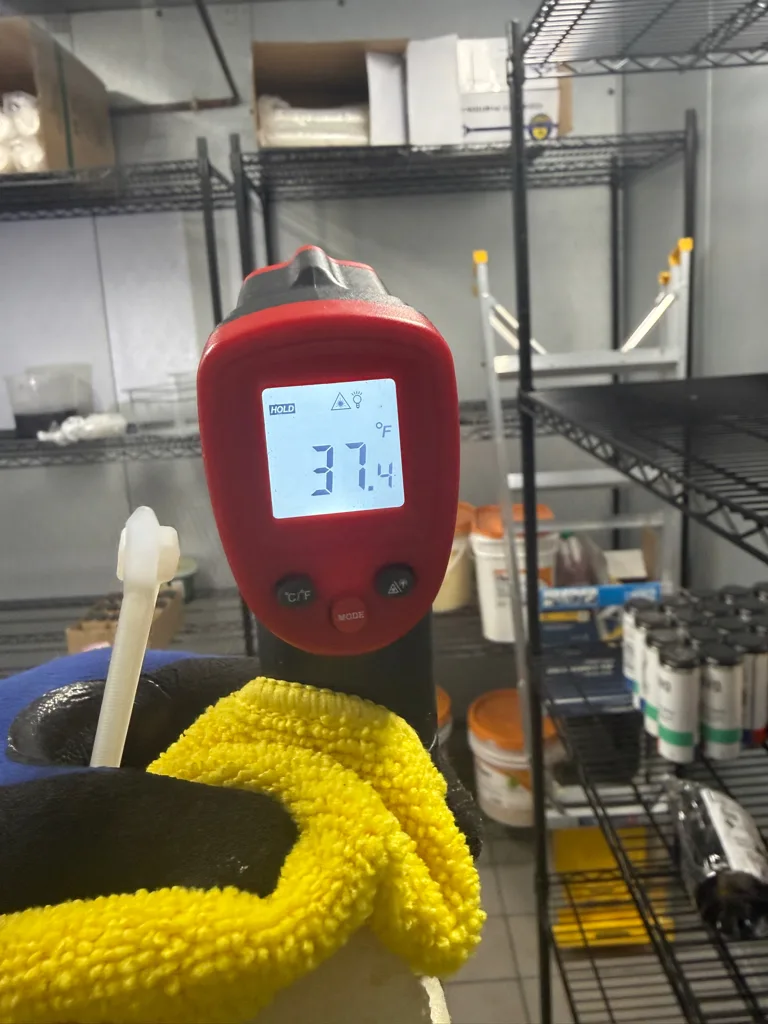
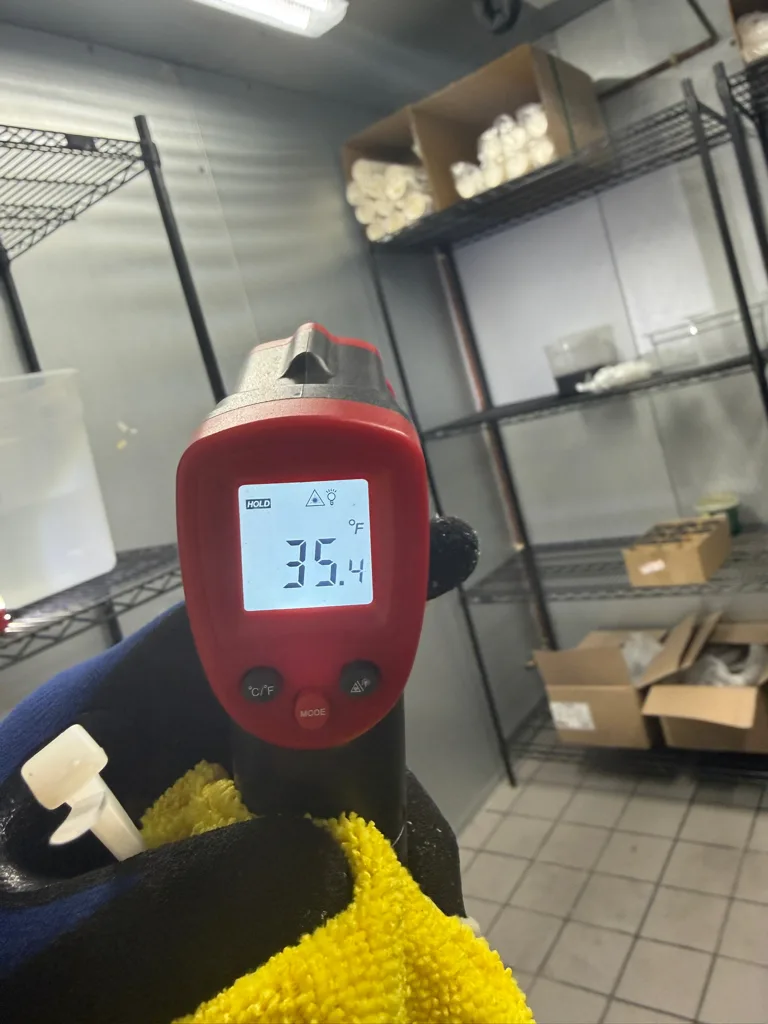
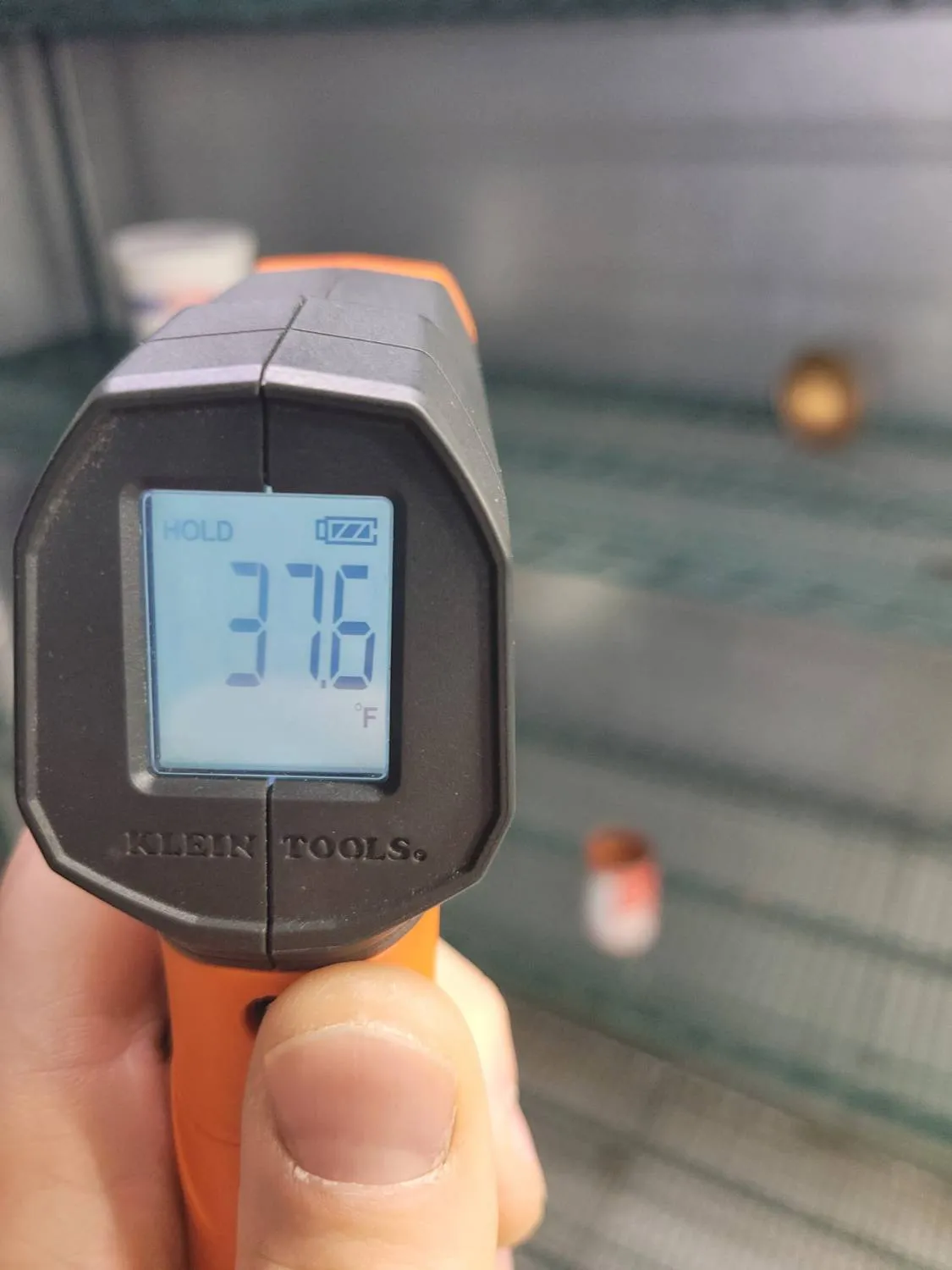
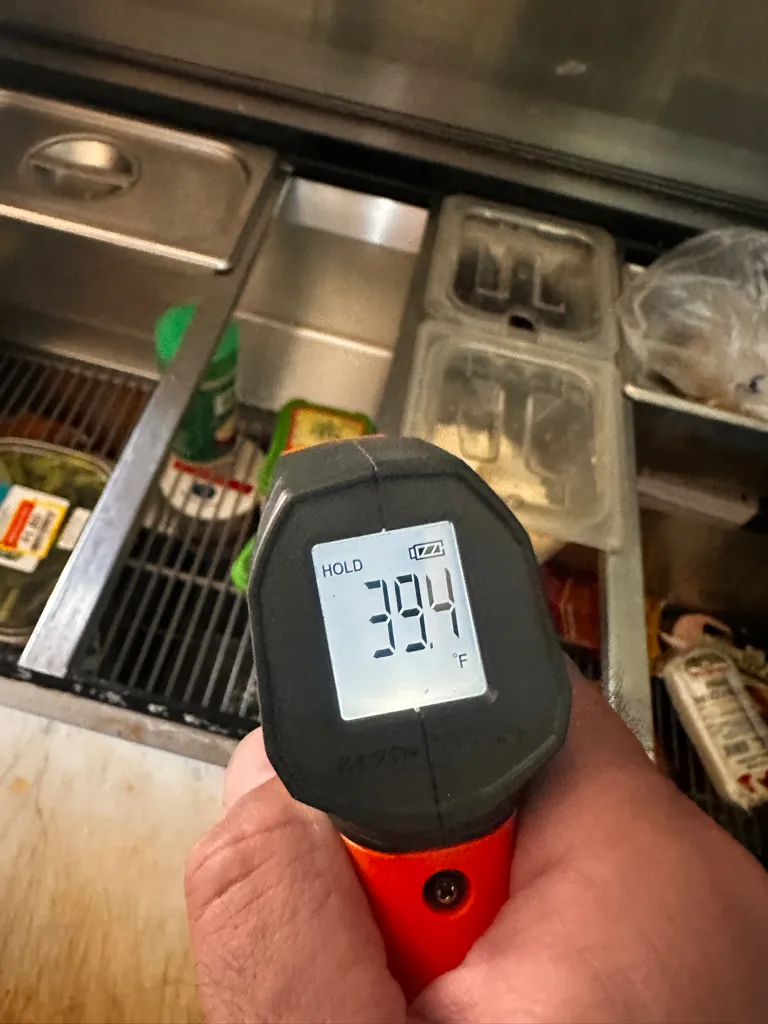
Temperature check after the rechargeWalk-in cooler temperature check: 37°FProduct-zone temperature check after the repairBox temperature check after the repair

Book a technician

Ice on the evaporator coil

A walk-in cooler is supposed to defrost itself during the off cycle, so a coil that is white with ice points to a problem. Common culprits are a stopped evaporator fan, a door left propped or a torn strip curtain letting humid air in, a dirty coil, a clogged drain, or a refrigerant or metering problem that drives the coil too cold. We clear the ice safely, test the fans and controls, and find out why it formed. Chipping ice off with a tool can puncture tubing and turn a simple fix into a sealed-system repair, so please let it melt or wait for us.

From our jobs

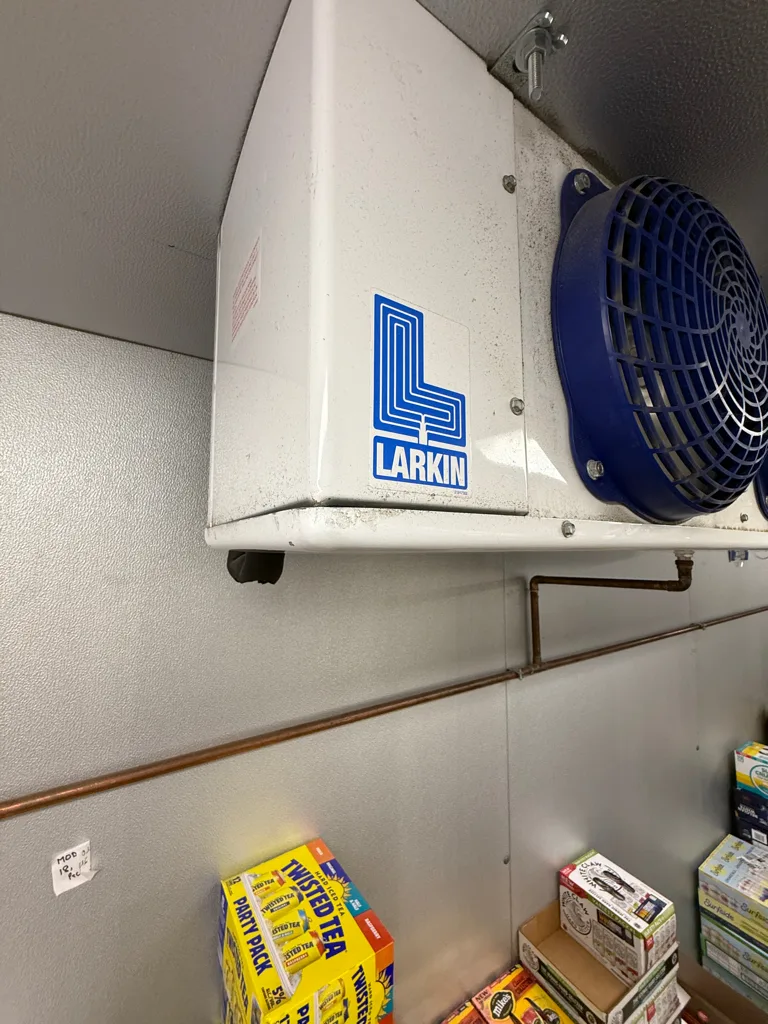
Second evaporator buried in ice before defrostWalk-in cooler evaporator completely iced overLarkin evaporator coil in the walk-inWalk-in cooler evaporator coil

Book a technician
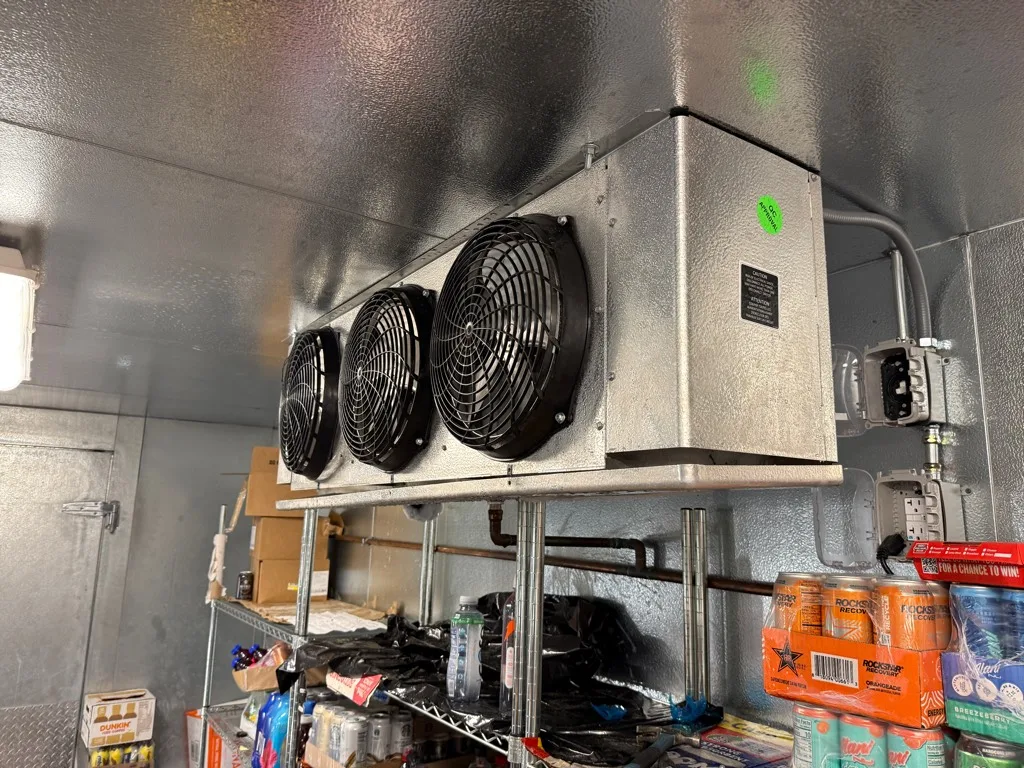
Condensing unit short-cycling or running constantly

If the compressor starts and stops every few minutes, the usual suspects are a pressure control, a failing start component, a dirty condenser tripping a high-pressure switch, or a refrigerant issue. A unit that never shuts off often has a dirty condenser, a weak compressor, a bad door seal or a box that is simply being opened too often during prep. We check pressures, controls and electrical draw, and we look at how the walk-in is being used before blaming the equipment.

From our jobs

New scroll compressor installed in the condensing unitCondensing unit running after start-upCondensing unit with scroll compressorRooftop condensing unit for walk-in cooler

Book a technician
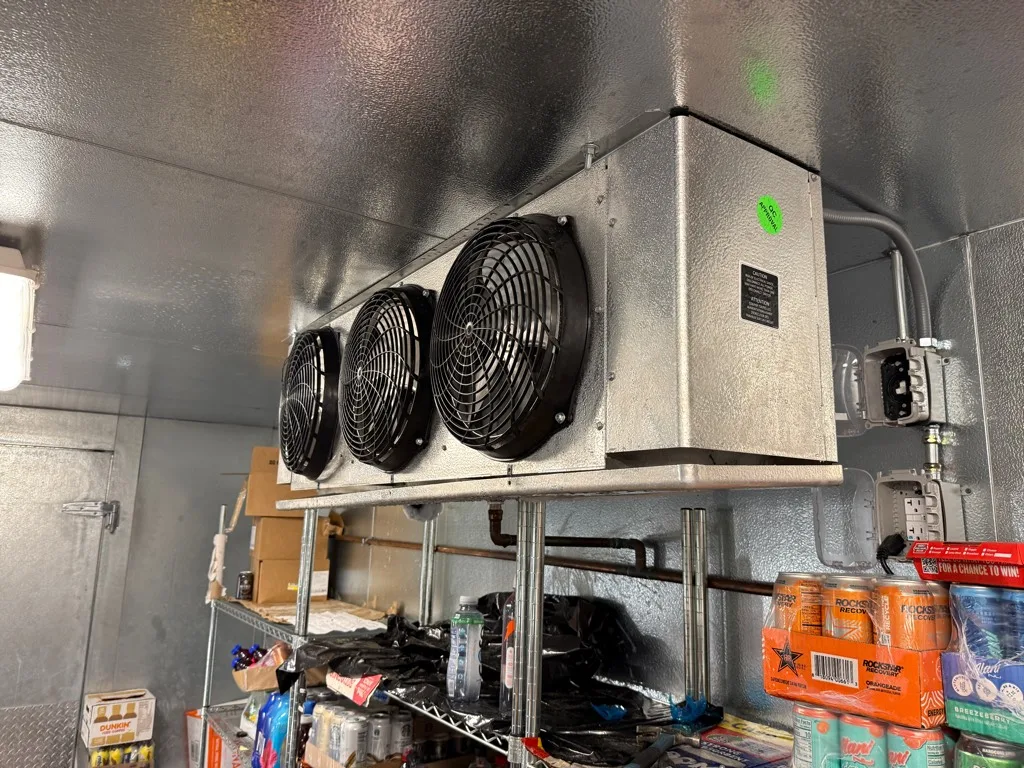
Door not sealing, heater wire or strip curtains

Walk-in doors take a beating from carts, hand trucks and busy staff. A torn gasket, a sagging hinge, a closer that no longer pulls the door shut, or a bent sweep at the bottom lets warm air in all day. Some cooler doors also have a heater wire in the frame to stop sweating; when it fails, condensation forms on the frame and drips. We replace gaskets, sweeps, hinges, closers and heater wire, and we can replace worn or missing strip curtains so the box loses less cold every time the door opens.

From our jobs

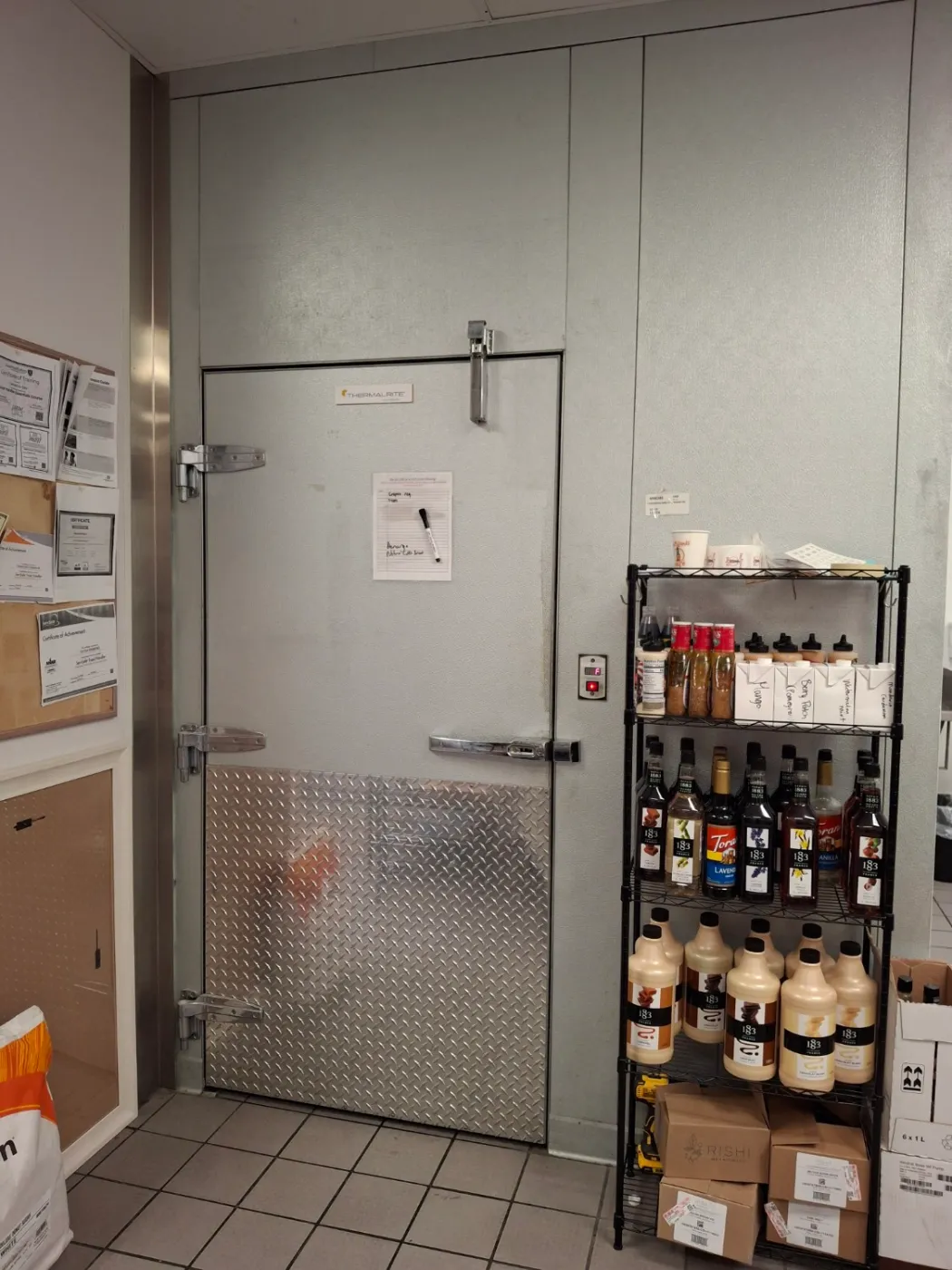
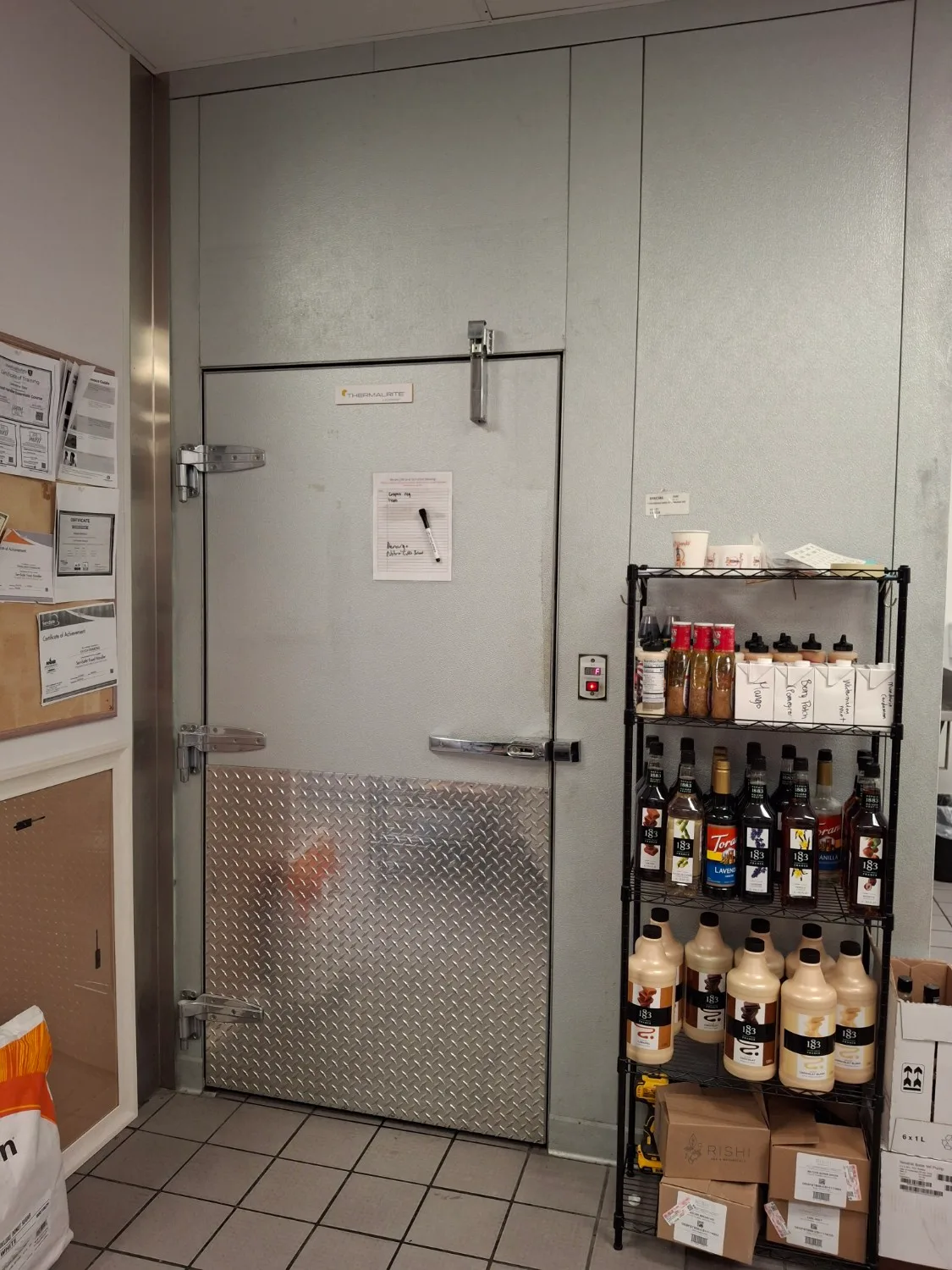
Walk-in cooler door at the caféWalk-in cooler door

Book a technician
Water on the walk-in floor or a leaking drain line

Puddles inside the box are a slip hazard and a sign that something is off. Most leaks come from a clogged or frozen evaporator drain line, a cracked drain pan, a drain line without enough slope, or a coil that iced over and then melted all at once. We clear and test the drain, check the pan and its mounting, and look at whether the drain line needs a heater or a better route so the problem does not come back.

Book a technician
Evaporator or condenser fan motors failing

Fans that squeal, rattle, run slowly or sit still are among the most common walk-in failures, and the box warms quickly once air stops moving across the coil. We test each motor, check blades and guards for damage or ice, and replace failed motors.

From our jobs

Evaporator after manual defrost and cleaningWalk-in cooler evaporator running clear after serviceWalk-in cooler condensing unit on the roofCondensing unit back in service on the roof

Book a technician

Expansion valve or refrigerant problems

When the basics check out but the box still runs warm, the issue may be in the sealed system: a low charge from a leak, a restricted filter-drier, or an expansion valve that is stuck or out of adjustment. Under federal rules, work that opens the refrigerant circuit must be done by an EPA Section 608 certified technician. Adding refrigerant without finding the leak is not a repair, and your written quote will explain what we found and what a proper fix involves.

Book a technician
Temperature alarm going off

Many walk-ins have a temperature alarm or a monitoring sensor that alerts staff when the box warms up. Sometimes the alarm is right and the cooler is failing; sometimes the sensor has drifted, sits in the path of the door or the evaporator discharge, or has a wiring fault. We compare the alarm reading against a calibrated thermometer, check placement, and repair whichever side of the problem is real.

From our jobs

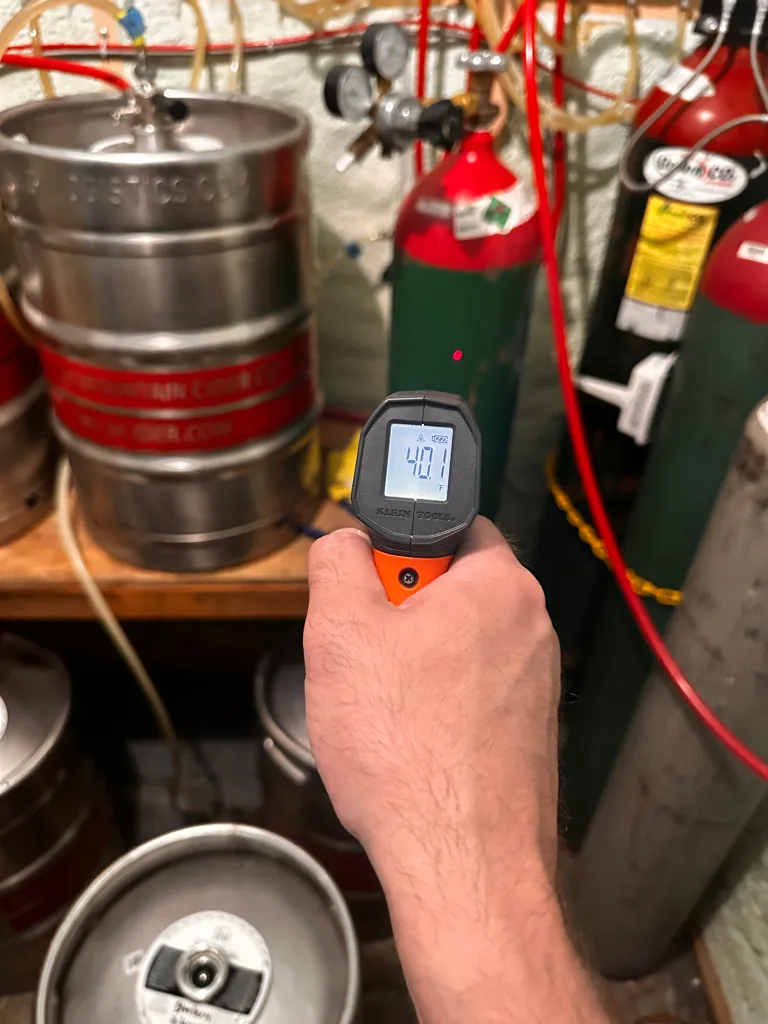
Keg cooler temperature checkKeg cooler holding temperature after serviceWalk-in cooler temperature: 37.6°F after service

Book a technician
What we service

Equipment covered

When you call, tell us what the box thermometer reads, whether the condensing unit is on the roof, on a pad outside or mounted on the box, and anything unusual you have seen, such as ice, water or noise. That helps us bring the right parts for the most likely failures. On site, the technician checks box and coil temperatures, the condensing unit, fans, controls, drain and door, then hands you a written quote before any repair begins. Fan motors, controls, start components, gaskets and door hardware are often finished on the first visit because common parts ride on the truck.

  • Walk-in coolers with self-contained (top-mount or side-mount) refrigeration systems
  • Walk-in coolers with remote condensing units, including rooftop and pad-mounted units
  • Evaporator coils, evaporator fan motors and drain lines
  • Condensing units, condenser fans, compressors and start components
  • Thermostats, temperature controls, pressure controls and defrost timers
  • Expansion valves, filter-driers and other sealed-system components
  • Doors, gaskets, sweeps, hinges, closers, latches and heater wire
  • Strip curtains, interior lights and door switches
  • Panel seams, thresholds and other panel and door hardware
  • Temperature alarms and monitoring sensors

Between visits: what your staff can do

  • Clean the condenser coil on a regular schedule; outdoor and rooftop units collect dust, leaves and cottonwood fluff, and indoor units near a cook line collect grease.
  • Keep the area around a remote condensing unit clear so air can move freely across the coil.
  • Inspect door gaskets, sweeps and strip curtains weekly and replace torn sections before they leak cold air all day.
  • Make sure the door closes and latches on its own; do not prop it open during deliveries for longer than you have to.
  • Keep product off the floor and at least a few inches away from the evaporator so air can circulate.
  • Check the evaporator drain pan and drain line during deep cleaning and watch for ice or standing water.
  • Log box temperature at opening, mid-shift and close so you spot a slow drift before it becomes a 41°F problem.

Repair or replace?

Most walk-in cooler failures are repairs, not replacements: fan motors, controls, gaskets, door hardware, drain issues and start components all cost far less than new equipment, and the insulated box itself can last a very long time. The harder call comes with the condensing unit or evaporator. A failed compressor on an older unit, a coil with repeated leaks, or a system that was never sized for how you use the box today may be better replaced than repaired. When that is the case, we will price the repair honestly so you can compare it against replacing the refrigeration system rather than the whole walk-in.

Guides

Who we do this for

Brands

Walk-in Coolers brands we repair

How a service call works

Step 1

Request

Call, text or send the form. Tell us the location and the equipment.

Step 2

Diagnose & quote

A technician arrives same or next day and gives a written quote before any work.

Step 3

Repair & report

You get a photo report and an invoice your office can file the same day.
Walk-in Coolers: common questions

My walk-in is warm. What should I do while I wait for a technician?

Keep the door closed, move the most sensitive product to another cooler if you can, and check that the evaporator fans are running and the condenser isn't blocked. Don't keep chipping ice off the coil; you can puncture it.

Why is there ice on my walk-in evaporator?

Usually a defrost problem (heater, timer or termination), a blocked drain, a door that doesn't seal or a low refrigerant charge. We find the cause, defrost the coil and fix the part so it doesn't come back.

Do you repair the rooftop condensing unit too?

Yes. We service the whole system: evaporator, condensing unit, controls, refrigerant and electrical.

Are your technicians certified to work with refrigerant?

Yes. Our technicians are EPA 608-certified. We recover refrigerant properly and leak-check after any sealed-system work.

Do you offer walk-in maintenance?

Yes. Regular coil cleaning, drain checks, door and gasket checks and a refrigerant check catch most failures before the box warms up. Ask us about a maintenance plan.

How fast can you come to a restaurant in Denver?

Commercial refrigeration calls get priority. We offer same- or next-day service across the Denver metro; call and we'll give you the soonest time.

Call (720) 534-0432