Ice maker not working: what our technicians check
Ice makers that stopped were the second most common refrigerator complaint in our records, 355 calls, right behind "not cooling". On French-door models, a lot of those turned out to be frost and airflow problems in the door ice compartment rather than a bad ice maker. Here's how we tell the difference.

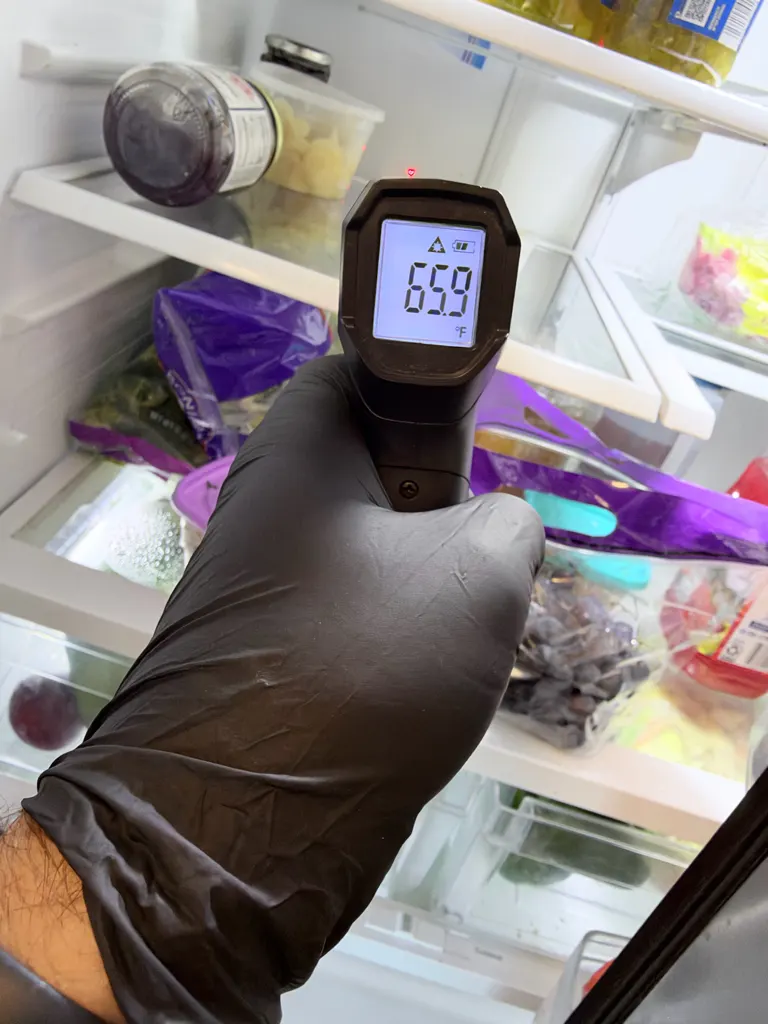
Make sure the freezer is cold enough (around 0–5°F), the ice maker is switched on and the bin isn't jammed. Small or hollow cubes almost always mean not enough water: an old filter, low pressure, or a partly clogged inlet valve. No water at all: frozen fill tube or failed valve. On French-door models with the ice maker in the door, frost in the compartment points to airflow, seals or defrost, not the ice maker itself.
How a refrigerator ice maker works
When the freezer is cold enough, the ice maker's control opens the water inlet valve for a few seconds and fills a mold. A thermostat or sensor waits until the cubes are frozen, a small heater loosens them, and a motor ejects them into the bin. An arm or optical sensor stops production when the bin is full.
That means four things have to work: the freezer temperature, the water supply, the ice maker module, and the full-bin sensing. We check them in that order.
| What you see | Likely cause | What we check |
|---|---|---|
| No ice, freezer warm | Cooling problem, not the ice maker | Freezer temp, fans, defrost |
| No ice, freezer cold | Water supply, ice maker module, shut-off arm | Valve, fill tube, module test |
| Small or hollow cubes | Low water: filter, pressure, valve screen | Filter date, pressure, valve |
| Ice clumped or jammed | Melting and refreezing, compartment frost | Door seals, compartment fan, defrost |
| Buzzing every cycle, no ice | Valve opening with no water reaching it | Supply valve, frozen fill tube |
| Ice overflowing / block in bin | Valve not closing, full-bin sensor | Valve, arm/sensor |
Freezer temperature first
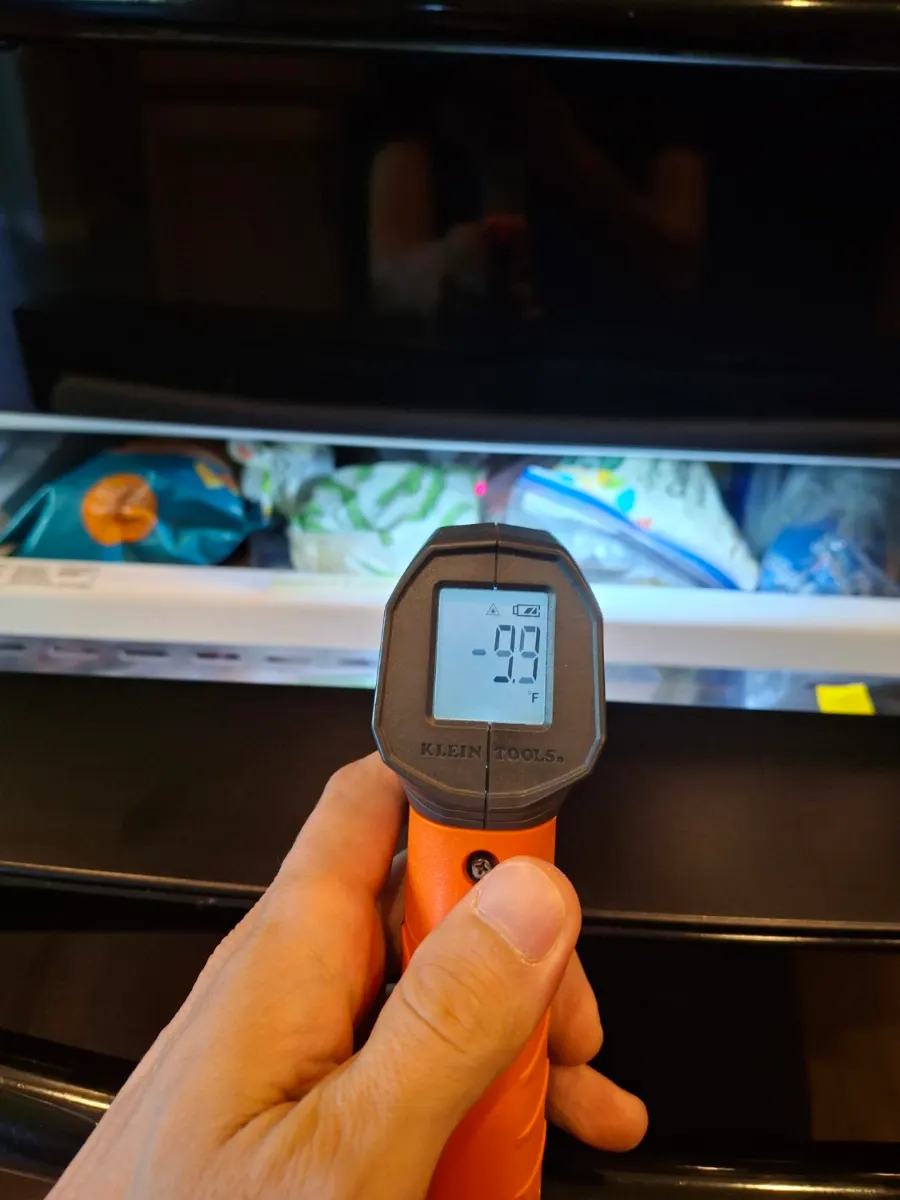
Most ice makers won't cycle if the freezer is warmer than about 10–15°F, and they run slowly above 5°F. So the first thing we check is the freezer. If it's warm, the ice maker isn't the problem. That's a cooling problem, and our refrigerator not cooling guide covers it.
Water supply: filter, pressure, valve
Small or hollow cubes almost always mean the mold isn't getting enough water. The usual causes are a filter that's overdue, low house water pressure, or a partly clogged screen in the inlet valve. Most refrigerator valves need somewhere around 20 psi or more to fill properly.
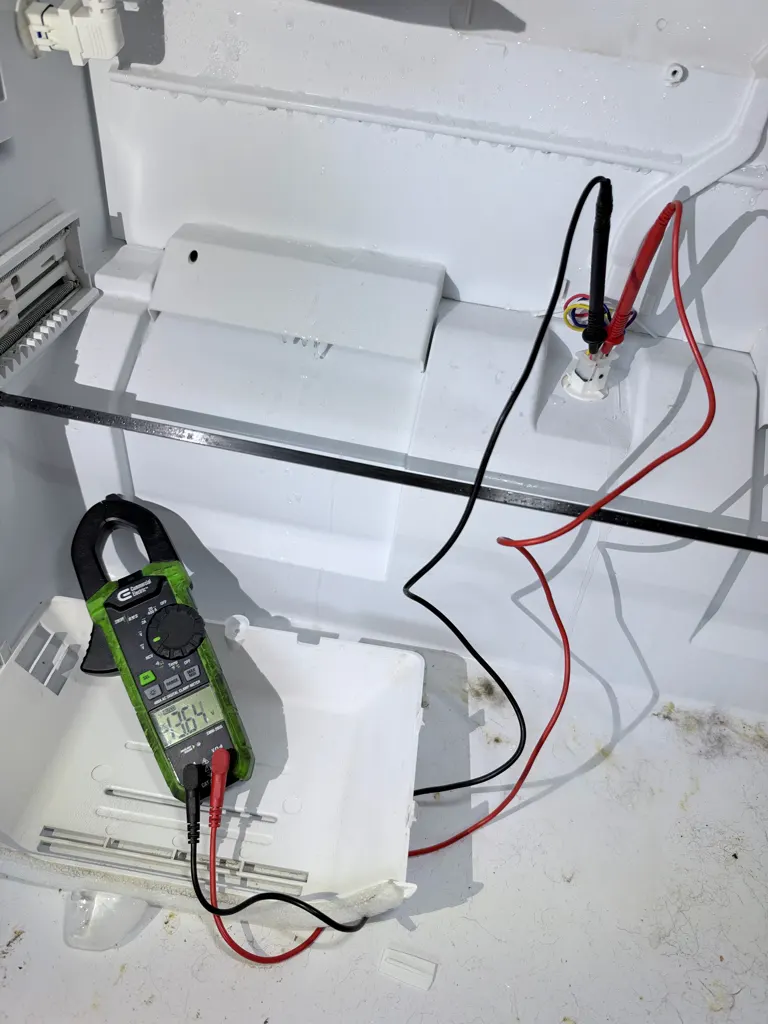
Hard water makes this worse. In parts of the metro with harder water, inlet valve screens and filters clog faster. Change the filter on schedule. If cubes are still small with a new filter, we test the valve: many inlet valve coils read a few hundred ohms, and an open coil means no water at all.
Frozen fill tube
The tube that carries water into the freezer can freeze solid, especially if the valve drips or the freezer runs very cold. The ice maker cycles, the valve opens, and nothing arrives. A hair dryer on low can thaw it as a test. If it keeps freezing, the valve may be leaking or the fill-tube heater has failed.
In-door ice compartments (Samsung, LG and others)
Many French-door refrigerators make ice in an insulated box in the left door. Cold air is ducted up from the freezer. If the seal around that compartment leaks, or its fan fails, or the defrost doesn't keep up, frost builds up, cubes stick together and the dispenser jams.
Replacing the ice maker alone doesn't fix that. We look at the seals, the compartment fan and the defrost function. On a Samsung we serviced in Aurora, we measured temperatures throughout the unit before replacing the ice maker, to make sure we weren't treating a frost problem with a new part. See our Samsung and LG pages for patterns we see on those brands.
Built-ins and undercounter ice machines
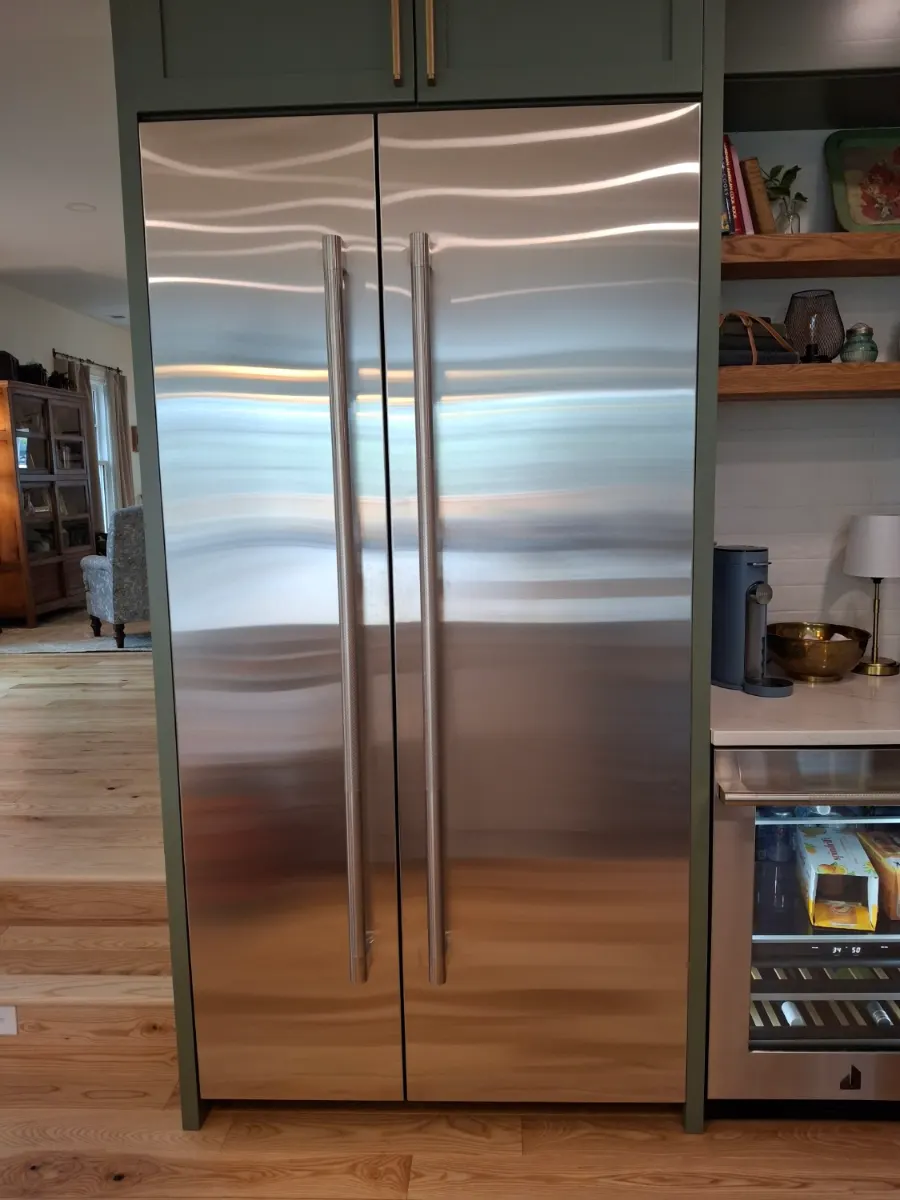
Built-in refrigerators from JennAir, Sub-Zero and others follow the same logic, but access is tighter and parts are often ordered. We replaced ice makers on JennAir built-ins in Louisville and Westminster this year after confirming temperature and water supply first.
Standalone undercounter ice machines make clear ice on a chilled plate and need regular descaling. Scale slows harvest until production stops. Pumps, valves and sensors are the usual repairs.
What you can do
- Make sure the ice maker is turned on
- Check freezer temperature
- Replace the water filter if it's overdue, and discard the first few batches after
- Open the supply valve fully and check the line for kinks
- Break up ice jams in the bin and chute
- Turn the ice maker off and shut the water if it's leaking
What our records show
The gap between 355 ice-maker complaints and 70 replaced ice makers is the interesting part. Most ice makers that "stopped working" didn't need a new ice maker. They needed a filter, a thawed fill tube, a valve, a seal or a defrost repair. That's why we test before we order.
| What we see | Count |
|---|---|
| Refrigerator calls where the ice maker stopped | 355 |
| Ice makers replaced on refrigerators | 70 |
| Water inlet valves replaced on refrigerators | 39 |
| Standalone ice maker / undercounter repairs | 73 |
Ice maker designs by brand
Knowing where the ice maker lives tells us where to look. In-door designs depend on cold air ducted from the freezer, so airflow is part of the diagnosis. Freezer-mounted ice makers are simpler and usually come down to water or the module.
| Brand | Where the ice maker is | What we check first |
|---|---|---|
| Samsung French-door | In the fresh-food door, insulated compartment | Compartment frost, fan, seals, defrost |
| LG French-door | In the door (ice room), some in freezer drawer | Ice room frost, fan, fill tube |
| Whirlpool, KitchenAid, Maytag | Freezer or in-door depending on model | Inlet valve, module, fill tube |
| GE and Café | Freezer or in-door; some with nugget ice | Module, valve, dispenser |
| Frigidaire | Often in the door on newer French-door | Module, seals, fill tube |
| Sub-Zero, JennAir built-ins | Freezer section | Temperature, valve, module; access is tighter |
Leaks from the ice maker
Water dripping into the ice bin or under the refrigerator is often the ice maker's water path. A valve that doesn't close completely trickles water into the mold, which overflows and freezes into a sheet in the bin. A cracked fill cup or a fill tube that's slipped out of place sends water down the back of the freezer.
Outside the refrigerator, the most common leak is the supply line itself: an old plastic line that cracked, or a fitting at the valve that loosened when the fridge was moved. Shut the supply valve until it's fixed. Our refrigerator water line hookup page covers line replacement.
How we diagnose it on a service call
Test mode lets us run a harvest-and-fill cycle on demand instead of waiting an hour, which saves a lot of guesswork.
- 1Check freezer and fresh-food temperatures
- 2Look for frost in the ice compartment and around the fill tube
- 3Put the ice maker into test or harvest mode where the model allows it
- 4Watch whether the valve opens and how much water reaches the mold
- 5Check the inlet valve coil and the water pressure at the valve
- 6Test the ice maker's motor and sensor or shut-off arm
- 7Check the compartment fan and door seal on in-door designs
- 8Run a fill and confirm water before we leave
Water quality and hard water
Ice makers have small passages, and minerals settle in them. In the parts of the metro with harder water, valve screens and filters clog faster, and undercounter ice machines need descaling more often. Our city pages list local water hardness, for example Thornton, and what it means for your appliances.
Old filters also hurt ice quality: cloudy, smelly or slow ice often improves the day after a filter change. Discard the first few batches.
Is it worth repairing?
An ice maker module or inlet valve is an inexpensive repair on a refrigerator that's otherwise healthy. On a built-in, it's always worth it. Where it gets harder: an in-door compartment that keeps frosting on an older French-door, where the underlying fix is a door seal, fan or defrost repair. We'll tell you what it will take before we start.
Ice maker parts, explained
| Part | What it does | How it fails |
|---|---|---|
| Water inlet valve | Opens to fill the ice mold | Clogged screen, failed coil, drips |
| Fill tube | Carries water into the freezer | Freezes solid if the valve drips |
| Ice maker module | Fills, freezes, ejects and senses a full bin | Motor, thermostat or sensor fails |
| Shut-off arm / optical sensor | Stops production when the bin is full | Stuck up, misreads, bin overfills or no ice |
| Water filter | Cleans the water supply | Clogs, causes small or hollow cubes |
| Ice compartment fan (in-door) | Brings freezer air to the door ice box | Fails, ice melts and clumps |
| Compartment seal (in-door) | Keeps warm air out of the ice box | Leaks, frost builds up |
Cost and when to call
Ice maker modules and inlet valves are moderate repairs. Compartment frost problems take longer because the ice has to be cleared and the cause fixed. Call (720) 534-0432 with the brand and model. More on our ice maker repair page.
If the water dispenser stopped too, the supply is the common link. See refrigerator water dispenser not working.
Still not working?
Home service call from $59, credited toward the repair. Same- or next-day visits across the Denver metro.
Related repairs from our jobs
Questions we get about this
How long after a repair until I have ice?
Usually 12–24 hours for a full bin. Throw out the first few batches.
Why is my ice cloudy?
Trapped air and minerals. It's normal for most home ice makers.
Can I keep using the fridge with the ice maker broken?
Yes. Turn the ice maker off, and shut off the water if it's leaking.
Why does my in-door ice maker keep freezing up?
Usually a seal, compartment fan or defrost issue, not the ice maker itself.
Does a new water filter need to be flushed?
Yes. Run a few gallons through the dispenser and throw out the first batches of ice.
What water pressure does an ice maker need?
Most refrigerator valves need around 20 psi or more to fill the mold properly.