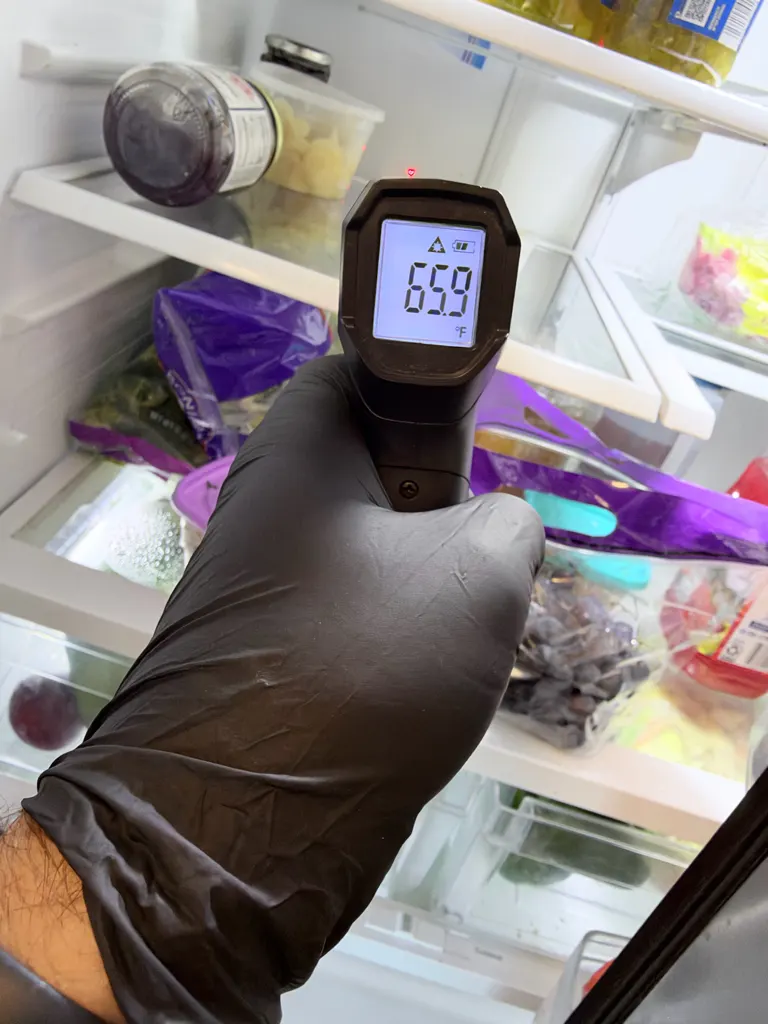
Refrigerator leaking water: where it comes from and how we fix it
A refrigerator leak looks like one problem but comes from one of about six places. Where the water shows up tells us most of the story: inside under the crisper drawers, on the floor at the front, or behind the unit. We start there, before we ever pull the refrigerator out.

Water inside the fresh-food section, usually under the crisper drawers, is almost always a frozen or clogged defrost drain. Water on the floor at the front can be the drain pan, the dispenser or condensation. Water behind or under the unit is usually the water line, inlet valve or filter housing. Shut the water supply if it's coming from the line, and keep the refrigerator running so we can see the pattern.
Where is the water?
| Where you find water | Most likely source | What we check |
|---|---|---|
| Inside, under the crisper drawers | Frozen or clogged defrost drain | Drain trough, drain tube, drain heater |
| Floor at the front, small puddle | Drain pan overflow or crack, dispenser drip | Pan, dispenser, door gasket |
| Floor at the front, after using the dispenser | Dispenser line or valve | Door water tube, dispenser |
| Behind or under the unit | Supply line, inlet valve, filter housing | Fittings, valve body, filter head |
| Inside the freezer, ice sheet on the floor | Defrost drain frozen, or ice maker overfilling | Drain, ice maker fill |
| Sweating on walls or door edges | Door seal, humid air getting in | Gaskets, hinges, leveling |
1. The defrost drain
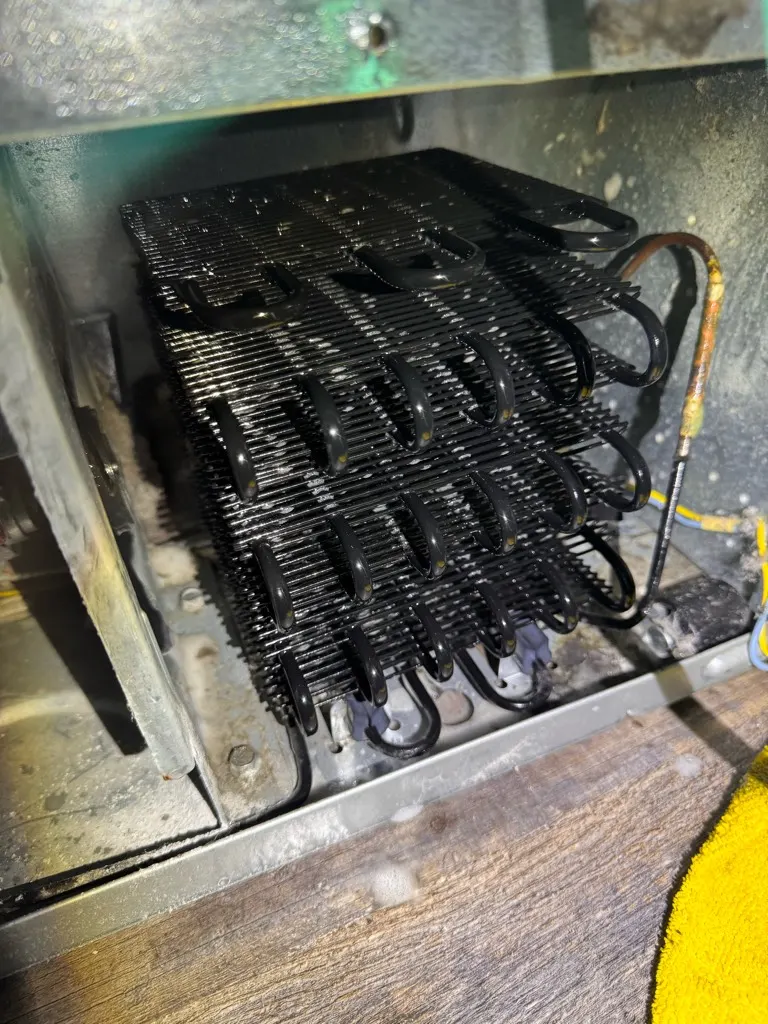
Every frost-free refrigerator melts the frost off its evaporator coil several times a day. That water runs into a trough under the coil, down a drain tube and into a pan near the compressor, where warm air evaporates it.
If the drain clogs with food debris, or freezes solid, the water has nowhere to go. It overflows the trough and runs into the fresh-food section, usually pooling under the crisper drawers. It's the most common leak we see.
On some Samsung French-door models the drain line is prone to freezing, and a small heater or metal clip on the drain is part of the fix. On other brands, a blob of ice at the drain opening is often a sign the defrost system itself isn't completing. We clear the drain with warm water and check the defrost cycle so it doesn't come back.
2. The drain pan
The pan under the refrigerator collects defrost water and lets the condenser heat evaporate it. If it's cracked, out of position after a move, or overflowing because the condenser fan isn't moving air, water ends up on the floor at the front. Pull the bottom grille and look with a flashlight.
3. Water supply line and inlet valve
If you have an ice maker or dispenser, there's a water line running to a valve at the back of the refrigerator. Old white plastic lines get brittle and crack. Compression fittings loosen when the refrigerator is pushed back. The valve body itself can crack, especially after being exposed to cold in a garage.
Water behind or under the unit, sometimes running out to the front, is the sign. Shut the supply valve and check the floor stays dry. Replacing the line with braided stainless and, if needed, the inlet valve, is a routine repair. We've replaced 39 inlet valves on refrigerators in our records. See our water line hookup service.
4. The filter housing
Filters that live inside the refrigerator, usually in the ceiling of the fresh-food section or at the bottom grille, sit in a plastic housing. A filter that isn't seated fully, an off-brand filter that doesn't seal, or a cracked housing all leak. Reseat the filter and try the manufacturer's filter before replacing parts.
5. The ice maker and dispenser
An ice maker valve that doesn't close completely overfills the mold. Water spills into the bin and freezes into a sheet, and some of it can run down the back of the freezer. A dispenser that keeps dripping after you let go usually has a valve or door-tube issue. Our ice maker guide covers these in detail.
6. Condensation and door seals
Sweating along the door edges or inside the cabinet, and water dripping down the walls, points to warm, humid air getting in. A torn or flattened gasket, a door that doesn't close by itself, or a refrigerator that's tilted forward are the causes. Most refrigerators should sit slightly higher at the front than the back so the doors swing shut; the leveling legs adjust this.
What our records show
Leaks rarely come alone. On Samsung refrigerators, ice maker complaints were more than three times as common as leak complaints, and the two are often the same problem: water from a frozen drain or a dripping ice compartment ends up somewhere it shouldn't. That's why we look at the whole water and defrost path, not just the puddle.
| From our refrigerator jobs | Count |
|---|---|
| Refrigerator repairs since 2024 | 2,296 |
| Water inlet valves replaced | 39 |
| Ice makers replaced | 70 |
| Samsung refrigerator jobs where a leak was the complaint | 18 of 228 |
| Samsung refrigerator jobs about the ice maker | 61 of 228 |
Leaks after a move or a new install
A refrigerator that starts leaking right after it was moved or installed usually has one of three problems. The water line was kinked or the fitting loosened when the unit was pushed back. The drain pan got knocked out of position. Or the refrigerator is tilted forward, so the doors don't close fully and condensation builds up.
Pull it out a few inches, check the line and pan with a flashlight, and set the front legs so the front sits slightly higher than the back. If the line is old white plastic, replace it with braided stainless while the unit is out. If a refrigerator was transported lying down, give it several hours upright before plugging it in.
How we diagnose it on a service call
Most leaks show their source within the first few steps. When two things are wrong, for example a slow drain and a weeping valve, we fix both, or the floor will be wet again in a week.
- 1Ask where the water appears and when: after using the dispenser, overnight, after a defrost
- 2Dry everything and look for fresh water at each source
- 3Check the drain opening at the back of the fresh-food section for ice or debris
- 4Remove the freezer back panel if needed and look at the drain trough and coil
- 5Pull the unit out and inspect the supply line, valve and fittings with the water on
- 6Check the drain pan position and the condenser fan
- 7Run the ice maker and dispenser and watch for drips
- 8Check door gaskets, hinges and leveling
Brand patterns we see
Patterns are a starting point. Every unit is checked before we order parts.
| Brand | What we look at first |
|---|---|
| Samsung French-door | Frozen defrost drain (ice under crisper drawers), drain heater or clip, ice compartment drips |
| LG | Ice room drips, drain line, water valve fittings |
| Whirlpool, KitchenAid, Maytag | Drain clogs, inlet valve, filter housing in the ceiling |
| GE and Café | Filter housing, dispenser line, drain pan |
| Frigidaire | Drain clogs, door ice maker drips, drain pan |
| Built-ins (Sub-Zero, JennAir) | Drain pan and evaporator tray, supply connections at the top |
Is it worth repairing?
Nearly always. Drain clears, valves, lines, filter housings and gaskets are moderate repairs on any refrigerator. The exception is a leak that's a symptom of a defrost system that keeps failing on an older economy unit, where the defrost repair plus other wear can add up. Check the numbers in our repair-or-replace calculator.
Parts involved in refrigerator leaks
| Part | What it does | How it fails |
|---|---|---|
| Defrost drain / drain tube | Carries defrost water to the pan | Clogs with debris or freezes |
| Drain heater or drain clip | Keeps the drain from freezing on some models | Missing, failed or misplaced |
| Drain pan | Holds water so it can evaporate | Cracks, shifts out of place |
| Water inlet valve | Feeds the ice maker and dispenser | Cracked body, valve won't close |
| Supply line and fittings | Bring water to the valve | Plastic cracks, fittings loosen |
| Filter housing | Holds the water filter | Cracks, poor seal with wrong filter |
| Door gaskets | Seal warm air out | Tear, flatten, cause condensation |
What you can do right now
- Dry everything and check again in a few hours to see where water reappears
- Shut the water supply if the leak is behind the unit
- Turn off the ice maker if the leak is in the freezer
- Pull the bottom grille and check the drain pan
- Clear food from around the drain opening at the back of the fridge section
- Check that the doors close on their own
Cost and when to call
Drain clears, lines and valves are moderate repairs. If the drain keeps freezing, the defrost repair takes longer because the coil has to be thawed. Call (720) 534-0432 if water keeps coming back, if it's reaching the floor, or if the refrigerator is also running warm. More on our refrigerator repair page and Samsung refrigerator repair.
If water stopped coming from the door instead, see our water dispenser guide.
Still not working?
Home service call from $59, credited toward the repair. Same- or next-day visits across the Denver metro.
Related repairs from our jobs

Questions we get about this
Is a leaking refrigerator dangerous?
Water on the floor near electrical outlets is a hazard. Dry it, and shut off the water line if the leak is from the supply.
Why is there ice under my crisper drawers?
The defrost drain has frozen. Clearing it helps, but the cause needs fixing or it returns.
Can I keep using the refrigerator?
Usually yes. Turn off the ice maker or water supply if the leak is from the water system.
Why does my refrigerator leak only after using the dispenser?
A dispenser valve or door water tube issue, or a filter that isn't seated.
Why is water dripping inside my freezer?
Usually the defrost drain is frozen or the ice maker is overfilling. Check for ice at the bottom of the freezer.
Do refrigerators need a drain cleaning?
Clearing the defrost drain opening of food debris occasionally helps prevent clogs.