Home / Commercial appliances / Commercial Washers & Dryers

Commercial equipment

Commercial washer and dryer repair in Denver

A shared washer that won't drain, a commercial dryer that stops heating, a drum that won't turn. We repair commercial and heavy-duty laundry for Denver apartment buildings and businesses.

Commercial service call$129
Waived when you approve the repairWritten quote before any work · same- or next-day appointments · 90-day warranty on parts and labor

4.8 ★  71 Google reviews

Request business service

We reply during business hours (Mon–Sat 7am–7pm · Sun 8am–6pm). Urgent? Call (720) 534-0432.

Same / next-day dispatchPriority slots for contract clients
90-day warrantyOn every repair, parts and labor
Service call waivedWhen you go ahead with the repair
EPA 608 certifiedTechnicians licensed for refrigerant work
Insured, COI on requestReady for vendor onboarding
W-9 & invoicingNet-30 terms for approved accounts

Our commercial laundry work is mostly apartment and condo laundry rooms, plus salons, gyms and small businesses that run heavy-duty machines all day. Speed Queen and Huebsch are the brands we see most, along with commercial-duty Maytag and Whirlpool.

In a shared laundry room one broken machine means complaints, so we aim for same- or next-day visits and carry common belts, pulleys, pumps and switches.

Washers

Commercial washer repair

01Drains, controls and locks

In Berthoud a commercial washer stopped working. We took the housing apart, cleaned the drain pump, filter and drain hose, reassembled it and tested a full cycle. In Arvada a Speed Queen had water damage to its controls: new start and stop buttons, a new control board and a clean-up of the water damage brought it back. In Lakewood we serviced a Speed Queen lid lock and handled a Speed Queen that wasn't draining.
Dryers

Commercial dryer repair

02No heat, no tumble

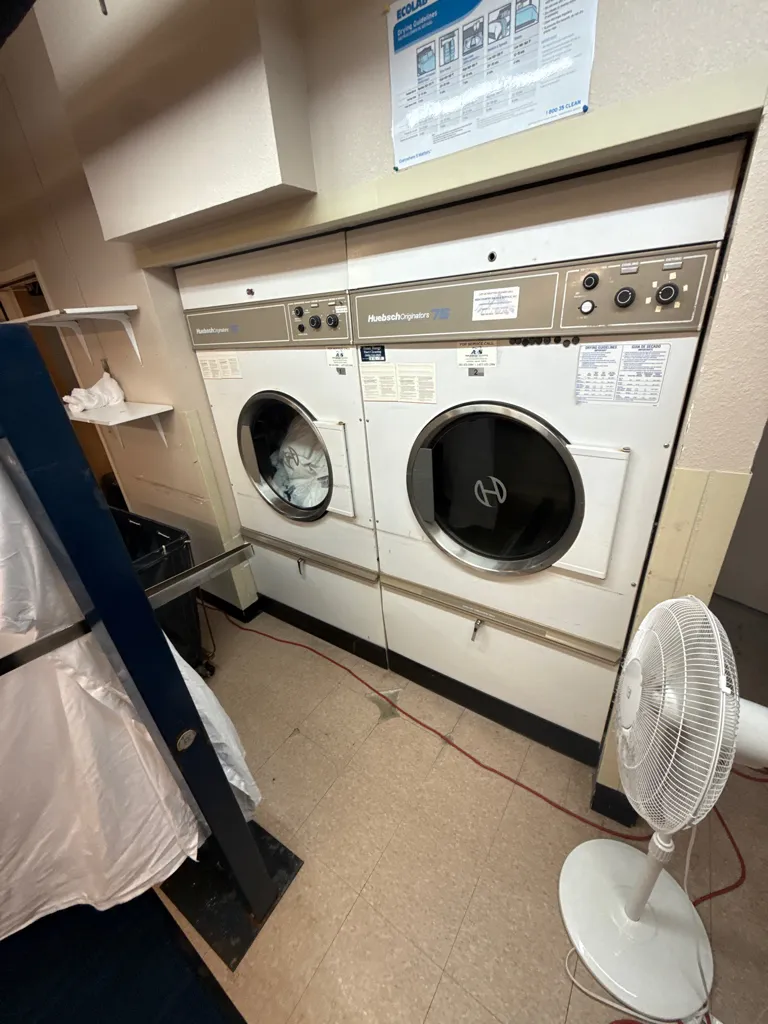
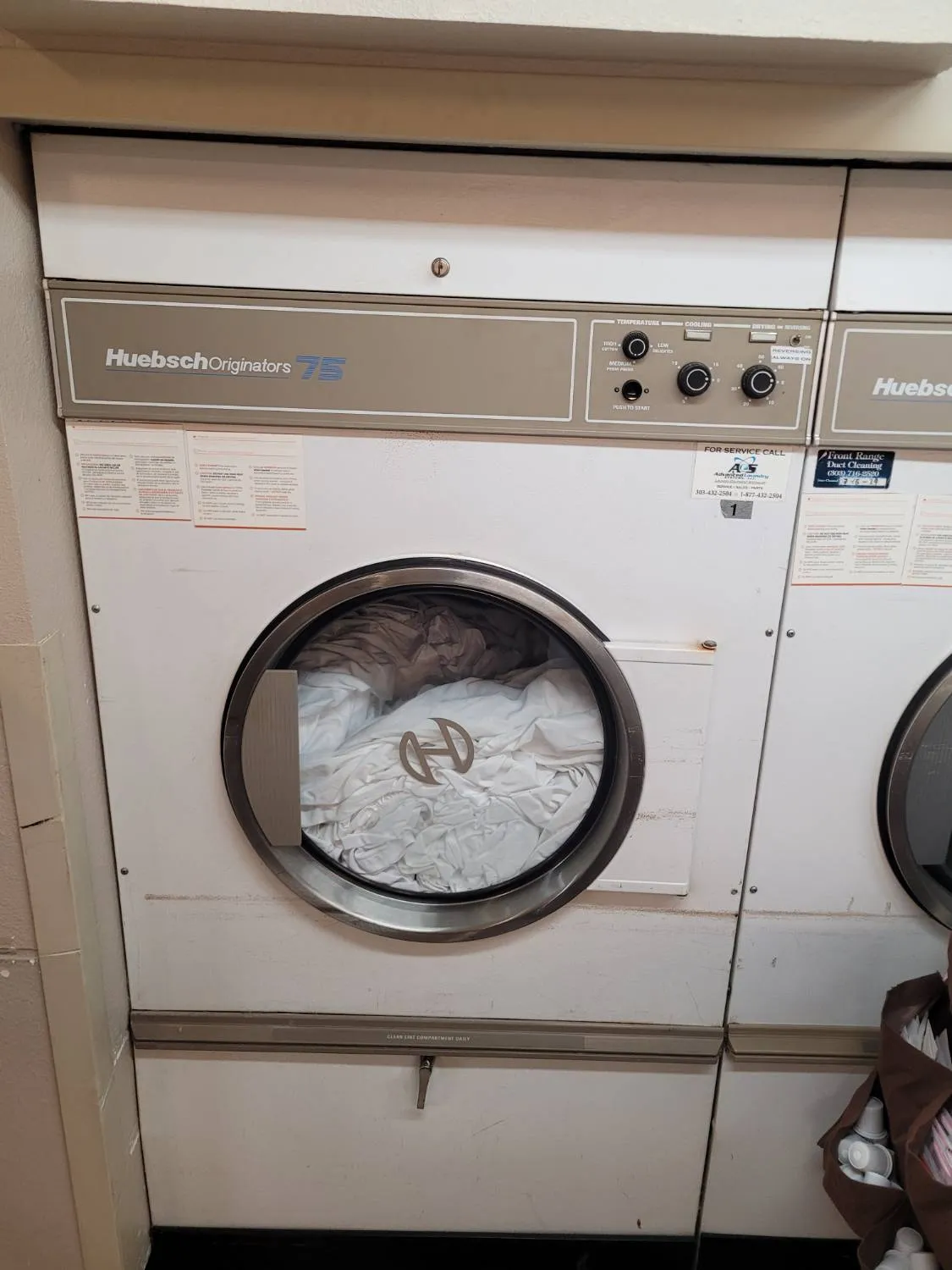
In Denver a commercial dryer stopped heating; a worn idler pulley, roller and belt were the problem, and we replaced all three. In Boulder the back panel came off a Huebsch commercial dryer and the drum stopped turning. We cleaned the heat exchanger, refitted the cover and serviced the heating element.

Photos

Commercial laundry repairs, in photos

03Dryers

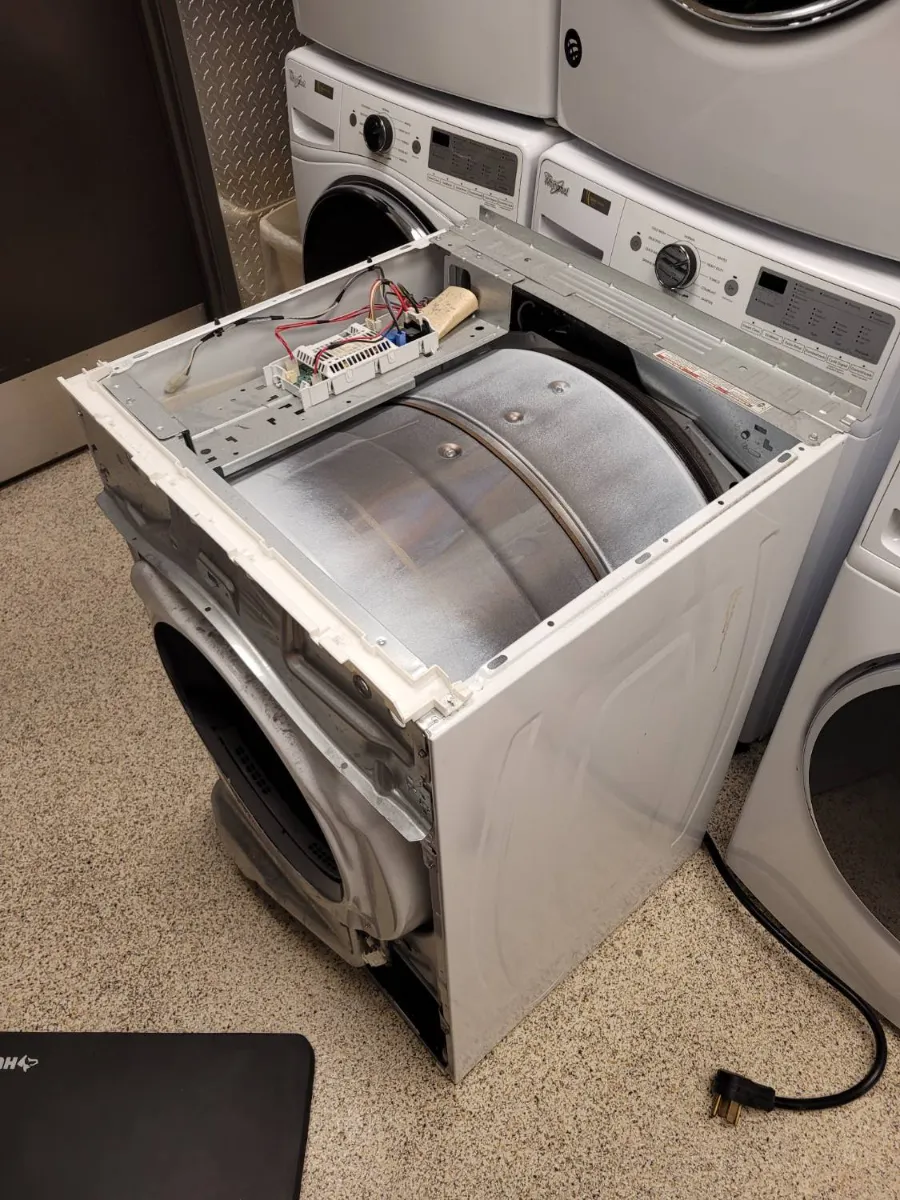
In Denver a commercial dryer that wasn't heating had a worn drum roller, idler pulley and belt that were slowing the drum and tripping the heat; we replaced all three. In Longmont two stacked commercial dryers needed new support wheels and a thorough internal cleaning, because lint packed inside a commercial dryer is both a performance problem and a fire risk. In Boulder a Huebsch dryer had its back panel come off; we cleaned the heat exchanger area, refitted the cover and checked the heating element.

Stacked commercial dryers in Longmont during a support wheel replacement and cleaning
Longmont commercial dryer opened up for the support wheel replacement
Laundry room in Boulder with the Huebsch dryer after the repair

04Washers

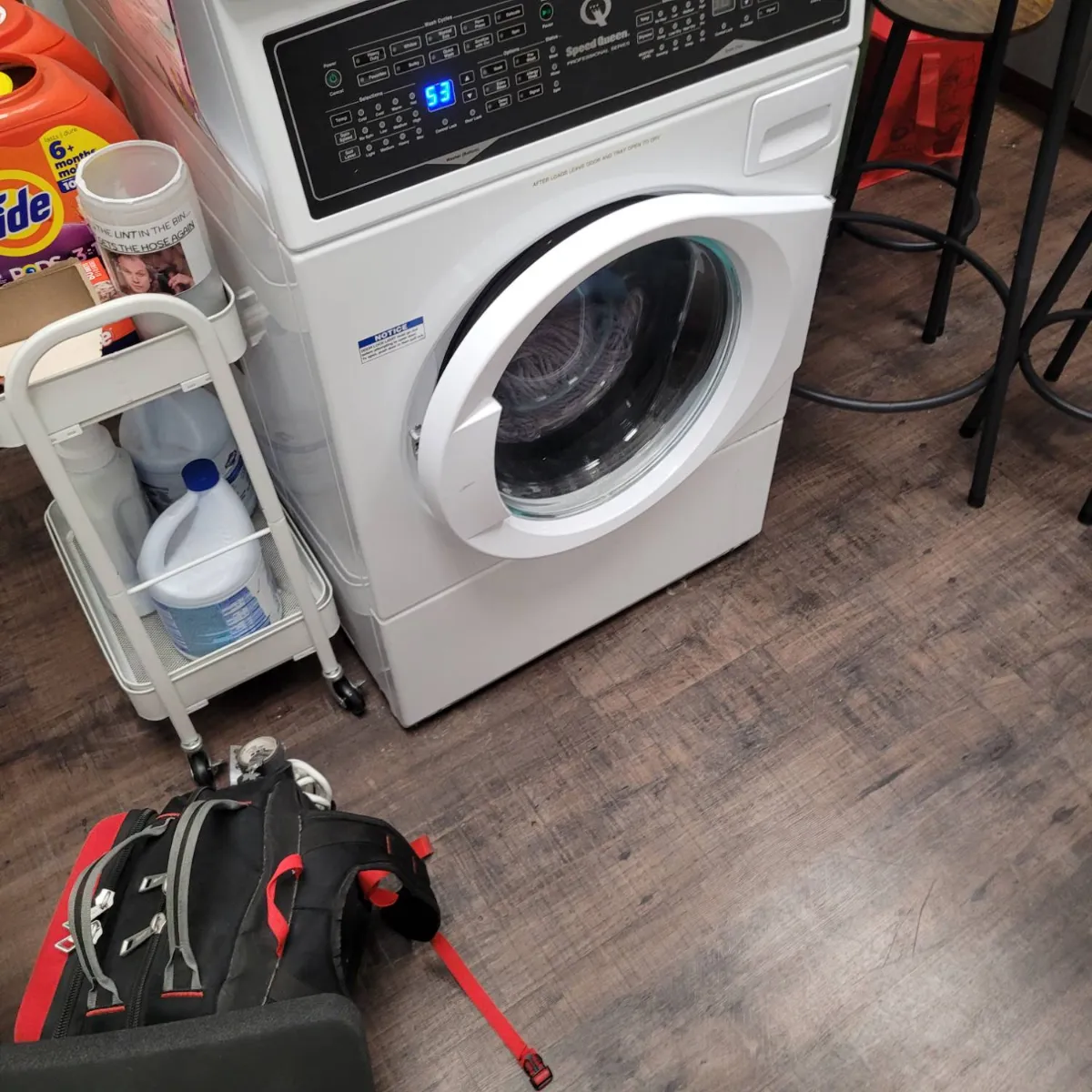
A commercial front-load washer in Commerce City and a Speed Queen pair in Golden are typical of the machines we service: heavy-duty, built to run many cycles a day, and almost always worth repairing.

Speed Queen dryer in Golden that had stopped working
The same Golden Speed Queen laundry pair
Who we serve

Apartment laundry rooms, salons, gyms and small businesses

05Multifamily and HOA laundry rooms

In an apartment or condo laundry room one broken machine means a line of unhappy residents. We coordinate access with property managers, fix most problems on the first visit and leave a clear invoice for the owner. Coin and card readers are handled by your route operator or vendor; we repair the machine itself: drains, locks, valves, motors, belts, heating and controls.

06Salons, gyms, spas and restaurants

Businesses that wash towels and linens all day put far more cycles on a machine than a household. That wears belts, bearings, door locks and drain pumps faster, and lint builds up in dryers quickly. Regular cleaning and early repairs keep the machines running.

Fire safety

Lint, vents and commercial dryer fire risk

07Why we clean inside the dryer

Commercial dryers move a lot of air and a lot of lint. Lint collects behind the drum, around the burner or element and in the exhaust, and it is the main cause of dryer fires. On every dryer repair we look inside the cabinet and at the exhaust, and we recommend a full internal cleaning at least once or twice a year for busy machines.

08Signs to call us

Clothes taking two cycles, a burning smell, the outside of the dryer hot to the touch, or a high-limit that keeps tripping all point to restricted airflow and should be checked before the machine is used again.

Brands

Commercial laundry brands we repair

09Speed Queen, Huebsch and more

We see Speed Queen and Huebsch most, along with commercial-duty Maytag, Whirlpool and GE machines and stacked commercial units. Parts for these brands are widely available, so most repairs are finished quickly.

Washers

Commercial washer problems, by symptom

10Will not drain or will not spin

A commercial washer that stops with water in the drum is usually a drain problem: a blocked pump, a clogged drain hose or valve, or a foreign object such as a coin, a sock or a hair tie. On one commercial washer in Berthoud the fix was cleaning the drain pump. A washer that drains but will not spin often has a lid or door lock that is not confirming closed, a worn belt, or a motor control fault. We check the lock first, because on commercial machines the lock has to prove it is closed before the control will allow a spin.

11Will not start, leaks or shakes

A machine that takes payment or a start command and does nothing usually has a door lock, a control or a power problem. We have replaced Speed Queen control boards and switches, including on a washer whose controls were damaged by water. Leaks on front-load commercial washers come from the door boot, the dispenser hoses or a drain hose; on top-loads, from hoses and the tub seal. Heavy shaking means worn suspension, shocks or bearings, or a machine that is not level. A washer that walks across the floor will damage its own hoses and wiring, so it should be stopped until it is fixed.

Dryers

Commercial dryer problems, by symptom

12No heat

Most commercial dryers in apartment laundry rooms and small businesses are gas. When a gas dryer tumbles but stays cold, we check in this order: airflow (a clogged lint compartment or vent trips the airflow switch), the high-limit thermostat, the igniter, the flame sensor and the gas valve coils. A Denver commercial dryer that would not heat and a Boulder Huebsch with poor heat were both on this list. On electric commercial dryers, the elements and the limits are the usual parts.

13No tumble, noise and slow drying

A drum that will not turn is a belt, a motor, an idler or a drum roller. On one Boulder Huebsch the back panel had come off and the drum stopped spinning. Squealing and thumping come from worn rollers, bearings and idlers. Slow drying across several machines at once almost always points to the shared exhaust or makeup air in the room, not to every dryer failing at the same time; on two Longmont dryers with noise and slow drying, we looked at both machines and the exhaust together.

Machine types

The machines we see in Denver-area laundry rooms

14Top-loads, front-loads and stacked pairs

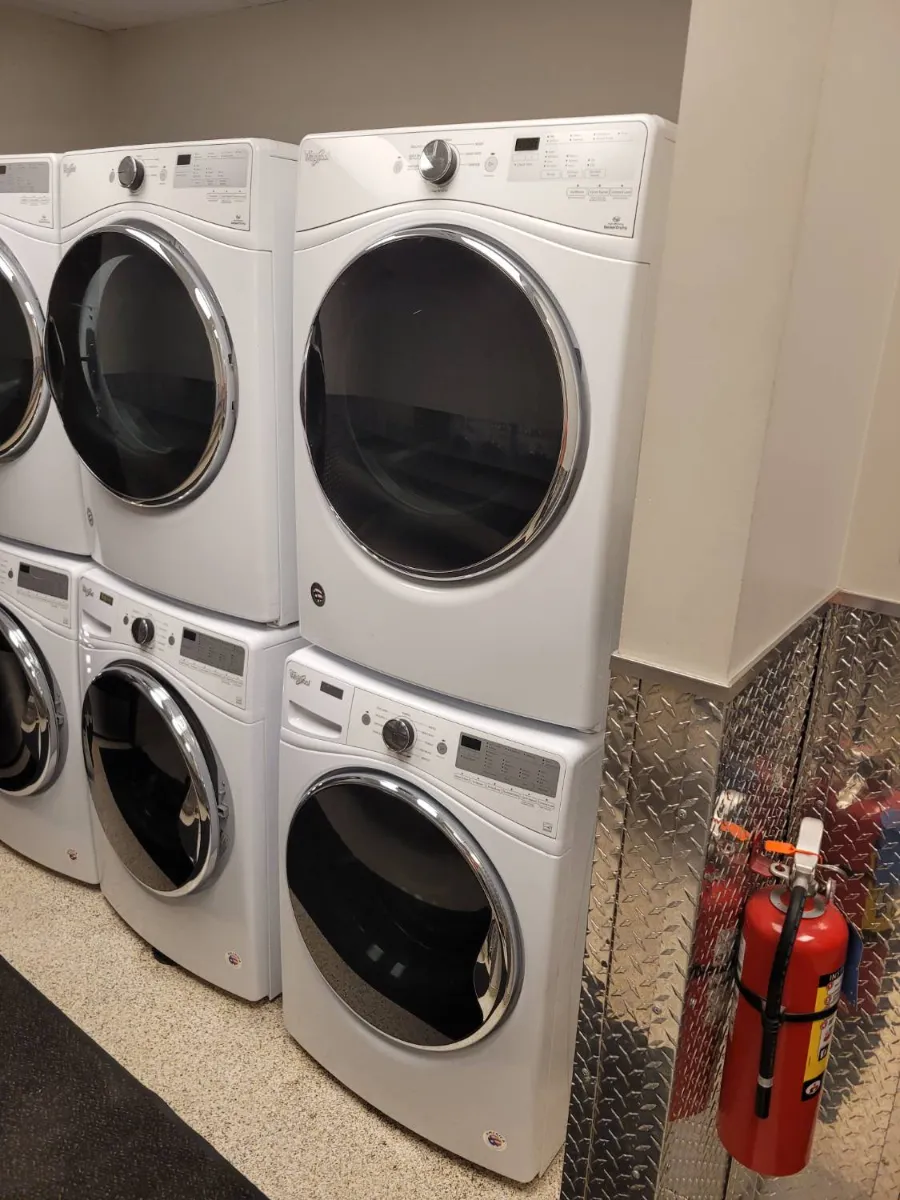
Most small commercial laundry rooms we service use one of three setups. Commercial top-load washers are simple and tough, with a lid lock, a transmission or direct drive and a basic control. Commercial front-load washers use less water and spin faster, so they have a door boot, a door lock and a motor control that all need attention. Stacked washer-dryer pairs save floor space in apartment buildings and small businesses, with the dryer on top. Dryers are mostly gas, single or stacked, with a burner, an igniter, an airflow switch and a belt-driven drum.

Each type fails in its own way. Top-loads wear lid locks and drain pumps. Front-loads wear door boots, bearings and locks. Stacked pairs are harder to reach, so a repair takes more care, and the dryer on top shares a frame with the washer below. Telling us which you have helps us bring the right parts.

Maintenance

A maintenance schedule for a small laundry room

15Daily, monthly and yearly

Daily: empty the lint screens on every dryer, or have whoever manages the room do it. Wipe the door glass and boots on front-load washers and leave the doors open to dry. Monthly: check washer drain hoses and inlet hoses for bulges and leaks, clean the dispenser drawers, and vacuum lint from the dryer lint compartments behind the screen. Every six to twelve months, depending on use: have the inside of each dryer cleaned out, the burner area checked, belts and rollers inspected, and the exhaust ducts cleaned from the dryer to the roof or wall. Lint inside a commercial dryer is a fire risk, and dryers in shared laundry rooms run far more hours than home units.

16What to tell us when you call

Tell us the brand, whether each machine is gas or electric, how many machines are affected, any error code on the display, and whether the problem is on one machine or several. Let us know who will give access to the room and whether there is a coin box or card reader we should not open. If several machines show the same problem, we look at shared causes first: power, water supply, drain or exhaust.

Safety

Gas, venting and fire safety for commercial dryers

17What we check every time

Several dryers running for hours a day push a lot of lint and hot, moist air. If the shared exhaust is undersized, crushed or full of lint, every dryer on it runs hotter and slower, and the high-limit thermostats start tripping. Lint that builds up inside the cabinet, around the burner and behind the drum is what turns a dryer fault into a fire. On every commercial dryer call we look inside the cabinet, check the burner flame, test the high limit and check that the exhaust pulls properly.

If anyone smells gas in a laundry room, shut off the dryers, open the doors, leave the room and call the gas utility from outside. Do not reset or restart the dryers until the source is found. A burner that lights late with a soft boom, a flame that is mostly yellow, or soot around the burner are all reasons to stop a dryer and have it looked at.

Decisions

Repair or replace a commercial machine

18How we look at it

Commercial washers and dryers are built to be repaired. Speed Queen, Huebsch and similar machines are designed with replaceable locks, boards, motors, belts and burners, and a repair is almost always cheaper than a new machine. We suggest replacement only when the drum, tub or cabinet is badly damaged, when parts are no longer made, or when one machine keeps failing in different ways. You get a written price before any repair, and repairs carry a 90-day warranty on parts and labor.

Property managers

Questions property managers and owners ask

19Who owns the machines?

Before you book, check whether your building owns its washers and dryers or leases them from a laundry route company. Many apartment laundry rooms are run under a route contract, and in that case the route company is usually responsible for repairs and may not want an outside technician working on its machines. If the building or the business owns the equipment, we can service it directly.

20Can you work while the room is in use?

Yes, in most cases. We work on one machine at a time, keep the area around it clear, and leave the others running when it is safe to do so. If we need to shut off a shared water supply, gas line or circuit, we tell the person who gave us access first so residents or staff are not caught off guard.

21Do we get something in writing?

Yes. You get a written diagnosis and price for each machine before we repair it, and the invoice lists the parts we replaced and what we tested. For a room with several machines, that gives you a simple record of which units have had which work, which helps when you plan replacements later.

Early warning

Signs a commercial machine needs service before it fails

22What to watch for

Most commercial washer and dryer breakdowns give a warning first. On washers, watch for a load that is still wet after the final spin, a cycle that runs longer than it used to, water left in the drum, new banging during spin, or a door or lid that has to be pushed to lock. On dryers, watch for loads that need a second cycle, a cabinet that is hot to the touch, a burning or scorched smell, new squealing or thumping, and lint collecting around the door or the front of the machine.

In a shared laundry room, residents and staff notice these things before anyone else. A simple sign asking users to report problems, with a phone number or email, catches failures while they are still small. A worn belt, a weak igniter or a slow drain pump is a routine repair. Left alone, the same problem can burn out a motor, scorch a load or flood the floor.

Job records

Recent commercial washers & dryers repairs in and around Denver

WhereApplianceProblemWhat we did
BerthoudCommercial washerNot workingCleaned drain pump, filter and drain hose
ArvadaSpeed Queen washerWater-damaged controlsReplaced buttons and control board
LakewoodSpeed Queen washerLid lockCleaned and tested lid lock
DenverCommercial dryerNot heatingReplaced idler pulley, roller and belt
BoulderHuebsch dryerDrum not turningCleaned heat exchanger, refitted cover
DenverCommercial dryerNot heatingReplaced drum roller, idler pulley and belt
LongmontCommercial dryers (2)Noise, slow dryingReplaced support wheels, cleaned inside
BoulderHuebsch dryerBack panel off, poor heatCleaned heat exchanger, refitted cover, checked element

Problems are described as the customer reported them; repairs are taken from the technician's notes. No customer details are published.

Tips from our technicians

How to avoid the next commercial washers & dryers repair

Post a sign asking users to clean the lint screen every load.

Have shared dryer exhaust ducts cleaned at least twice a year.

Don't let users overload washers; it wears suspensions and bearings quickly.

Empty every dryer lint screen daily in a shared laundry room.

If several dryers dry slowly at once, check the shared exhaust before calling about each machine.

Post a sign in the laundry room asking users to report noise, leaks or slow drying.

Who we are

ABC Denver Appliance Repair is an independent, local repair company. Our technicians are EPA 608-certified, carry common parts on the truck and test every repair before they leave. Every repair comes with a 90-day parts and labor warranty.

Problems we fix

Common commercial washers & dryers problems we fix

Commercial washer not draining

A washer that stops with water in the tub usually has a clogged drain valve or pump, a foreign object such as a sock or coin in the drain path, a failed drain pump or valve motor, or a fault in the water level sensing. The technician clears the drain, tests the valve or pump and its control signal, and checks the level sensor and hose so the next cycle completes.

Book a technician

Washer door will not unlock or lock

Front-load commercial washers rely on a door lock and switch assembly that wears with heavy use, and a failed lock either strands a customer's laundry or keeps the machine from starting. We test the lock, the door switch and the control output, and check for a hinge or latch that has sagged out of alignment.

Book a technician

Washer shaking or walking during spin

Excessive vibration can come from worn shock absorbers or suspension springs, failing tub bearings, loose mounting bolts on hard-mount machines, or an out-of-balance sensor that is not doing its job. We inspect the suspension, bearings and mounting, and check the floor and frame on hard-mount washer-extractors.

Book a technician

Washer not filling or filling slowly

Low or no fill points to clogged inlet screens, a failed water valve, low supply pressure or a control fault. We clean the screens, test the valves and verify the water level control so cycles run to the correct volume and temperature.

Book a technician

Commercial dryer not heating

On gas dryers, no heat often means a failed igniter, gas valve coil or flame sensor; on electric dryers, a failed heating element. Both types can be shut down by an open high-limit thermostat or thermal fuse, which usually trips because airflow is restricted. We test the heat source and safeties, and we check lint screens, the lint compartment and the exhaust run, because replacing a fuse without fixing airflow just leads to another failure.

Book a technician

Dryers taking two cycles to dry

Long dry times are almost always an airflow problem: a clogged lint screen, lint packed behind the screen, a crushed or overlong exhaust duct, or a blocked outside damper. Weak heat from a failing burner or element is the next suspect. We check airflow and temperature and point out exhaust problems your building maintenance team should address.

Book a technician

Stack dryer top or bottom pocket not working

On stack dryers each pocket has its own controls and safeties, so one can fail while the other runs normally. We troubleshoot the individual door switch, sail switch, motor, drive belt, heat circuit and control for the dead pocket.

Book a technician

Machine displaying an error code

Commercial controls log fault codes for drain, fill, lock, heat and motor problems. We read the code and the machine's history, then confirm the actual failed part with meter tests rather than replacing a control board on a guess.

Book a technician

What we service

Equipment covered

When you call, list each machine that is down, its location and any error code, so the technician can plan the route through a store or several laundry rooms in one trip. On site, we diagnose each machine, give you a written quote per machine and repair the approved ones; for payment-system faults we will tell you if the problem is outside the machine so you can contact your payment provider. Property managers can request a certificate of insurance and W-9 ahead of time, and business accounts can be invoiced.

  • Commercial front-load washers
  • Commercial top-load washers
  • Soft-mount and hard-mount washer-extractors
  • Single-pocket commercial dryers
  • Stack dryers
  • Gas and electric commercial dryers
  • Multi-housing laundry room washers and dryers
  • Stacked washer-dryer units
  • Coin- and card-operated machines (the machine itself, not the payment system)

Between visits: what your staff can do

  • Clean dryer lint screens several times a day in a busy store, and vacuum the lint compartment behind the screen on a regular schedule.
  • Have the exhaust ducts and outside dampers inspected and cleaned periodically; lint buildup slows drying and is a fire hazard.
  • Wipe washer door gaskets and leave doors open after hours to reduce odor and mildew.
  • Check inlet hoses for bulges and cracks, and replace any that look worn.
  • Post clear signs about load size and detergent type, since overloading and too much detergent shorten machine life.
  • Track out-of-order calls by machine number so recurring problems are easy to spot and repeat failures can be repaired at the root.

Repair or replace?

Door locks, drain pumps and valves, igniters, belts, inlet valves and thermostats are worth repairing on almost any commercial machine. Failed tub bearings, a cracked outer tub or a failed drive motor and control on an older washer can approach the cost of a new one, especially when other machines in the same row are the same age. We will give you the repair figure in writing so you can weigh it against replacing that machine or the whole bank. If a machine keeps coming back with the same failure, we will say so rather than keep selling you the same part.

Guides

Who we do this for

Brands

Commercial Washers & Dryers brands we repair

Real work

More photos from our jobs

Photos from our own service calls in the Denver metro — not stock images. · All job photos →

How a service call works

Step 1

Request

Call, text or send the form. Tell us the location and the equipment.

Step 2

Diagnose & quote

A technician arrives same or next day and gives a written quote before any work.

Step 3

Repair & report

You get a photo report and an invoice your office can file the same day.

Commercial Washers & Dryers: common questions

Do you repair coin and card-operated machines?

We repair the washer or dryer itself: drains, motors, belts, heat, locks and controls. Payment systems are serviced by their vendors.

Which brands do you repair?

Speed Queen, Huebsch, and commercial-duty Maytag, Whirlpool and others.

Can you service a whole laundry room?

Yes. We can check every machine on one visit and give you a single written report and quote.

Do you clean commercial dryers?

Yes. We clean lint from inside the cabinet, around the heat source and in the exhaust, which improves drying and reduces fire risk.

Do you repair coin-operated machines?

We repair the machine itself (drain, locks, valves, motors, belts, heating, controls). The coin or card system is usually serviced by your vendor.

How fast can you come to an apartment laundry room?

Usually the same day or the next day; we coordinate access with the property manager.

Call (720) 534-0432