Dishwasher not cleaning: film, grit and food left behind
A dishwasher that runs but doesn't clean is frustrating because nothing looks broken. In our experience, most of these come down to four things: a clogged filter, blocked spray arms, water that isn't hot enough, and the wrong amount of detergent for the water. The wash pump is the expensive one, and it's usually last on the list.
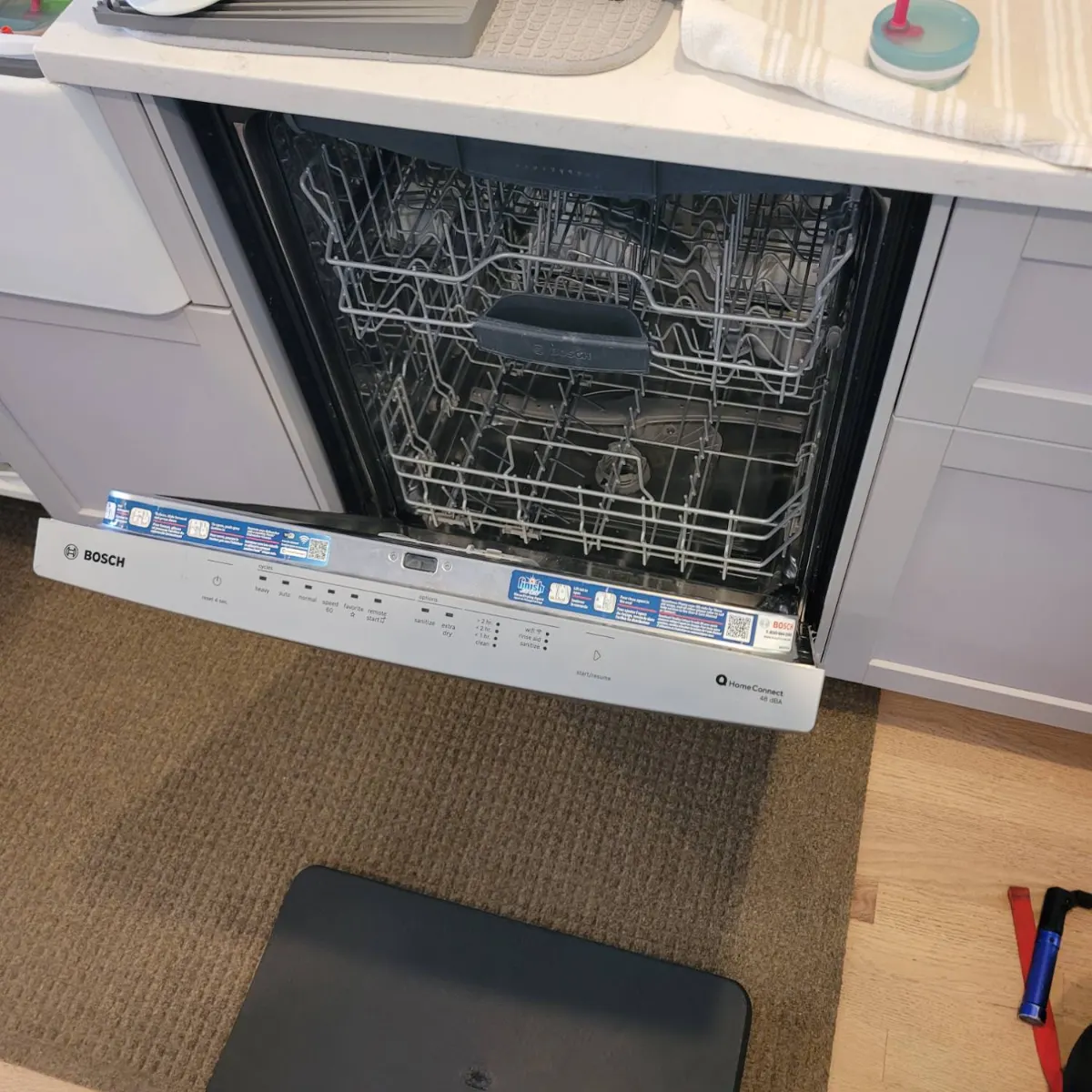
Clean the filter and spray arms first. Run the kitchen tap until it's hot before starting. Use fresh detergent and rinse aid, and don't overload. Gritty dishes point to a clogged filter or a dishwasher re-depositing food; white film points to hard water or too much detergent; dishes dirty only on the top rack point to the upper spray arm or its feed. If all of that is right, the wash pump or heater needs testing.
Read the dishes
| What you see | Likely cause | What to do |
|---|---|---|
| Gritty, sandy residue | Clogged filter, food recirculating | Clean filter and sump |
| Food stuck on, especially on top rack | Blocked or cracked upper spray arm, feed tube | Clear arm, check feed |
| White cloudy film | Hard water, not enough rinse aid, too much detergent | Adjust detergent, rinse aid, hardness setting |
| Greasy film | Water not hot enough, weak detergent | Run tap hot, check heater |
| Detergent pod not dissolving | Low temperature, blocked dispenser door | Check heater, loading |
| Everything dirty, quiet wash | Weak or failed wash pump | Test pump |
1. The filter
Most dishwashers built in the last decade use a fine mesh filter instead of a food grinder. When it clogs, the wash water carries food back onto the dishes and leaves grit. Twist out the filter, wash it under the tap with a soft brush, and clean the sump below. Monthly cleaning prevents most of these calls. Our dishwasher not draining guide covers the filter in more detail.

2. Spray arms
Seeds, glass and bits of label lodge in the spray arm holes. A blocked arm spins weakly or not at all. Pop the arms off, rinse them, and clear each hole with a toothpick. Spin them by hand after reinstalling; they should turn freely and not hit tall items.
If the top rack is always the dirty one, the upper arm or its feed tube is the suspect. A cracked feed or a misaligned connector at the back of the rack sends water everywhere except through the arm.
3. Water temperature
Detergent works best with water around 120°F or hotter. If the kitchen tap runs cold for a minute before warming, the dishwasher's first fill is cold too. Run the sink tap until it's hot before starting. Many dishwashers also heat water themselves with an element or a heater built into the pump; if that fails, dishes come out greasy and pods don't dissolve. We check the heater and thermistor with a meter.
4. Detergent, rinse aid and hard water
Old detergent loses strength, especially powders that have absorbed moisture. Rinse aid matters more than people think: modern dishwashers dry by condensation and need it to sheet water off glass.
Hard water leaves white film and spots. Across the metro, water hardness varies a lot; our city pages list the local figure, for example Thornton. If your dishwasher has a water-hardness setting, set it to match. On soft water, the opposite problem happens: too much detergent etches glass and leaves a film that doesn't wash off.
5. Loading
Tall pans in the bottom rack can block the upper arm. Big platters in front block the detergent door. Bowls nested together don't get sprayed inside. Load dirty surfaces facing the arms, keep the center clear, and make sure the arms can turn freely.
6. The wash pump
If the filter, arms, temperature and detergent are all right and the dishwasher still cleans poorly, especially if the wash sounds quieter than it used to, the wash (circulation) pump may be weak or failing. We check it for debris, test the motor and, on models with a heater built into the pump, test the heater too. It's a bigger repair than a drain pump, but usually worth it on a dishwasher that isn't old.
Dishwasher wash parts, explained
| Part | What it does | How it fails |
|---|---|---|
| Filter assembly | Catches food so it isn't recirculated | Clogs, causes grit |
| Spray arms | Distribute wash water | Holes block, arms crack or stick |
| Upper arm feed tube | Carries water to the top arm | Misaligned or cracked |
| Wash / circulation pump | Pressurizes wash water | Weakens, jams on debris |
| Heater or heat pump | Heats the water | Element or integrated heater fails |
| Detergent dispenser | Releases detergent on time | Door blocked or spring fails |
| Inlet valve | Fills the tub | Partial fill, weak wash |
How we diagnose it on a service call
- 1Look at the dishes and ask when it started
- 2Clean and inspect the filter and sump
- 3Check spray arms and the upper feed
- 4Run a cycle and check fill level and water temperature
- 5Test the heater and thermistor
- 6Listen to and test the wash pump
- 7Check the dispenser and inlet valve
Is it worth repairing?
Filters, arms, dispensers and inlet valves are inexpensive. Heaters and wash pumps cost more but are usually worth it on a dishwasher under about eight years old, and almost always on Bosch, Miele and other premium models. Try the repair-or-replace calculator once you have a price, or see our dishwasher repair page and Bosch dishwasher repair.
Seeing foam or water at the door? Our dishwasher leak guide covers detergent suds and door seals.
Still not working?
Home service call from $59, credited toward the repair. Same- or next-day visits across the Denver metro.
Questions we get about this
Why are my glasses cloudy?
Hard-water minerals or etching from too much detergent on soft water. Rinse aid and correct dosing help.
Should I pre-rinse dishes?
Scrape food off, but heavy rinsing isn't needed; detergent needs some soil to work.
Do dishwasher cleaners help?
Yes, monthly, after cleaning the filter.
Why does the top rack come out dirty?
Usually the upper spray arm or its feed is blocked or misaligned.
