Walk-in freezer: failed pressure sensor, hidden leak and an expansion valve — nonprofit kitchen, Longmont
A community meal program in Longmont lost freezing in its walk-in freezer. The diagnosis took several visits: a failed pressure sensor, then a leak that only showed up under vacuum, then a refrigerant feeding problem that was isolated to the thermostatic expansion valve (TXV).
The problem
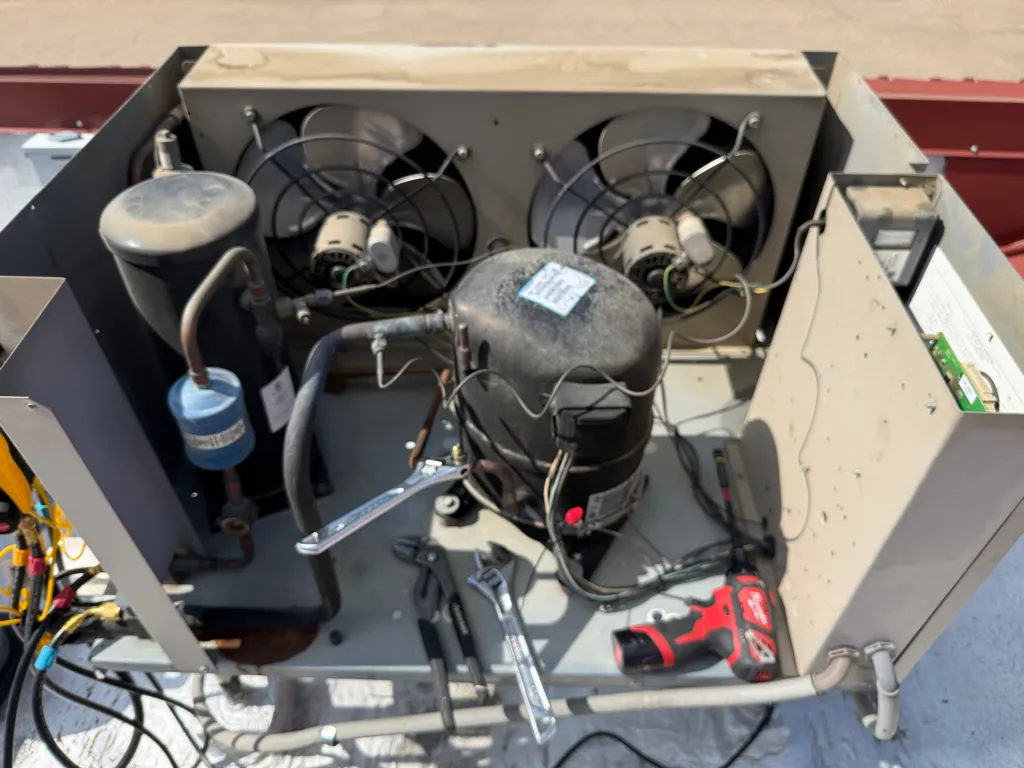
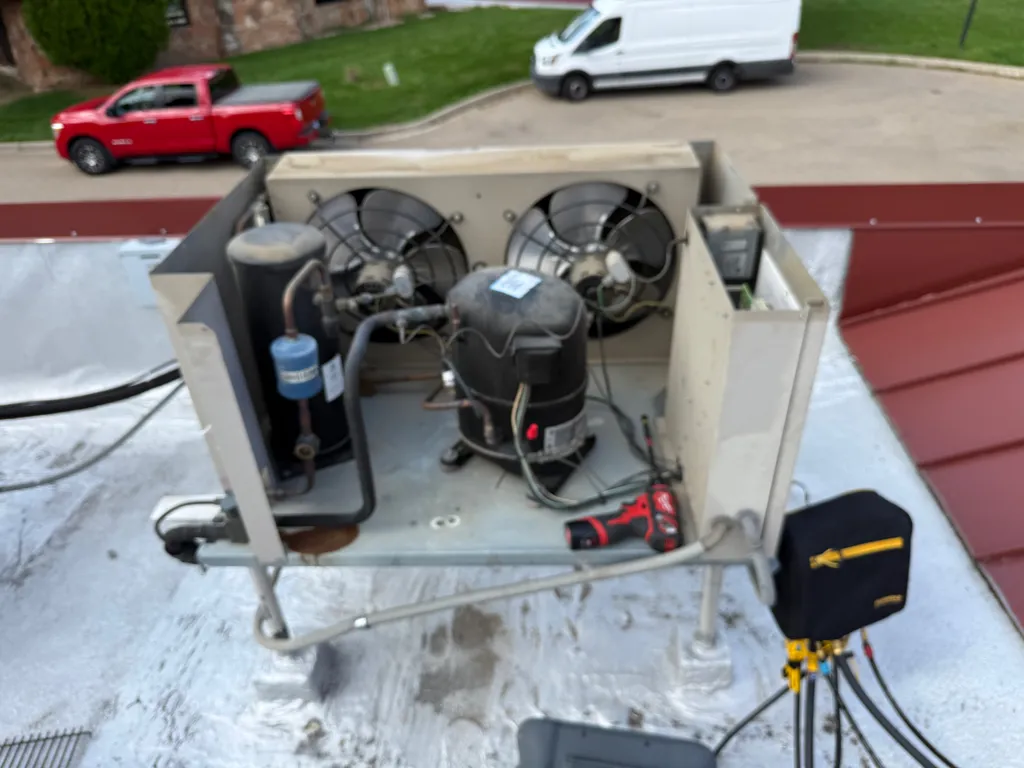
The freezer's condensing unit sits on the roof with no fixed stair, so every visit started with a ladder setup on the side of the building. The first diagnosis found a failed pressure sensor on the refrigeration system.
Replacing a sensor on a sealed system means opening it, so the full refrigerant charge had to be recovered first. That is federally regulated work for EPA Section 608 certified technicians.
What we did
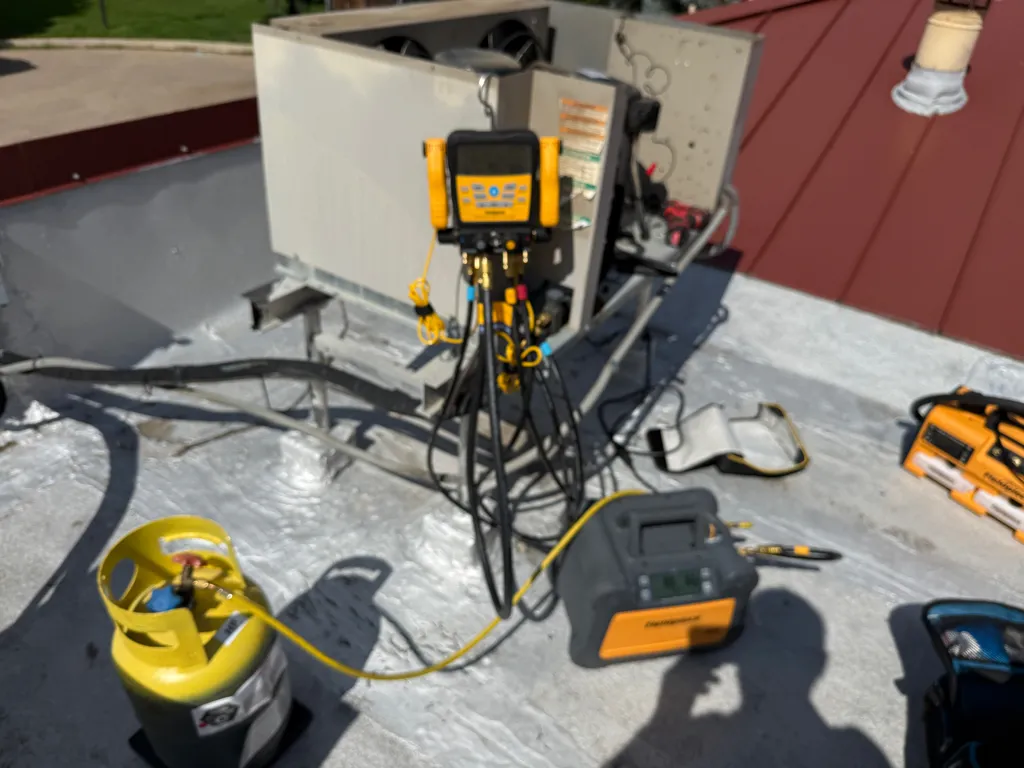
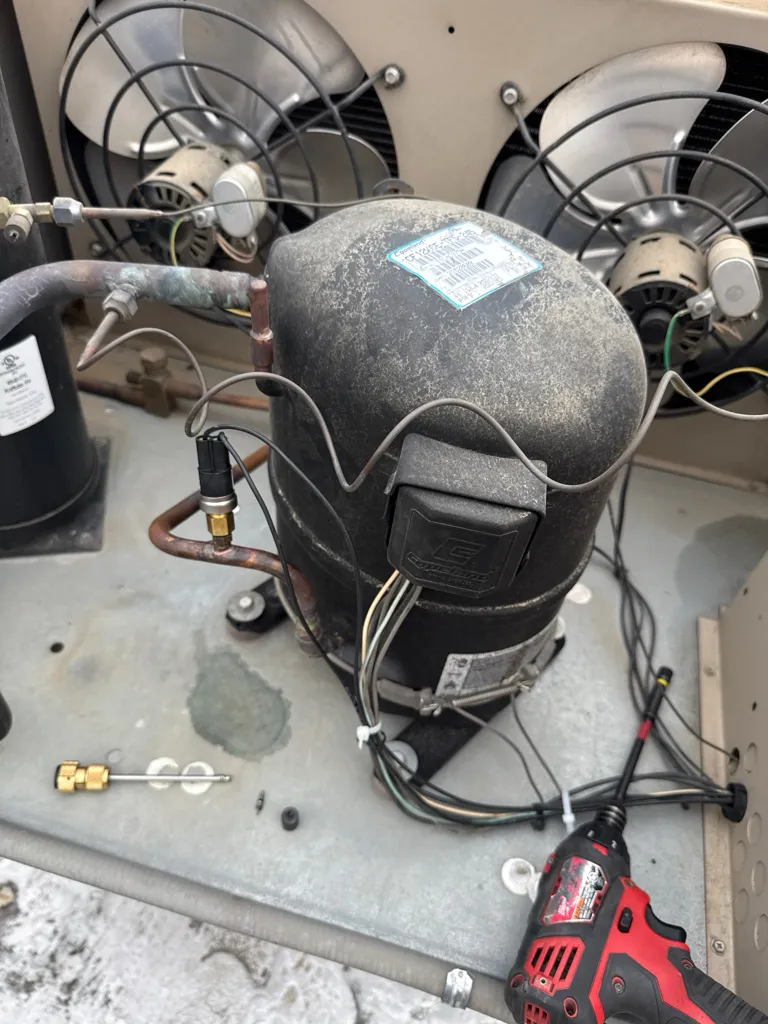
- Recovered the full R-404A charge with a recovery machine and replaced pressure sensor no. 1.
- Pulled a vacuum on the system. It would not go below 500 microns — a sign of a leak.
- Came back with an electronic leak detector and pressurized the system with nitrogen and a trace of R-404A to find it.
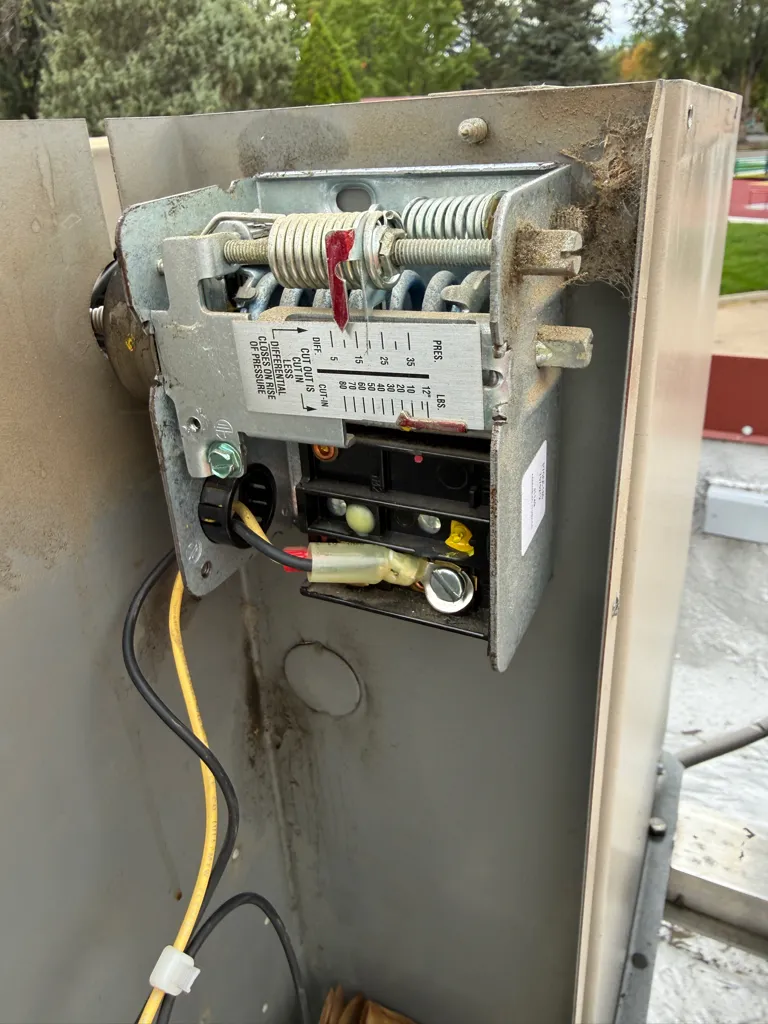
- Found the leak at the second pressure sensor — the cut-out that stops the compressor when the liquid-line valve closes — and replaced it.
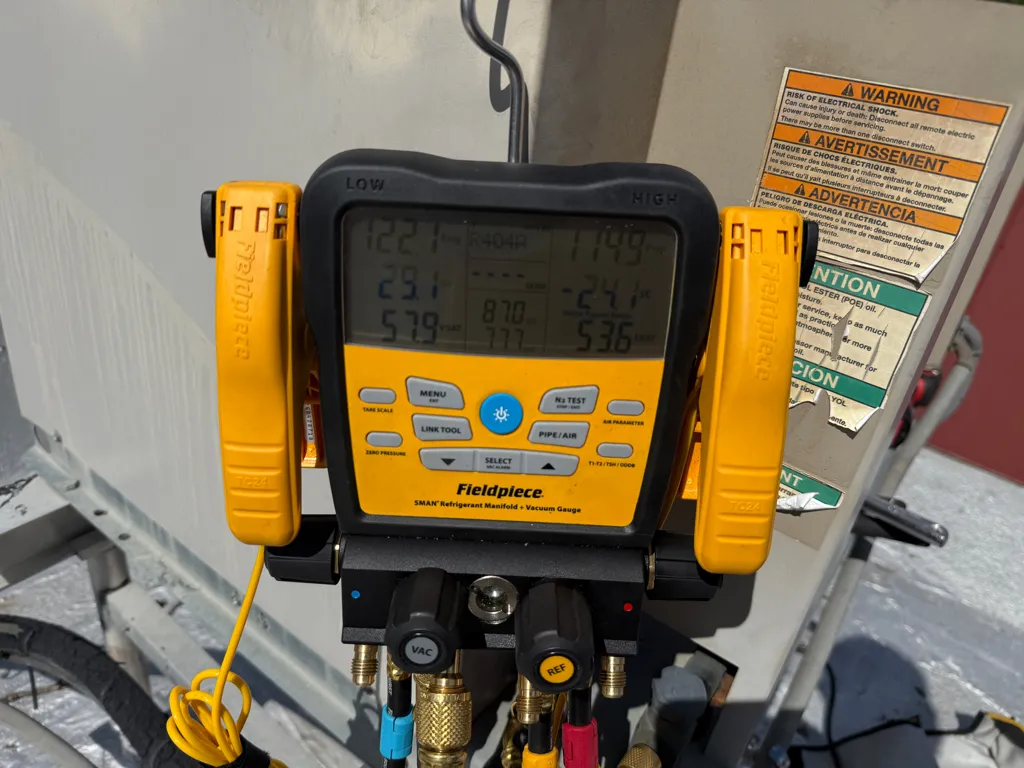
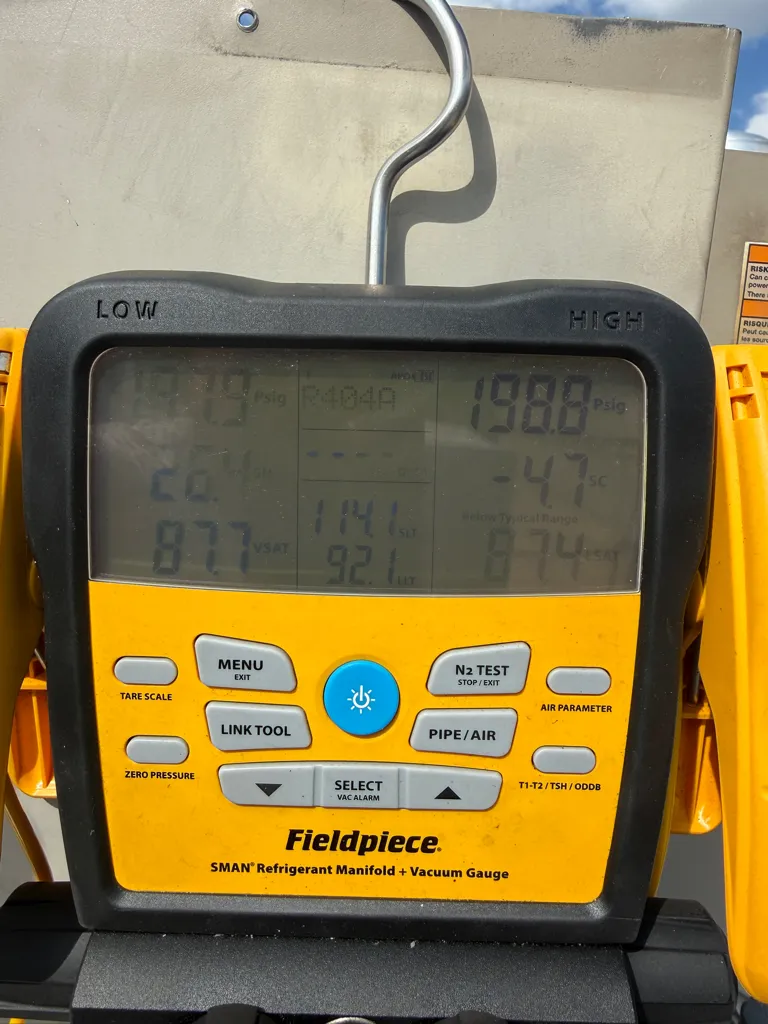
- Charged the system with 4 lb of R-404A and started it. The compressor ran, but head pressure climbed past 400 psi and the box did not pull down.
- Ran performance diagnostics on a return visit: low side about 20 psi, high side 350–360 psi, evaporator not being fed. That pointed to the liquid-line solenoid valve or the TXV.
- Tested the liquid-line valve with a solenoid magnet. It opened normally, which ruled it out and isolated the fault to the TXV.
On site
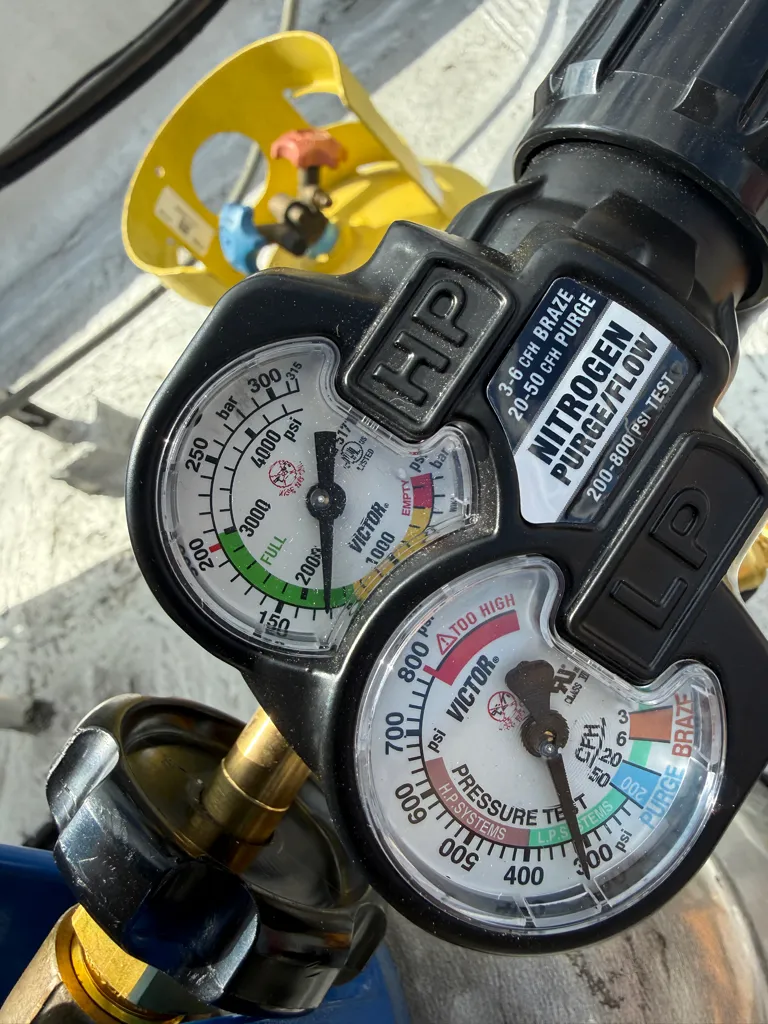
Result
Both pressure sensors were replaced and the leak was fixed. The remaining fault was isolated to the expansion valve; the customer chose to pause before the TXV replacement, so that part of the repair was not done.
Takeaway for operators
Walk-in freezer problems often stack: fixing the first failure reveals the next. Testing each component before replacing it — here, proving the solenoid valve worked with a magnet — keeps the customer from paying for parts that were not the problem.
Similar problem with your equipment?
Same- or next-day appointments, written quote before any work, EPA 608 certified technicians.
More case studies
Keg cooler defrost and controller repair
A cidery in Longmont called because its keg cooler was not holding temperature.
Read →September 2025Restaurant freezer fan motor replacement
A Thai restaurant in Longmont had a reach-in freezer on its kitchen line that needed a fan motor assembly replaced..
Read →June 2026Commercial dishwasher timer and water valve replacement
A childcare center in Longmont had a door-type commercial dishwasher that needed its timer/control unit and water control valve replaced..
Read →September 2026Walk-in cooler compressor replacement on a café rooftop
A café in Aurora lost cooling in its walk-in cooler.
Read →September 2026Walk-in beverage cooler with two iced-up evaporators
A convenience store in northeast Denver called about its commercial walk-in cooler.
Read →October 2026Walk-in cooler condensing unit service
A store in northeast Denver had its walk-in cooler checked from the evaporators inside the box to the condensing unit outside.
Read →