01No heat
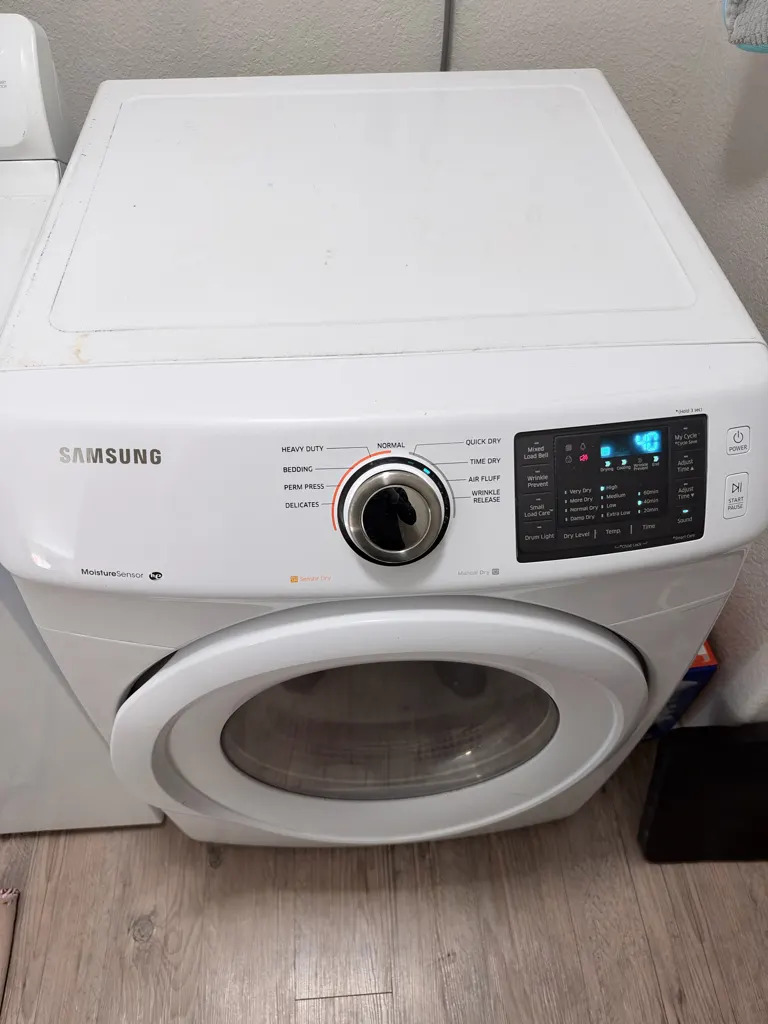
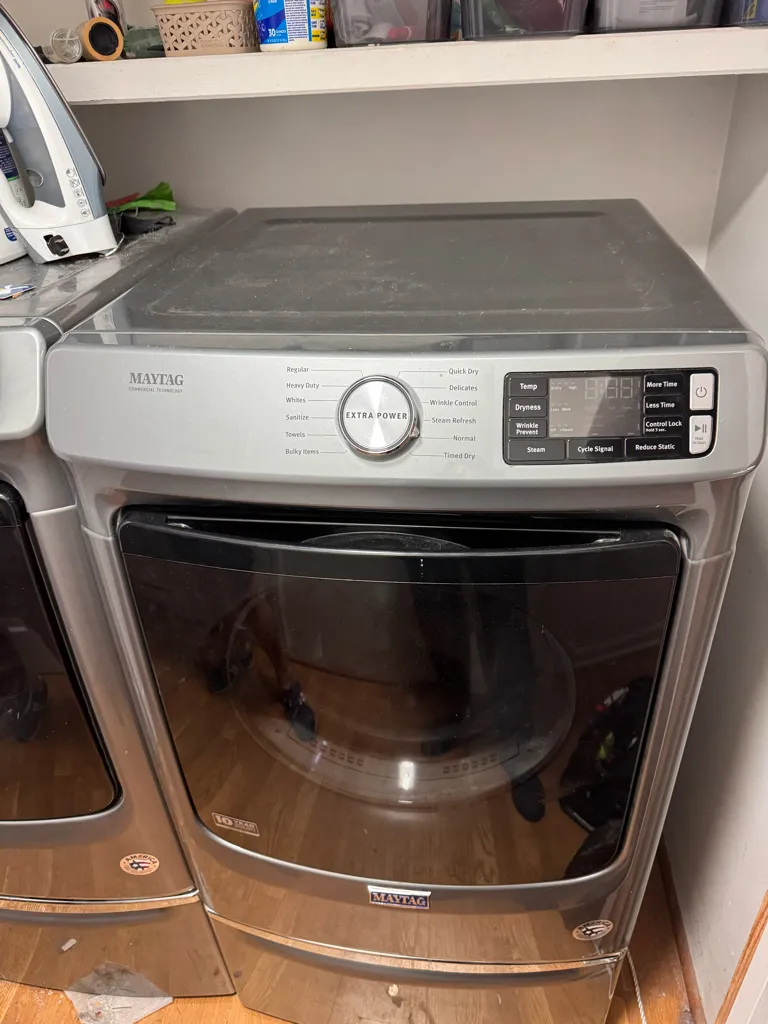
A Samsung dryer in Lakewood wasn't heating; we replaced the heating element assembly. A Maytag that wasn't heating needed a heating element, a drum belt and a cleaning, and another Lakewood dryer needed a new element.
Home / Locations / Lakewood / Dryer repair
Lakewood, CO · Dryer repairDryers that run cold, take two cycles, or have a drum that rubs. Here's what we've fixed on dryers in Lakewood.
We reply during business hours (Mon–Sat 7am–7pm · Sun 8am–6pm). Urgent? Call (720) 534-0432.
Most Lakewood dryer calls are no-heat calls, and most of those are electric heating elements. We also check the vent on every visit, because a clogged vent is what burns out elements and thermal fuses.
A Samsung dryer in Lakewood wasn't heating; we replaced the heating element assembly. A Maytag that wasn't heating needed a heating element, a drum belt and a cleaning, and another Lakewood dryer needed a new element.
A Samsung's drum needed adjustment, and another Samsung needed a new lint screen. A torn lint screen lets lint into the blower and the vent, which leads straight back to no-heat calls.
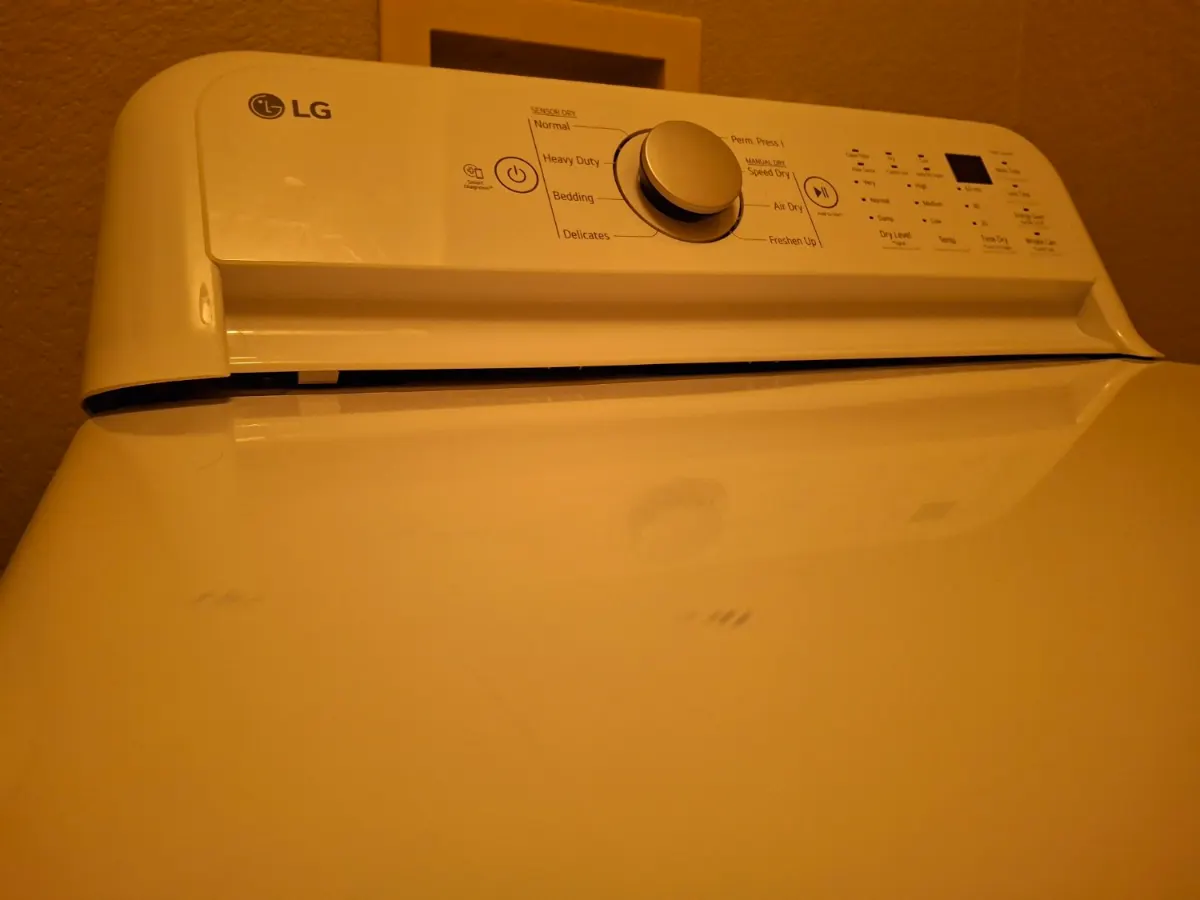
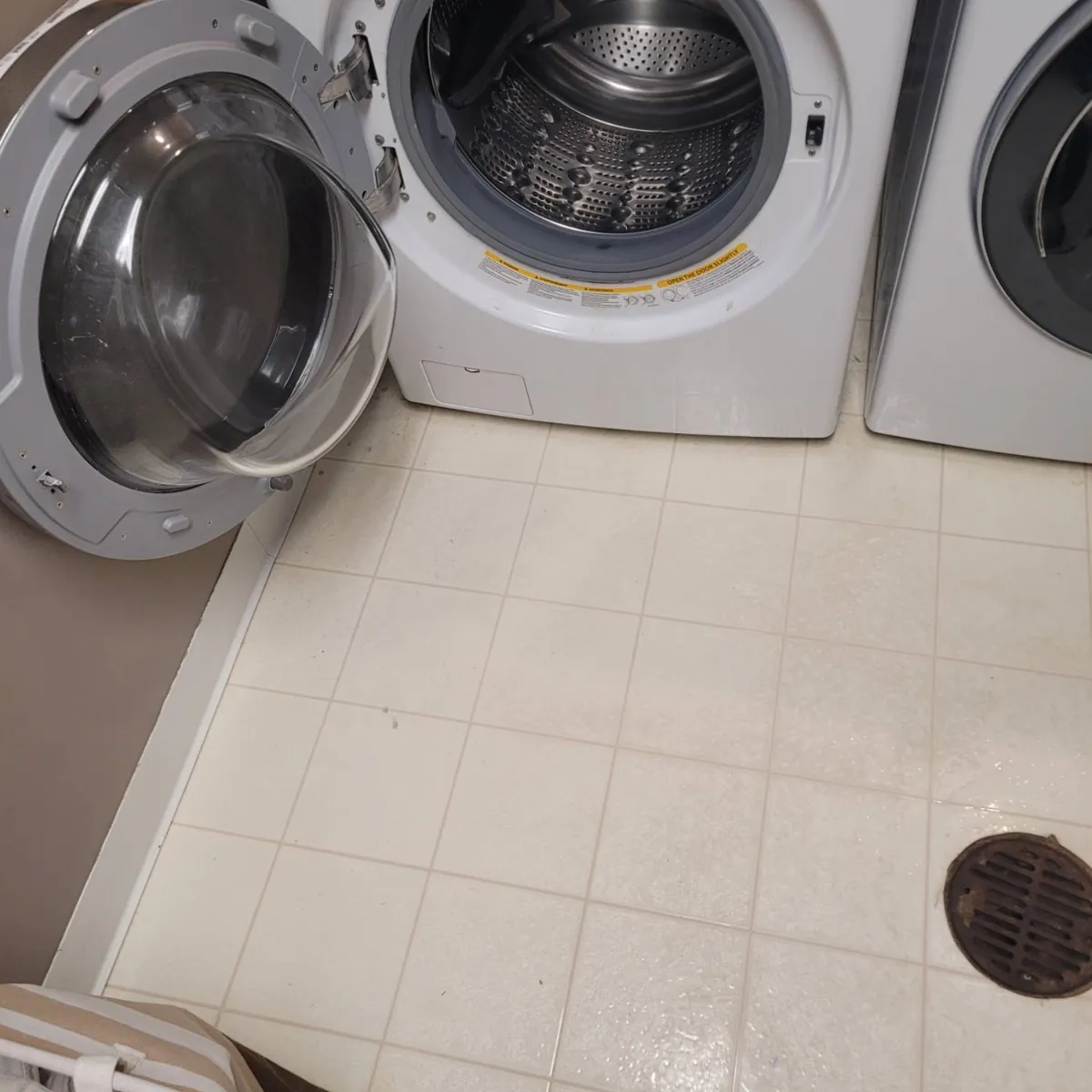
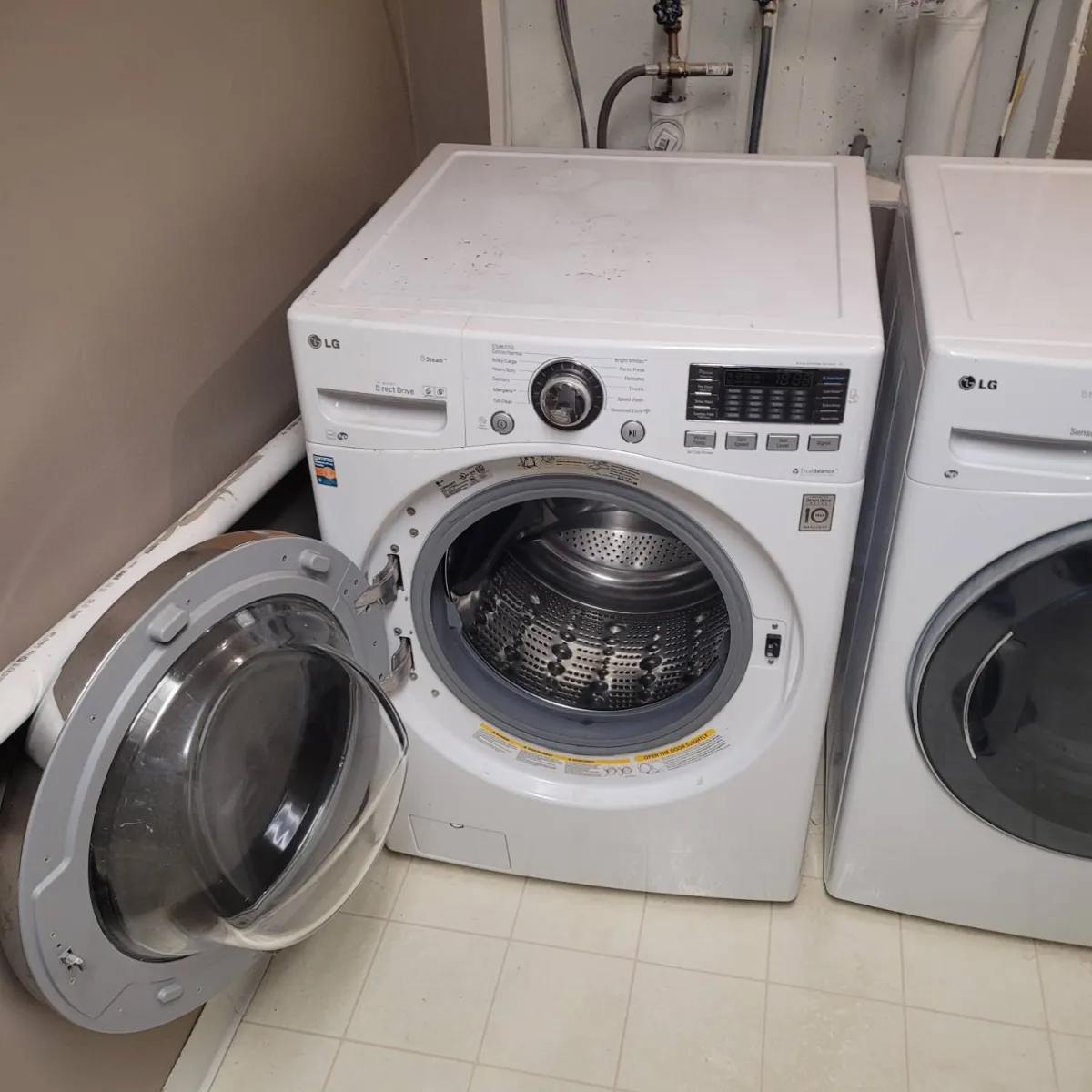
The LG washer and dryer from this Lakewood call: the washer wouldn't turn on and the dryer needed new drum rollers.
An LG washer and dryer stack in Lakewood after dryer roller work.
A Samsung dryer in Lakewood that ran but stayed cold needed a new heating element. A Maytag with the same complaint needed an element and a drum belt. On an LG the dryer heated unevenly and shut off early because the thermistor that reads the exhaust temperature had failed; after the new thermistor we ran it through a timed-dry cycle to check the display and the temperature. Another customer suspected a blown thermal fuse; we tested it and the safety thermostats before replacing anything.
Whenever a dryer has no heat we also check the vent. A clogged vent makes the dryer overheat, which blows fuses and burns out elements, so replacing the part without clearing the vent just means another repair later.
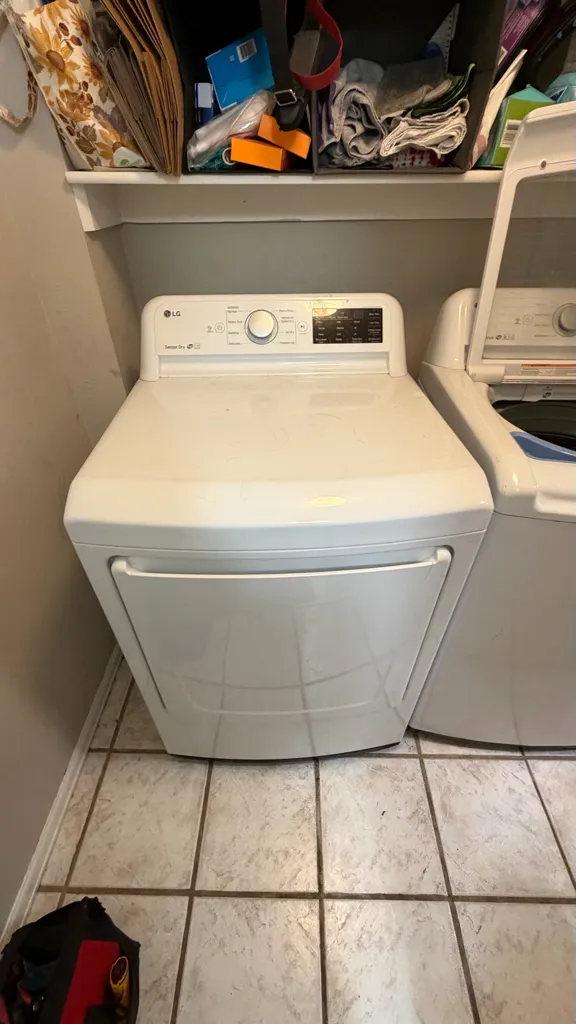
An LG dryer in Lakewood got new drum rollers and an idler pulley; the photos show it opened up with the drum supports exposed. A Samsung front-load dryer needed the drum adjusted after it started rubbing. Another Samsung had a torn lint screen, which lets lint get into the blower and the vent, so we replaced it.

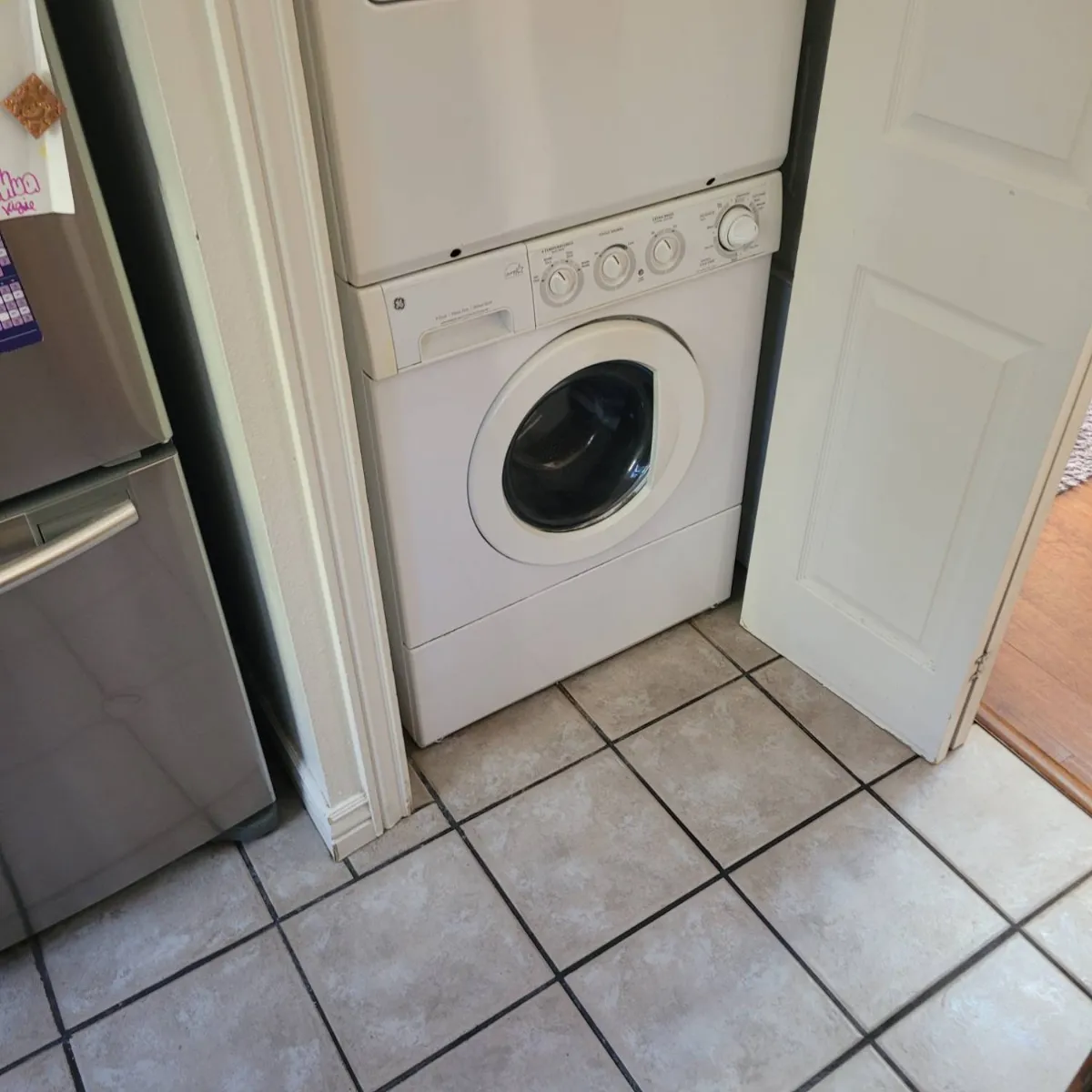
Many Lakewood calls are for the pair: a GE washer and dryer that had both stopped working, and an LG set checked after the washer started smoking. Stacked and side-by-side sets in small laundry closets are common in Lakewood's older homes, and we work carefully in tight spaces.
Lakewood has a lot of mid-century homes with gas dryers and long vent runs to an outside wall, and newer townhomes and condos near Belmar and the light rail with electric stacked units. On gas dryers we test the igniter, flame sensor and valve coils and check the gas connection; on electric dryers the element, thermal fuse and high-limit thermostat.
You get the exact price before work starts. Every repair has a 90-day parts and labor warranty.
Lakewood is the fifth-largest city in Colorado, and a large part of it is mid-century housing: ranch homes and split-levels from the 1950s through the 1970s, many with the laundry in the basement. That layout is hard on dryers. The vent often runs up and across the basement ceiling before it reaches the outside wall, sometimes with several elbows and a run of flexible foil duct. Every bend and every foot of duct adds resistance, lint settles in the low spots, and the dryer runs hotter and longer to do the same load.
The result shows up in our Lakewood records as heating element failures, the most common dryer repair we do here. A new element fixes the symptom. A clear, short, rigid vent fixes the cause. When we see a crushed foil duct or a vent hood that does not open, we point it out on the spot.
Run the dryer on high heat and go outside to the vent hood. The flap should open fully and you should feel strong, warm airflow. If the flap barely moves, the vent is restricted. Inside, pull the dryer out and look at the duct behind it: it should be smooth metal, not crushed, and not longer than it needs to be. A dryer that takes more than one cycle to dry a normal load, feels very hot on the outside, or leaves the laundry room humid is telling you the same thing.
Samsung is the most common dryer brand in our Lakewood records. On Samsung dryers, HE or hE means a heating error: the dryer is not getting hot, usually a heating element, a thermal fuse or a high-limit thermostat on electric models, or an igniter or gas valve coil on gas models. tE points to the temperature sensor (thermistor) and dE or dC to the door switch. One Lakewood Samsung only needed a new lint screen, because a torn screen lets lint straight into the blower and the heater area. Another needed its drum adjusted.
LG dryers show d80, d90 or d95 when their flow sensing detects that the vent is 80, 90 or 95 percent blocked. That is not a dryer fault; it is the vent. tE1 and tE2 are temperature sensor codes, and we have replaced LG thermistors in Lakewood for exactly that. LG dryers that thump or squeal usually need drum rollers and an idler pulley, a repair we have done on Lakewood LG pairs.
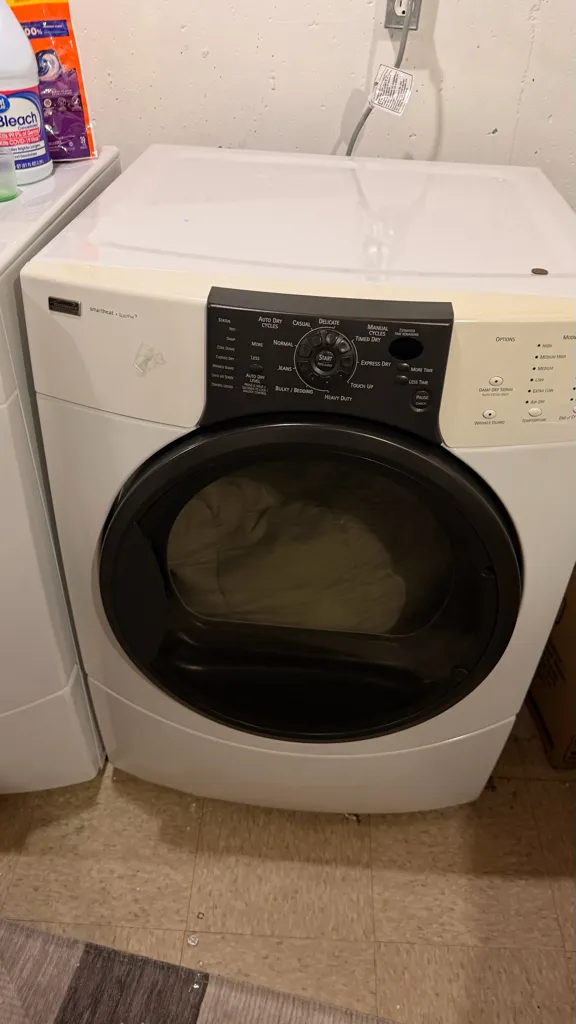
The west-side neighbors show the same pattern. In Wheat Ridge, a Kenmore stacked dryer that would not heat and made noise needed a drum support and a heater element. A Samsung that would not heat had a burned terminal on its heating element wire harness, which we repaired, and another Samsung came back to us for a follow-up under warranty. A Maytag that screeched needed all of its rollers replaced. In Golden, a Whirlpool dryer came back to us a year after an earlier repair, a GE dryer needed a rear drum bearing, and a commercial Speed Queen dryer needed service. In Lakewood, a Maytag that would not heat and a dryer whose owners suspected a blown fuse were typical no-heat calls.
On an electric dryer, the heat comes from a coiled element. When it breaks, the dryer tumbles but blows cold air. A thermal fuse or high-limit thermostat can also open, usually because the vent is restricted and the dryer overheated. We test the element, the fuse, the thermostats and the thermistor with a meter and replace only what has failed, and then we check the vent so the new part does not fail the same way.
On a gas dryer, the igniter glows, the flame sensor confirms it, and the gas valve coils open. When one of those weakens, the dryer heats for a while and then runs cold, or never lights. Gas dryers in Lakewood need the same vent care as electric ones, and a gas dryer should never be vented with plastic or vinyl duct. If you smell gas near the dryer, turn it off, leave the room and call.
Clean the lint screen after every load, and wash it with warm water and a brush every few months if you use dryer sheets, which leave a film that blocks airflow. Vacuum the lint screen housing a couple of times a year. Have the full vent cleaned once a year, more often if it is long or runs through a basement ceiling. Do not overload the drum.
Lakewood also has many apartments and townhomes along Colfax, Wadsworth and the light rail line, and those often have stacked or compact laundry in a closet. A stacked dryer sits on top of the washer, so most repairs mean working at shoulder height or pulling the pair out together. We bring the tools to do it without damaging floors or hookups, and we re-level the stack before we leave. Compact ventless dryers are a different design: they condense moisture instead of venting it, so they need their condenser or lint filters cleaned regularly, and they take longer to dry than a vented dryer by design.
Many older Lakewood homes still have a three-prong dryer outlet, while newer homes and current code use a four-prong outlet with a separate ground. New electric dryers usually ship without a power cord, so the cord has to match the outlet and the dryer has to be wired for it: on a three-prong cord the neutral and ground are bonded at the dryer, and on a four-prong cord that bond is removed. Getting this wrong can leave the dryer cabinet energized, so it is worth having it done right.
Gas dryers need a flexible appliance connector in good condition and a shutoff valve within reach. Old connectors, especially uncoated brass ones from decades ago, should be replaced, not reused. When we install or reconnect a dryer, we match the cord to the outlet, check the gas connection for leaks, run a short rigid or semi-rigid vent where we can and test the dryer through a full heated cycle.
| Where | Appliance | Problem | What we did |
|---|---|---|---|
| Wheat Ridge | Kenmore stacked dryer | Not heating, noisy | Replaced drum support and heater element |
| Wheat Ridge | Samsung dryer | Not heating | Repaired the heating element wire harness terminal |
| Wheat Ridge | Maytag dryer | Screeching | Replaced all drum rollers |
| Golden | GE dryer | Not working | Replaced the rear drum bearing |
| Lakewood | Samsung | Not heating | Replaced heating element assembly |
| Lakewood | Maytag | Not heating | Replaced element and belt, cleaned |
| Lakewood | Dryer | Not heating | Replaced heating element |
| Lakewood | Samsung | Drum problem | Adjusted drum |
| Lakewood | Samsung | Torn lint screen | Replaced lint filter |
| Lakewood | Samsung dryer | Not heating | Replaced heating element |
| Lakewood | LG dryer | Shutting off, uneven heat | Replaced thermistor |
| Lakewood | LG dryer | Noisy | Replaced drum rollers and idler pulley |
| Lakewood | Samsung dryer | Torn lint screen | Replaced lint filter |
| Lakewood | Maytag dryer | Not heating | Heating element and belt |
Problems are described as the customer reported them; repairs are taken from the technician's notes. No customer details are published.
Replace a torn lint screen right away.
Have the vent cleaned yearly; it protects the heating element and thermal fuse.
If an LG dryer shows d80, d90 or d95, clean the vent before calling.
Wash the lint screen with warm water if you use dryer sheets.
Never reuse an old gas connector when you replace a gas dryer.
ABC Denver Appliance Repair is an independent, local repair company. Our technicians are EPA 608-certified, carry common parts on the truck and test every repair before they leave. Every repair comes with a 90-day parts and labor warranty.
From our job records since 2024 (completed home jobs). No client details are published.
A dryer that takes two cycles in Lakewood usually has a vent problem, not a heater problem — clean the vent before replacing parts.
Lakewood's water is moderately hard (about 5.2 grains per gallon). Moderately hard water slowly builds scale in ice maker valves, dishwasher heaters and washer inlet screens. Rinse aid and regular filter changes go a long way.
At about 5,656 feet, water boils about ten degrees below 212°F and recipes behave differently than at sea level. That's normal. What isn't normal is a gas burner with a yellow or lifting flame — that's worth a service call.
In our records, the busiest months for dryers in Lakewood are February and October; the quietest is April. Booking early in a busy month gets you a faster appointment.
Completed jobs by month, 2024–2026.
The brands below are the ones we see most in Lakewood, in order. We repair all major brands, standard and built-in.
Electric dryers run on a 240-volt circuit and heat with a coil element. When they stop heating, the element, thermal fuse, thermostats or one leg of household power are the usual causes.
Gas dryers use a burner with an igniter, flame sensor and gas valve. They heat faster and cost less to run but need careful service by a qualified technician.
Ventless dryers recycle air through a condenser or heat pump. They need clean filters and condensers and have pumps and sensors that standard dryers don't.
Upper dryers in stacked pairs or laundry centers require more effort to service; vent connections behind them are often crushed during installation.
On electric dryers we test the heating element, thermal fuse, high-limit and cycling thermostats. On gas dryers, it's usually the igniter, flame sensor or gas valve coils.
Nine times out of ten this is airflow: a lint-packed vent, a crushed transition duct behind the dryer, or a long vent run with too many elbows. We check the airflow before replacing heating parts.
We check the door switch, start switch, thermal fuse, belt switch and motor. A dryer that starts and shuts off after a few minutes often has an overheating motor or a failing thermal protector.
Thumping usually means flat-spotted drum rollers; squealing comes from an idler pulley or worn drum glides; scraping is often a drum seal or a coin caught in the blower. All are routine repairs.
Turn the dryer off. Lint near the heater or burner, a failing motor or a belt rubbing are the usual causes.
A dirty moisture sensor, a restricted vent or an overloaded drum. Wiping the sensor bars with rubbing alcohol is a good first step.
A broken belt, a failed idler pulley or a motor problem. On many dryers a broken belt also stops the motor through a switch.
Dry drum glides or a worn idler pulley are typical. These parts are inexpensive, and replacing them prevents belt damage.
Most dryer repairs — heating parts, belts, rollers, switches — cost far less than a new dryer. A failed motor or control board on a very old machine is the main exception.
Service call from $59, credited toward the repair. Written price before any work.
Call, text or send the form with the appliance, brand and model if you have it. We give you an arrival window.
The technician tests the appliance and gives you a written price before starting. The service call is credited if you go ahead.
Most repairs are finished on the first visit with parts from the truck. Every repair carries our 90-day warranty.
On electric dryers it's usually the heating element or a thermal fuse; on gas dryers the igniter or valve coils. A clogged vent is often the root cause.
We clean the dryer's internal airflow and the duct behind it on dryer repairs, and check the vent run.
About once a year, more often with long vent runs or heavy use. A clogged vent is the most common cause of long drying times and burnt-out heating parts.
Usually it is worn drum rollers, an idler pulley or a belt. It is not dangerous at first, but the parts wear faster once they start to squeak.
Usually the same day or the next day.
Yes. We repair igniters, gas valve coils, flame sensors and thermostats on gas dryers, and check the gas connection afterward.